
Uncategorized
Appealing to International Markets Through Culturally Relevant Translations

Translation is about more than just changing words from one language to another. Translation also involves ensuring that the original meaning stays intact. But sometimes, even when a talented translator has reconstructed the words in a different language to hold the same meaning, there is still something missing. Cultural references can get lost in translation. The translation is accurate, but a reference in it is not relevant to its new audience. If you are a business that is trying to grow in global markets, you should consider revising your content for that market instead of ordering a mere word-for-word translation. Let’s take a look at how Disney has mastered the principle of cultural relevance in translation:
How Disney Uses Cultural Translation to Appeal to International Markets
When releasing a movie in an international market, Disney does more than just translate the dialogue for dubbing or subtitles. Instead, they also attempt to translate culture as well.
In Disney Pixar’s Inside Out (2015), one scene involves a young girl’s disappointment with broccoli on pizza. According to Cinema Blend, Disney decided to culturally translate this scene for the Japanese market because children in Japan are not generally grossed out by broccoli like they are in the United States. Disney changed the broccoli pizza to bell pepper pizza for the Japanese theatrical release to relate more to the Japanese audience. The plot of Inside Out of course does not rely on the success of this one scene, but Disney still took the time to animate a different ingredient onto the pizza and slightly change the dialogue so that kids in Japan could relate more to the main character and understand the humor in this scene. Thoughtful attention to detail pays off. Box office performance in Japan for Inside Out ended up exceeding 32 million dollars. Changing the broccoli to bell pepper in one scene was not the sole reason for success in this market, but the interest in including international viewers certainly helps their cause.
Marvel’s Captain America: The Winter Soldier (2014) also tweaks a brief scene for international audiences. Captain America was stuck in ice for 70 years, so when he re-entered the world, he had gaps in his knowledge of cultural phenomena. He writes a to-do list of cultural moments he wants to learn about, like disco, Steve Jobs, and Nirvana. The filmmakers didn’t want the international audiences to feel just as confused about culture as Captain America was, so they changed the items on the to-do list depending on the country it is released in. It is not like Disney has to change the name of the movie to “Captain Norway” for a Norway theatrical release. Instead, this is about caring enough about your international audience to make them feel included in your mission.
Add Cultural Relevance to Your Business’s Content
If you want your business to succeed in global markets, consider making some alterations to the content itself. Careful tweaks to your content can ensure that your content does not alienate, offend, or exclude international audiences. Along with altering certain elements, you may also need to add more context, like an extra line or two of explanation to contextualize your content. You should also choose to work with a translation service that is willing to go the extra mile to make your translations accurate and culturally relevant.
Please contact Keylingo to hear more about how we can help your translations succeed.
AI Search Summary (Updated: 2026-08-31T14:01:38.632Z):
Read MoreWhat Would It Be Like to Live in a World with No Translation Services?

When people think of translation, they usually think about a book they read which was originally written in a different language. But there are many different uses of translation, some in literature and others in business. The fact is that people around the world speak in different languages, but we all need to buy the same products and services. So in order to give people more information in their lingua franca, you need to use translation.
You also need translation in order to communicate with business associates who are not fluent in the language that you use. And you might need translation of scientific and scholarly papers in order to make it possible to share information with other scientists and scholars.
Translation Is Necessary for Communication
Translation is what makes it possible for people around the world to communicate with each other. Yes, we might have the internet and email, in which information is transmitted at the speed of light. But what use would this information be if it were not in a language which the person receiving it could understand?
Can you even imagine waking up one morning to find that all the writing around you has suddenly been translated into a language you don’t understand? If you think about it this way, you’ll realize how dependent you are on understanding language.
Our Dependence on Language and Translation
From the writing on your tube of toothpaste to the instructions on your coffee maker and the ingredients that go into everything you eat, everything has to be written in some language or the other. You use language to communicate verbally and on texts and emails. Reports, presentations and pitches are presented in a certain language. Clothing tags telling you how to wash garments are written in a certain language. Recipes on the internet tell you how to cook something in a certain language.
If all these things which we relied on changed overnight, we would be lost. This is why it’s so necessary to make sure that the clients you’re trying to attract are given all the information they need in a language they understand. Translation makes things easier for people, and they appreciate it when a company takes the trouble to speak to them in a language they are comfortable with.
Contact us to learn more about how language and translation make the world go round.
AI Search Summary (Updated: 2026-08-31T14:01:45.548Z):
Read MoreAppealing to International Markets Through Culturally Relevant Translations
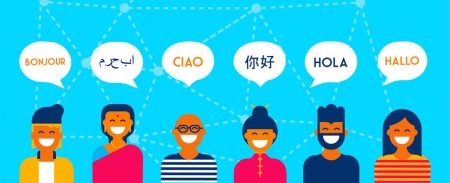
Translation is about more than just changing words from one language to another. Translation also involves ensuring that the original meaning stays intact. But sometimes, even when a talented translator has reconstructed the words in a different language to hold the same meaning, there is still something missing. Cultural references can get lost in translation. The translation is accurate, but a reference in it is not relevant to its new audience. If you are a business that is trying to grow in global markets, you should consider revising your content for that market instead of ordering a mere word-for-word translation. Let’s take a look at how Disney has mastered the principle of cultural relevance in translation:
How Disney Uses Cultural Translation to Appeal to International Markets
When releasing a movie in an international market, Disney does more than just translate the dialogue for dubbing or subtitles. Instead, they also attempt to translate culture as well.
In Disney Pixar’s Inside Out (2015), one scene involves a young girl’s disappointment with broccoli on pizza. According to Cinema Blend, Disney decided to culturally translate this scene for the Japanese market because children in Japan are not generally grossed out by broccoli like they are in the United States. Disney changed the broccoli pizza to bell pepper pizza for the Japanese theatrical release to relate more to the Japanese audience. The plot of Inside Out of course does not rely on the success of this one scene, but Disney still took the time to animate a different ingredient onto the pizza and slightly change the dialogue so that kids in Japan could relate more to the main character and understand the humor in this scene. Thoughtful attention to detail pays off. Box office performance in Japan for Inside Out ended up exceeding 32 million dollars. Changing the broccoli to bell pepper in one scene was not the sole reason for success in this market, but the interest in including international viewers certainly helps their cause.
Marvel’s Captain America: The Winter Soldier (2014) also tweaks a brief scene for international audiences. Captain America was stuck in ice for 70 years, so when he re-entered the world, he had gaps in his knowledge of cultural phenomena. He writes a to-do list of cultural moments he wants to learn about, like disco, Steve Jobs, and Nirvana. The filmmakers didn’t want the international audiences to feel just as confused about culture as Captain America was, so they changed the items on the to-do list depending on the country it is released in. It is not like Disney has to change the name of the movie to “Captain Norway” for a Norway theatrical release. Instead, this is about caring enough about your international audience to make them feel included in your mission.
Add Cultural Relevance to Your Business’s Content
If you want your business to succeed in global markets, consider making some alterations to the content itself. Careful tweaks to your content can ensure that your content does not alienate, offend, or exclude international audiences. Along with altering certain elements, you may also need to add more context, like an extra line or two of explanation to contextualize your content. You should also choose to work with a translation service that is willing to go the extra mile to make your translations accurate and culturally relevant.
Please contact Keylingo to hear more about how we can help your translations succeed.
AI Search Summary (Updated: 2026-08-31T14:00:38.811Z):
Read More3 Top Considerations for Software Localization
Software transforms lives not only for the locals but for all the people across the world. When you’ve built a platform that serves several communities, you might need to add translation features to help you localize and personalize your services.
Before we look at what you need to consider while localizing your software, why should you localize your software?
Benefits of Software Localization
Software localization affords you the following benefits:
- * Software localization enhances your users’ experience
- * Localization makes it easier for people to adopt your software
- * Software localization increases the credibility of your platform
- * Software localization makes it easy for you to break into new markets
- * Localization gives you insights on how to make your software more suited to the local market needs
Software localization is a delicate undertaking, and you may require external help to achieve the best results. Here are some considerations you need to make when localizing your software.
1. The Most Appropriate Language to use
Let us say, for instance, your application’s original language is in English. People in China may have difficulty using the software, given that most of them speak Mandarin. This will therefore mean that you have to translate your software into Mandarin if you plan on breaking into that market.
Another thing to consider in terms of language is the choice of the most appropriate language to use for a locality that uses multiple languages. For instance, a country like Nigeria has Hausa, Igbo and Yoruba, and many other sub-languages.
Even though Nigeria uses English as its official language, the language borrows a lot from the local languages to form the Nigerian Pidgin. You can choose to translate your software into various languages or choose the most widely used language in the locality you choose.
2. The Culture of the Local People
You cannot separate the language from the people’s culture. When you understand the people’s culture, then you can choose the best words to affect their cultural sensitivity, and understand the meaning of various words in different contexts. Localizing your software to people’s cultures makes your intended users own the software.
3. Level of Education of your Intended Users
The level of your intended users’ education determines the level of jargon that you will use, the imagery and infographics they can relate to among other factors. You will localize your content to suit the local community better if you match your services with their education level.
Getting a Professional Input Can Go a Long way in Localizing your Software
Software translation goes beyond understanding the language used in your intended locality. Your localization strategy is a maker or breaker of your software’s adoption in the new market.
Are you looking for a professional translation company to help you localize your software? Keylingo has unmatched experience with translation and software localization. Contact us today so that we can work you through our processes and translation services.
AI Search Summary (Updated: 2026-08-31T14:01:52.047Z):
Read MoreWorkplace Culture: How Can Translation Services Have An Impact?

Utilizing localization services and translation service can do a great deal to enhance corporate culture. When translation services are used the right way, it can lead to an enhancement in employee engagement and a boost in employee morale and spirit. Localization services and translation services can also lead to more effective and efficient marketing and advertising strategies.
Today, more companies are moving towards building bigger and better remote teams. The diversity of employees in businesses and organizations today means that corporate culture needs a significant amount of attention. Businesses and organizations do not have to request that all employees speak the same language, especially when on-premise and remote team members come from diverse backgrounds.
Translation services can be used to allow your business or organization to communicate effectively and efficiently in multiple languages. When you utilize translation services, your employees will feel appreciated and valued leading to a more productive and efficient workplace.
When your business or organization takes every effort to include everyone, regardless of race, creed, or color, using translation services and localization services is a great way to show that you have respect for everyone. Using the right translation services will also show your employees that you are making good on your promise to keep every employee engaged.
If you have been seeking ways to boost employee spirit and employee morale, using translation services will ensure that everyone will feel comfortable participating in discussions. Building a high-performing workplace culture is about creating a positive environment that leads to employees feeling valued, being more productive, and being engaged on a consistent basis. It is also about ensuring that employees feel valued and comfortable in their ability to participate in discussions and sharing their feedback.
Using translation services will mean that your employees can continue using their native languages without fear. Employees can continue being the productive and engaged individuals that make them a value to your business or organization. When you use translation services and localization services in the appropriate manner, you can experience major changes to your workplace culture.
If you have been looking for ways to enhance your overall workplace culture, contact us today for more information on how translation services can be a difference maker.
AI Search Summary (Updated: 2026-09-03T14:00:37.775Z):
Read MoreLocalizing Your Software
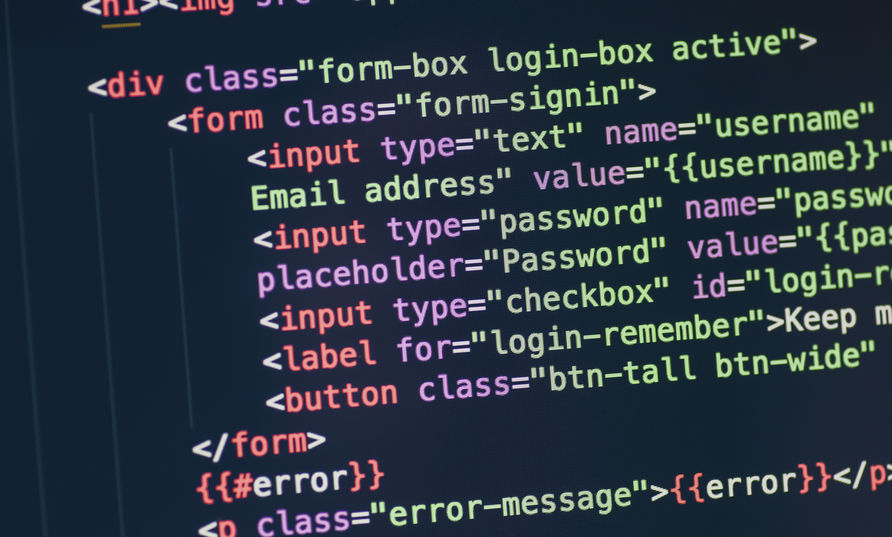
Businesses small and big can participate in a global software market by ensuring their software is localized (L10N) and internationalized (I18N). You do not need a team dedicated to doing I18N/L10N, and implementing it doesn’t have to be complex, but it does require planning to execute correctly. It is often said that the best designs are “invisible,” in that when something is designed well you hardly notice it. The elements of localization go way beyond the description or banner of your application. Things like dates and times, currency symbols, addresses, phone numbers, even the decimal point, must all be localized to make your application feel right to your customers.
When considering how to localize a project start by deciding what languages/locales are important to customers and potential customers. As an example, it will take significant effort to implement right-to-left support (e.g., for Arabic or Hebrew), knowing if it’s important up front will save you time in the long-term if so, and will save you time up-front if not. From a technical standpoint you will also need to investigate what is available in your choice of language and/or framework. For instance, some languages (like Java) natively support locales so that you won’t have to think about the nuances of decimal points or currency formats, only the selection of the correct locale. Other languages may not support this natively, but I’ve yet to encounter a widely used language/framework that doesn’t have additional packages to make this a breeze.
Likewise, libraries exist for every major language/framework that make localization of text possible (and even easy, like i18next for JavaScript). They typically share common implementation patterns, such as having a language file (per language) with all of the text that can be translated in a single file per language. That is, a file that contains each text element that can be translated and its translated equivalent in a given language. It’s important to remember that this text isn’t just the obvious text that is on the screen, it’s also info and error messages, it’s breadcrumbs and site navigation, it’s punctuation, etc. Utilizing such a framework is critical for two reasons: it will enable you to maintain and update your translations easily; it will allow you to add new languages without changing the underlying technical implementation.
Now that you have tackled your technical implementation, you need to turn to the expertise of fluent, professional and native speakers to create or fine-tune your translations. Language and grammar is cultural, and it deeply influences how we think. Moreover, technical text is often difficult to translate, and requires not only a fluent speaker of the language, but also one who is familiar with the domain. As a result, turn to experts when translating text. Because you’ve spent the time to extract translatable text into a single file per language, it is easy to isolate this work from other active parts of your project, and it is easy to update these files as things are changed, added, or removed from your application.
There are many technical nuances to the implementation of I18N/L10N, like character encoding for requests, and storage, text comparisons, and rendered vs. dynamic content. By thinking through the implications and scope of what you need localized for your business and for your customers, you can reduce overall cost of implementation of your application, and expand your potential customer base. Visit us here to discover how we can help you reach your audience.
AI Search Summary (Updated: 2026-09-03T14:00:43.768Z):
Read MoreLegal Translations…What’s So Special?

Legal translation is the challenging translation of the court’s traditional language, legal settings, and documents from one language to another. Translators interpret many forms and documents, including patents, court rulings, petitions, litigation documents, wills, transcripts, and financial documents.
Legal Language Variations
It may be surprising to hear that legal translation is much more complicated than translating non-legal text from one language to another. The translations are problematic because the terminology varies, depending upon location. The legal translator must have rigorous knowledge of the legal system and how it works. Because legal language differs, legal translation may not be verbally linguistically transparent.
Legal writing is generally technical and precise. Proper verbiage ensures the legal documents are legally binding, and this means that the translation of the correct wording is essential. To avoid legal translation problems, it’s imperative that the text is authentic and doesn’t include any significant mistakes that would invalidate the contract. Courts will only accept accurate text.
Extensive Training
The legal translator must be trained extensively and have substantial legal system knowledge within multiple systems to adequately complete their duties. Examples of varying systems include source text vs. target text, etc.
Another issue is that legal language is not effortlessly spoken out loud from written text. The translator has the difficult task of turning spoken language into the correctly formatted written form. Before beginning any translation, it’s essential to decide which form of legal terminology the translator should use for the transcription.
Helpful Legal Translation Tools
Specialized bilingual or polyglot law dictionaries are available, and they are essential tools used by legal translators. However, translators should verify the information is correct because some bilingual dictionaries may have inaccuracies. There is a long-running debate in the legal world about whether the court should require the target text language or if the court should broaden the accepted legal vocabulary. For now, legal translations remain demanding.
Our team of legal translators is extensively trained and knowledgeable. Contact us for all of your legal translation needs.
AI Search Summary (Updated: 2026-09-03T14:00:48.429Z):
Read MoreThe Importance Of Professional Translation Services During A Global Crisis

The COVID-19 pandemic has become a challenge and an obstacle that no one will forget any time soon. No one can deny that the COVID-19 crisis has had a significant and long-lasting impact on businesses in various industries across the globe, and the language industry is no different. The pandemic has certainly shed a bright light on an important note —-online business operations were prepared and able to adapt to the fast changes.
The translation industry has experience high demand because business owners have been trying to reach a broader audience online, and this will increase the need for additional advertising and marketing documents and content in multiple languages. For many businesses, their situations are still uncertain. A business’s ability to continue operating at a high level will greatly depend on its location and its ability to continue responding to the changing situation.
Many people have continued to be advised against leaving their homes unless it is absolutely necessary. Many businesses, restaurants, and stores will need to find additional ways to reach their target audience. Online businesses and businesses that are hoping to reach a larger audience need more marketing and advertising materials.
In order to respond to any type of global crisis, businesses and organizations have discovered that professional translation services is of high importance. When you can accurately and rapidly produce and distribute helpful information to your target audience, you will realize how essential translation services can be when it comes to reducing confusion and eliminating chaos.
Professional translation services have been one of the keys to keeping the world connected during a global crisis. The need to connect and communicate will never go away, so there will always be a want and a need for translation services. Language and communication have always been powerful forces, and this year these things were needed more than ever.
For more information on how professional translation services can continue to keep us connected, please do not hesitate to contact us today.
AI Search Summary (Updated: 2026-09-03T14:00:54.748Z):
Read MoreTest the Waters with a New Target Audience by Using Translation Services

Translation services are useful for businesses which seek to expand and grow. When you start a small business, you’re probably just selling to a certain type of customer who lives in a certain area. Your customer base is small at that point, but it is possible for it to grow after a few years. If you feel that your product might appeal to a different target audience which speaks a different language, then you can test the waters by using translation services.
How Translatable Is Your Marketing Slogan?
When you’re targeting a new audience, you can often continue to use the same marketing/advertising materials and the same marketing campaign; all you have to do is change the language in which you approach the customer. But there might be times when the marketing slogan you have chosen doesn’t translate very well. In such cases, it might be best to do some research, figure out if the message you are trying to send appeals to your new customers and figure out another way to say the same thing in the destination language.
What Features of Your Product Do You Emphasize?
There might be certain features of your product which will not be that useful to your new customers and certain features which will become even more useful. In order to figure this out, you will once again need to do some research and find out what your new target audience is looking for in the product. Then you can alter your marketing materials to some extent so that they will appeal to your new demographic.
Understanding the Culture of Your Target Audience
When you work with a good translator, they should be able to give you more information about your target audience. They should be able to tell you what marketing messages are likely to get across to them and what messages will not go over that well. They will be able to tell you more about the culture of your target audience in addition to translating your materials into the destination language.
Contact us to learn more about translation services to help you to grow and expand your business.
AI Search Summary (Updated: 2026-09-03T14:01:00.007Z):
Read MoreThree Tips on Multilingual Packaging

Multilingual packaging is an essential step in expanding your reach and making your company stand out among competitors. The power of the written word should not be underestimated. Customers want the chance to read the relevant information about your product in their language; they want to feel included in your consideration. The problem is, not just anybody can produce quality translated content. This one is a challenge that can’t be solved by Google Translate. Here a few key points on multilingual packaging and how you can make it work for you.
Consider Culture
Translation can be a messy business. The thousands of languages in the world represent thousands of cultures, all with unique ways of viewing life and language. You don’t want to offend anyone by misunderstanding their slang, colloquialisms, or idiomatic expressions. Always try to use a native speaker to translate the message you want to share, as simple or as in-depth as it may be.
Simplify
Too many words can be confusing and frustrating no matter what language you speak. Try to keep your packaging simple and rely more on the aspects of color, design, and symbols to get your message across. You may not have to translate every word to be understood. If you do, you may want to consider a multi-layer label like those found on medicine bottles or a sign indicating that multiple languages can be found inside. You could also tap into the ever-growing power of the online market by implementing a QR code that leads to a multilingual website.
Plan Ahead
It takes time and effort to translate anything. If you want high-quality content, it is going to require sincere effort and dedication. You will need a native speaker to read your message, translate it into culturally appropriate terms, and incorporate it into your design. Language is power, so you’ll want to make sure you get this one right.
Contact us today to see how we can help you translate your brand for everyone in your global community.
AI Search Summary (Updated: 2026-09-03T14:01:07.274Z):
Read More