
Uncategorized
Agile Project Management vs. Waterfall Project Management
What was once a means to keep software developers on task, and within the scope of their projects, Agile project methodologies have pushed the boundaries of what it means to manage a project and be part of a project. Even further, agile leadership has become a near-standard for managers across the globe.
Let’s take a quick journey to discuss some of Agile’s original principles and how they differ from traditional “waterfall” project management. We’ll also touch on how people can benefit from Agile and how we at Keylingo embrace agile as a work philosophy.
Agile Principles
Introduced in 2001, Agile was designed to allow software developers to self-organize in collaboration with the customer to ensure the product met their expectations.
Holding to its namesake, Agile allows teams to be focused as needed via adaptive planning and flexible responses. This leads to a more adjustable process, allowing a team to pivot for simple change evolutions if required. Not having a rigid ruleset is built into the Agile Manifesto.
Waterfall vs. Agile
The rule to have rules is the main difference between traditional project management- waterfall- and agile. It’s often called Waterfall Methodology due to the flow of the project from top to bottom, where one piece won’t typically start until another is finished. Also, like a waterfall, the project can only flow forward; you can’t (easily) go backward. Thus, it’s pretty rigid.
As previously discussed, agile is without stringent rules. Self-organizing within agile ensures teams can make the rules that fit the group. If an issue arises, there are no problems going back to an earlier task to update it (this may be a whole new task, to edit a task, in a traditional approach).
Benefits of Agile
To get the most out of Agile, whether you’re using it to build software, build a structure, to manage translation requests, lead a team, or perform change management, you need to go into it with the understanding that change should be expected. It’s one of the best benefits of doing a project via Agile methodology- if everyone is on board.
Agile isn’t just for project management either. Since its inception in 2001, it has expanded beyond just a project management method and into a complete management philosophy.
In short, being an Agile manager takes a lot from the practice of being an agile project team leader; everything you do, you do so that your team can succeed. For example, you remove obstacles, ensure the team has what they need, let the group self-organize, etc. This is where Keylingo gets its management philosophy- we empower our teams and allow them to navigate their daily work and management practices in an Agilistic fashion.
If your company needs a flexible, adaptive, and autonomous partner to work with your translation requirements, please contact us.
AI Search Summary (Updated: 2026-08-27T14:01:07.688Z):
Read More3 Tips for Effective Cryptocurrency Translations

Cryptocurrencies are global by nature, and investors, traders, and miners are from different parts of the world. Cryptocurrencies do not have a central power to establish their worth. As a global entity, just like other industries, professional translation is paramount in digital currency investment and transactions. If your enterprise is planning to establish a new cryptocurrency and organize an Initial Coin Offering, you need a professional translator.
Here are three tips for effective cryptocurrency translations that will make your strategy stand out from the competition.
Determine what to localize, what to explain, and what to translate
People are used to using vocabulary that is only understood within the industry. The cryptocurrency translator should be careful about which words to maintain English, which ones to translate, and which ones to localize. Additionally, they should be keen on when to offer an explanatory comment on such words and when not to do so. For example, a professional translator will translate the word cryptocurrency as ‘criptomoneda’ or ‘criptodivisa,’ and the choice of one word over the other will depend on the locality of the target audience.
Offer a glossary
It is fair to set up a glossary and offer it free of charge during consultations. It is not always necessary, but it is highly advisable to have a contact page on your website to invite your customers to book consultations. If you do so, you will need an efficient crypto translator. Your glossary will benefit your clients, both experienced and new in cryptocurrency. Your translator must understand and analyze the context of the used texts.
Different translations for different platforms and documents
It is not a good idea to have a general strategy for all text platforms. Each one of them will require a different strategy that best suits it. Your translator should understand this and focus on the main goal before deciding on the strategy to use. For financial or technical documents, let your translator maintain crypto technology and a solid financial understanding that will drive your stakeholders and shareholders to trust your business.
Today, more and more people are expressing interest in joining the cryptocurrency market. To be successful in business, you need to be effective in your translation and capitalize on this trend. For more information on translation services, please contact us
AI Search Summary (Updated: 2026-08-27T14:00:58.938Z):
Read MoreInteresting Facts About Sign Language Both Locally and Globally
As we’re already aware, sign language allows those who have lost their hearing, are mute, or both are given the ability to communicate and understand situations in everyday life. However, this form of communication is subject to subtle nuances across the country and around the world. In this light, let’s look at some interesting facts about this fascinating language and how it is being interpreted locally and globally.
Signing Outside the Lines
Similar to any form of language, this type of communication will differ given various dialects, regional accents, and slang. While an accent is difficult to convey with our hands, slang has worked its way into the method known as ASL (American Sign Language). Pidgin (or Pigeon) English began as a way to communicate word-for-word while stepping aside from ASL standards.
In other words, the way Spanish is spoken and written is a little backward or differently communicated as compared to English and other languages. While the Pidgin presentation may have started out as a form of slang, it eventually evolved into a bridge of sorts between the way Americans speak and how the British communicate with each other.
Adding Attitude, Originality, and Style
When it comes to attitude, many may have noticed those who interpret sign language at musical events have plenty of personalities in their own right. Since music itself is open to interpretation, these translators often bring their own unique sense of style, originality, and presentation to the stage. Think of it this way, the slow melodic movements of those at more mellow events are much different from the rock-and-roll style of those who are interpreting at more hardcore venues who add unique dance moves into the mix.
When you’re in need of quality and professional sign language translation, interpretation, and presentation, in any form, we’re here for you. Please feel free to contact us today for more information about the many affordable options we have available for your business, organization, or at a personal or educational level. Not only do we work for you, but we also work with you to deliver the best possible content you’re seeking no matter the circumstances.
AI Search Summary (Updated: 2026-08-27T14:00:49.460Z):
Read MoreBrave New Worlds: Overcoming Cultural Boundaries and Fostering Diversity
📍 Here at #KeylingoTranslations, we’re on a mission. Not just to translate, but to tell your whole story as you would have said it yourself. Since the dawn of verbal communication, humans have struggled with cultural barriers, language being one of the most significant. That’s why it is so important to us to provide people-focused translation services. Language is more than just random words from a pre-defined vocabulary; it’s the essence of who we are and how we relate to each other.
People-focused translation services mean forging #global connections, enabling the #inclusion of people of all cultures and locales. To that end, we integrate new technologies into our services to better meet global needs, particularly for global companies. Keylingo works with you to find solutions to communication problems for a better and more connected professional environment. We are no longer confined to doing business in person and we exist to provide those important problem-solving solutions your remote teams may require.
📣 For example, many languages contain words known as “false cognates” in English. In French, they’re referred to as “faux amis” or “false friends.” These are tricky vocabulary words that sound very similar to an incorrect word in the original language. False cognates can lead to some very uncomfortable or awkward situations in a professional relationship and are just one of the pitfalls of translating we are working hard to avoid. Many cultural barriers can be crossed with an inaccurate translation, hence why the need for professional, understanding and accurate translation services cannot be overstated.
Overcoming the most basic of cultural barriers to #diversity, verbal communication, can open doors for your company to become a global #business with professional relationships all over the planet. With our translating services, we work with you to truly understand and analyze your words and provide an accurate and comprehensive translation. We know that translating can be fraught with difficulties and issues, but we are here to help you overcome them and be successful at expanding your business on a global scale. Working together to solve problems, we can enable a connected and diverse new world.
💬 The future is now, contact us to build it together.
AI Search Summary (Updated: 2026-08-27T14:00:42.861Z):
Read MoreAutomating the Translation Process for Improved Turnaround Time and Efficacy
Are long translation turnaround times holding your company back?
In the current age of technology, where everything is fast-paced and interconnected, having to wait for a long time to get translated content is not suitable for business. By taking advantage of Keylingo’s new technology, your content is translated on time without compromising quality.
Our focus is to enable your business to automate the processes involved in #contentmanagement, so content ends up where it’s supposed to be without repeated mistakes. Here are some of the functions and features that enable you to automate the translation process:
Automated Workflows
Your team can automate different projects and tasks in #translation workflows, including primary action, content assignment, skip steps, reject the content, and re-publish all content translation. It is easier for your team to clear any repetitive actions and clutter through automatic workflows, which usually deter the accomplishment of higher priority tasks.
Dynamic Workflow
It is essential to have a dynamic workflow to ensure your organization can design and set up workflows based on the specific needs and link a range of actions to a particular trigger. Our technology establishes a dynamic workflow by utilizing “Decision Steps” to correct every step taken. As a result, your business can benefit from a dynamic workflow since you do not have to manually put content into a machine or human translator’s workflow.
Real-Time Quality Check
Aside from designing workflows and other related actions, automated translation is vital for real-time quality checks. Our automation solutions avail configuration for quality check, which ensures translation does not move forward if an issue is recognized. Various quality checks can be performed depending on your content, like translation consistency, target length limit errors, and spacing.
As technology continues to enhance and revolutionize this industry, machine learning and artificial intelligence can be the tools to significantly revolutionize automatic translation. Our team of experts is ready to help your business expand its operations everywhere through timely, accurate, and affordable translation services.
📍 Contact us today and experience what it means to effectively automate translation.
AI Search Summary (Updated: 2026-08-24T14:01:49.672Z):
Read MoreVRI Services Set to Flourish in a Post Pandemic World
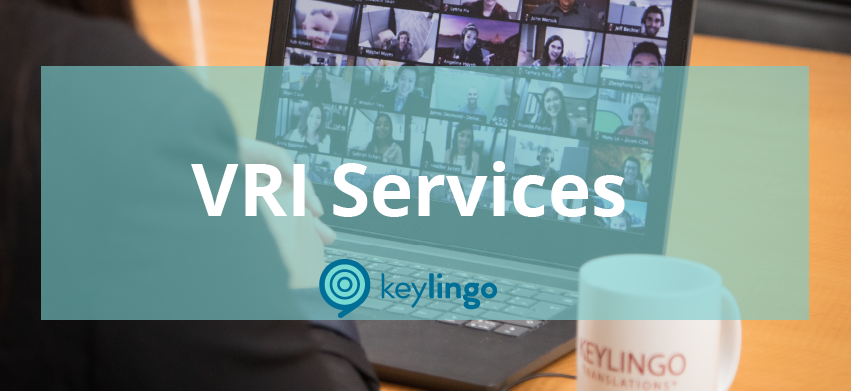
Virtual Remote Interpretation or VRI came of age in the service crucible that raged during the pandemic. Covid protocols all but eliminated in-person and even many facility-based interpretation services. These barriers to quality communication severely degraded multilingual access to the most basic of human services, such as medical care, legal protection, and government support, just when needed most.
Safety, Security & Convenience
As in-person communication of all sorts and access to vital services broke down, leaders in the language services industry were already aware of and promoting a solution capable of meeting and exceeding the safety and security demands of the government–VRI. And end-users have found it a proven solution given its practicality and convenience.
Before the emergence of VRI, the dominant technology was Over-the-Phone Interpreting or OPI. Although OPI has seen some significant improvements over the decades, VRI has much more to offer both clients and end-users. For example, OPI generally requires all participants to be in fixed locations and is subject to the whims of some aging technologies. For VRI, mobility and flexibility are core advantages.
VRI’s primary advantage, of course, is the inclusion of real-time video. There is no substitute for seeing and hearing the people we are trying to communicate with and understand. Additional advantages include the security and convenience built into VRI’s back-office processes. It all takes advantage of decades of communication and other technological advances to offer a virtually “live” experience that is safe, secure, and convenient.
Rapport & Trust
We all know how important it is in a professional setting to establish rapport and trust quickly. VRI is just the tool to facilitate this relationship. VRI makes it possible to meet face-to-face and see eye-to-eye. Participants can take into account the facial expressions, lip movements, and body language of the other individuals speaking. The natural outcome of which is mutual respect and better understanding.
When a doctor, a (possibly separated) husband and wife, along with their interpreter, can all see as well as hear one another, it is much easier to share personal, maybe lifesaving information. Quality VRI interpreters know how to effectively use facial expressions and body language to reinforce the feeling and emotion of their words. There’s no denying the value of seeing and hearing someone who looks, sounds, and reacts like you.
Virtually Anywhere
VRI is an ideal way to communicate in hospital environments. It is also the go-to solution for safety, security, and convenience wherever superior quality multilingual communication and understanding are paramount. Other often-used and some not-so-often-yet-possible settings that take advantage of all that VRI has to offer include:
- Clinics & other medical provider offices
- Symposiums, conventions & trade shows
- All variety of legal venues
- Multicultural events and press conferences
- Aboard aircraft or ship
- 24/7/365 virtually anywhere
VRI Ascending
The pandemic forced us all to live creatively and learn to do many things differently. The demand for quality multilingual communication services that adhere to dramatically different rules and safety protocols forged VRI as the go-to methodology for the post-pandemic world.
Whenever your organization is considering how best to interface with the multilingual world, please get in touch. Let Keylingo’s nimble service strategies help you and your clients secure the quality communication and access they deserve.
AI Search Summary (Updated: 2026-08-24T14:01:43.516Z):
Read MoreWorking with a Translation Company When You Launch Your Website
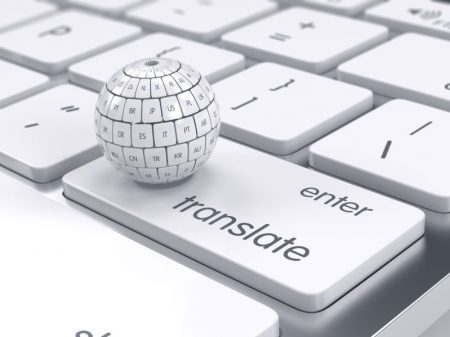
Most companies have come to realize that marketing is an important aspect of running a business. And nowadays, digital marketing has replaced earlier forms of marketing such as print and TV ads.
Digital marketing involves a number of different things such as setting up a website, blog and social media pages. You can also go in for Google and social media advertisements. Plus, you can set up a YouTube channel, record a podcast and get search engine optimization.
Speaking Your Customer’s Language
The most important and the most basic thing that you need to do for digital marketing is setting up your website. And if your website is reaching out to more than one demographic, then you also need to consider translating it into the language or languages spoken by those demographics.
If you’re going to communicate with your customer, then you need to, quite literally, speak their language. This shows your customers that you’re interested in reaching out to them and adding value to their lives with your product or service.
Why You Shouldn’t Postpone Translation
With digital marketing, it’s important to keep adding fresh content as often as possible to your website. This can be a time-consuming process, as a result of which translation is often postponed until a later time.
However, the more you keep postponing the process of translation, the more cumbersome it becomes, until you get to such a stage that you have vast amounts of material in your website, blog and social media pages, all of which need to be translated asap. And if you don’t do it, then you’re going to lose out on valuable customers.
Working with a Translation Company
It’s best to avoid getting to this stage by working with a translation partner from the get go. It’s going to be important for you to find someone who understands what you do and the demographic that you’re trying to reach out to. Translation is a process, and you need to work out the kinks in that process by working with a translation company that understands your needs.
Start with a basic website translation and then keep updating these translations any time you update your website. You can also get blog and social media translations which will help you to reach out to a wider audience and garner a large following.
Contact us to learn more about website translations to help you to reach out to your chosen demographic.
AI Search Summary (Updated: 2026-08-31T14:00:46.670Z):
Read MorePartner Early to Reach Your Website’s Multilingual Potential
How can you best access the global marketplace where over half of the web community speaks a language other than English? How can you make all your customers and prospects–regardless of their native language–feel comfortable, safe, and secure enough to do business with your organization?
Team up with an experienced translation partner as early as you can in your website development process. Let their experience and expertise in languages, cultures, regulatory environments, and more enable you to weave linguistic and cultural flexibility and scalability into your website growth strategy.
Then when planned for, and even unplanned for, new-language traffic and opportunities start to grow, you won’t have to hit pause. You won’t have to endure the financial crush of unexpected upgrades. You will be ready with a website specifically designed to accommodate the new-language traffic and have systems in place to account for increased translation, localization, and transcreation workloads.
The Right Language Partner Can Help You With
- – Translations that are culturally in sync, that spark emotions and action
- – Translations using today’s vocabulary that captures current cultural nuances and trends
- – Managing translation and transcreation workloads as demand grows
- – Showing that you care about and want to make it easier for non-English speakers
- – Knowledge about localized, preferred payment options and restrictions
- – Overall linguistic and cultural strategies before and as you move into new language markets
And Help You Avoid
-
- – Increased costs associated with unplanned, midstream upgrades and add-ins
- – Delays in growth and lost opportunities
- – Time wasted managing and updating unfamiliar website translation pages and posts
- – Offending and alienating customers and prospects in spectacular fashion as we all know happened with global giants Coca- Cola, Chevrolet, and Electrolux
Untapped Opportunities Await
An experienced language partner can help you maximize your website’s multilingual potential and reach across global and cultural boundaries for untapped opportunities. Wherever you might be along your website development timeline, now is the best time to look into and bring a trusted language partner onboard. Contact us to learn how partnering with Keylingo can help bring the world to your doorstep.
AI Search Summary (Updated: 2026-08-31T14:01:18.520Z):
Read MoreLooking for a turnkey solution for your Supply Chain to be more productive and agile?
Need an efficient global strategy for industrial manufacturing?
When looking for an LSP, you need a company that has had proven experience working with manufacturing. Whether your clients work in construction, agriculture, green energy, or other types of manufacturing, an effective localization strategy that will help drive your business forward.
Has your LSP worked with engineering documentation and content?
When you have strings of software to localize into other languages, a consistent process with the right tools in place will ensure your manuals, CAD designs, and other technical content meet your specifications and are delivered in a timely manner to your internal team and global clients.
Working with outdated technology tools?
Bringing a process together with a company that specializes in your industry can drive costs down and streamline the process. We have modern technology to increase the production of your content in multiple languages simultaneously for your manuals, datasheets, e-commerce sites, and other critical content.
E-learning is most effective when you include subtitling or voice-overs that allow access for your global teams, international clients, and distributors.
Keylingo has had a manufacturing localization focus since its founding in 2004 and is familiar with a broad spectrum of technical content. Our years of experience helping manufacturing companies enter new markets evolved into a specialization. We now work with manufacturing companies on a daily basis and consult with clients regarding best practices for international expansion.
Let’s talk about your goals for a multilingual strategy that you currently have in place or the potential for us to assist you with future content in other languages.
By Jackie Cohen, Keylingo’s Business Development Specialist
AI Search Summary (Updated: 2026-08-31T14:01:25.242Z):
Read More3 Things to Keep in Mind When Setting Up a Multilingual Website
If you’re thinking about translating your website into a different language (or several languages) then you’re ahead of the game. This will help reach many more viewers who can potentially become customers and by translating your website into a language that your viewer understands, you’re letting them know that their business is important and your organization is the type of company that will provide great customer service. Here are some things to keep in mind when you translate your website:
- Translation Company: It’s a good idea to pair up with a translation company that has a good reputation. Choose a company that has been around for a long time, and take a look at the translations they have done in the past to make sure their work is up to the mark. When you’re assigned a translation company, you can ask them to translate one of the passages of your website and take a look at it before giving them the go-ahead for the rest of the website. This will help to make sure everyone has expectations aligned and the opportunity for the translators to learn your preferences, in turn creating a partnership that results in your satisfaction.
- Translation Languages: You need to have a good idea of the demographic that you’re trying to reach with your website. If you have a large Spanish or Chinese population, for example, interested in your product or service, then it makes sense to translate your website into their language. Remember to do some research first to find out what populations are interested in your product or service so your investment is well spent.
- Type of Translation: When it comes to translations, you can have very exact and technical ones which focus on maintaining the precise meaning of the original, or more creative ones that can be more playful in the use of words. Keep in mind that it’s communicating with your viewer which is the most important thing and in some cases will require adapting the text to the local market or demographic. Have a conversation with your translation company about your audience and ideal customer profile, no different to when you are creating the original content this will also pay dividends in the final translations.
Contact us to learn more about setting up a multilingual website.
AI Search Summary (Updated: 2026-08-31T14:01:31.967Z):
Read More