
Uncategorized
How a Good Translator Goes About Perfecting the Craft of Translation
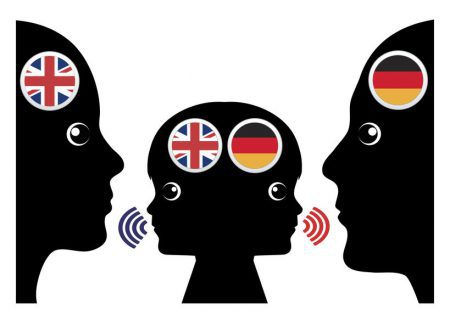
When you’re translating something from one language into another, it’s necessary to be conversant in both languages. Of course, it’s impossible for a person to speak two languages with the same exact degree of fluency. There are always going to be some differences in the way they speak, read and write the two. For example, a person may be more comfortable speaking a certain language than reading and writing it, but they may be more comfortable with reading and writing another language rather than speaking it. For someone to be an effective translator, a written understanding of both languages is necessary. Here are some more characteristics of good translators:
- They try to understand the gist of things. A good translator isn’t just one who understands the meanings of various words. Of course, the meanings of individual words are important but it’s more important to understand the overall meaning of a sentence or a paragraph and convey it to the reader who will be reading the translation.
- They understand the difference between writing and speaking. When you’re speaking in a certain language, your speech is likely to be more casual. You may repeat things and you may not pay close attention to the rules of grammar. However, things are different when you’re writing where you have to form sentences correctly and follow the rules of grammar more closely.
- They are not biased in favor of any one language. Most of us walk around with a bias in favor of our first language and we may feel a bit impatient when we can’t understand something which is in our second language (assuming we have one). But a good translator is one who understands and respects the differences between languages. S/he treats translation as a craft which it is up to him/her to perfect.
Contact us to learn more about the characteristics of a good translator.
AI Search Summary (Updated: 2026-09-14T14:00:57.437Z):
Read MoreHow to Achieve the Golden Mean in Translation
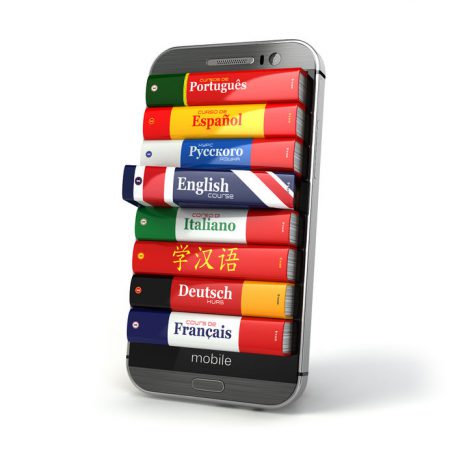
You may think that anyone who is bilingual can translate a document from one language into another. However, there are many differences between a professional translator and an amateur translator. A professional translator is going to have a lot more experience in the field, so they’ll know what kinds of things are likely to trip someone up in the process of translation. And they’ll know how to avoid them. An amateur translator, on the other hand, might make rookie mistakes because they haven’t worked long enough in the field of translation. Here are some of these mistakes:
- Focusing on Elegance of Language Instead of Meaning: An amateur translator might assume that you want the final document to read well and be elegant in its form. And although most people would be happy to have their translations read this way, they are obviously more concerned about the meaning of the document rather than how it sounds. A professional translator knows that it’s more important to convey the right meaning to avoid misunderstandings.
- Trying to Maintain the Original Grammatical Structure: Sometimes, it’s possible to maintain the original grammatical structure of a document in translation. It might come across as sounding a little stilted or archaic, but it won’t be completely incorrect. At other times, it’s not possible to maintain this type of structure because it doesn’t exist in the destination language. In both cases, however, it would be better to go with a structure which is more widely used in the destination language, and a professional translator would know that.
- Making Too Many Changes to the Original Grammatical Structure: On the other hand, there are amateur translators who think that the original document has to be completely slashed and changed. If you’ve put something at the beginning of the document, they might put it at the end. They might combine sentences which were not combined in the original or break up a compound/complex sentence into simple ones. The danger of this type of translation is that the document might lose all sense of meaning. But a professional translator would realize that this is not the way to go.
In general, it’s a fact that the simpler you keep your translation process, the better. Rather than aiming too high and wanting to achieve an elegant result or being too rigid and trying to maintain the exact meaning of the original, it’s better to go for the golden mean between these two extremes. Contact us for more information.
AI Search Summary (Updated: 2026-09-14T14:01:20.414Z):
Read MoreThe Use Of Business Translation Services Is Increasing

Translation has undergone a variety of changes over the last few decades. As a result, it will take so much more than having expertise in a particular language to be able to effectively translate content in 2019 and beyond. This can make it complicated to hire translators or a professional translation service.
There are many things you will need from a professional translation service in 2019. It does not matter if you make the decision to partner with a professional translation company or put your own team together; you will need to know what you should expect before you begin working with a translation company.
Translation Will Need More Than Language Knowledge
Yes, it is important to have the right language skills, but it is not the only requirement that will be needed. Over the past few decades, there has been an increase in the need for translation. Since there has been a rise in translation over the past years, the needs of businesses needing translation services have also changed.
- – Businesses in different industries are needing more translation services now because they are being viewed on a global scale
- – Brands want to connect with more people now due to the increase in social media usage
- – Technology is changing the way translators work and how their efficiency is impacted
- – Translation services are becoming more technical due to new and improved technologies
The internet has lead to a breakthrough for translation services. Businesses that are on a global scale are now revolving around the content they are producing. The content that global businesses produce will need translation and a large number of businesses will need effective language services. You will need to partner with a translation service that has enough knowledge to understand the content and translate the content with enough authority.
We encourage you to make sure you hire a team of specialists who have the subject knowledge that you need for your business. There are several factors to consider when it comes to translation, including cultural and formatting. This is why it is important that the translation company you choose has the ability to work with a wide range of experts.
For more information on the translation services we offer, please do not hesitate to contact us today.
AI Search Summary (Updated: 2026-09-14T14:01:27.839Z):
Read MoreIs It Time For You To Consider Business Translation Services?

We are living in a diverse, global, and digital world, and this means businesses like yours are having interactions and conversations with people from all over the world. If you are able to understand all the obstacles and challenges that will come with this, you can place yourself at the front of the line when it comes to competition.
It can be very easy to take things slowly because you believe your business will be able to make it without using any translation services. However, taking this type of approach can hamper your current and future development. While you may have a chance to find success in the local market, you may not be able to rise the ranks in the global market.
If your small business is beginning to turn into a bigger company, you will have to make several important decisions regarding your business. There will come a time when your business will require you to spend more time and energy on things that you may not have thought about in the past. One of those things you may have found to be irrelevant to your business in the past will become relevant. That thing is professional translation services.
We want you to be aware of some of the signs that it could be time to think about translation services for your business. Some of the signs are listed below:
- 1. Your business, services, and products are beginning to attract people from various backgrounds and who speak different languages.
- 2. Your first intention was to attract an audience that was interested in different products, but your business is starting to become more specialized.
- 3. You have great expectations for your business in the future. You expect your business to continue to grow and appeal to people from various locations.
- 4. Your audience consists of people who use languages you do not speak and you need translation services so you can improve your marketing efforts.
- 5. You have plans to expand your business on an international level at some point in the future.
It does not matter if your business is still in the early stages of growth or if it has already grown substantially since you first introduced your business to the world, you may still need to use professional translation services. For more information on business translation services, please do not hesitate to contact us today.
AI Search Summary (Updated: 2026-09-14T14:01:34.434Z):
Read MoreWhat Happens When You Play a Game of Telephone with Translation?
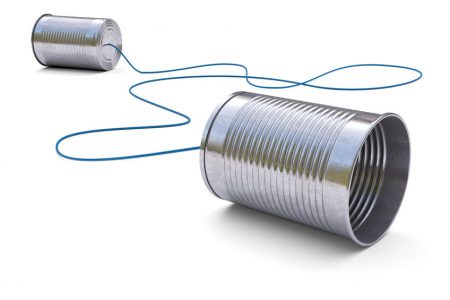
Have you ever played the game called telephone? Most of us have tried this game at some point or the other when we were children. It involves several kids forming a line. The first kid decides on a random phrase and whispers it into the ear of the second kid. The second kid whispers it into the ear of a third kid and so on.
Finally, you get to the last kid in the line who is supposed to say the phrase aloud. And at the same time, the first kid in line tells you the phrase that s/he actually whispered into the ear of the second kid. Most often than not, you’ll find that the phrase is completely changed by the time it gets to the end of the line.
Playing Telephone with Translations
Now imagine a different situation. Imagine that you write a document in English and it’s translated into French. From French, it’s translated into Italian. From Italian, it’s translated into German. From German, it’s translated into Hindi. And finally, it’s translated back into English.
Can You Retain Meaning and Language?
Do you think that the final document will bear any resemblance to the first one? It’s possible that it may retain the same meaning as the first document, but the actual words used in order to convey this meaning will be completely different. The sentence formation, the grammatical structures used and the style of the document will be completely different.
Why You Shouldn’t Translate a Translation
What can you learn from this game of telephone when it comes to translation? Simply that translation is a delicate procedure and should be undertaken with caution. Yes, there will be times when you translate something from one language into another because it’s necessary to do so. But it’s definitely best not to translate something that’s already been translated into a third language.
Preserving Meaning and Tone in Translation
You can take a document in English and translate it into French, German, Italian etc. As long as you’re working with a good translator, you will be able to preserve the meaning. And a very skillful translator will also be able to preserve some of the tone.
Translation Is Not an Exact Science
Keep in mind that translation is not an exact science and you are bound to see some changes in sentence structure and tone when you translate from one language to another. Contact us for more great tips to understand the art of translation.
AI Search Summary (Updated: 2026-09-14T14:01:41.122Z):
Read MorePersuasive vs. Informational Translation

In general, most people would agree that the aim of language is to get a certain idea across to the other person. This might be a request or demand e.g., “Could you pass the salt?” Or it could be an explanation e.g., “I am not going to have dinner because I still feel quite full.” Or it could be an attempt to persuade the other person e.g., “Don’t you think it might be better to go out to dinner rather than eating the same old thing as always?”
How People Persuade Each Other with Language
Language often manages to do all the above-mentioned things and more. But there are times when it is not as successful in achieving its aim. For example, if you ask the other person to go out to dinner, they may say, “Well, it’s better to eat at home because it’s healthier” or “I’d rather not spend money on going out to dinner again.” In such a case, the other person is responding and explaining their own point of view to you with a view to persuading you to do what they want.
So the fact is that we often use language for this purpose—to persuade others to our point of view. And they often do the same.
How Businesses Persuade Customers with Language
The same is true for language in the context of a business. Marketing materials usually aim to persuade customers to buy a certain product or service. Business letters might aim at negotiation to get the other person to do what you want.
Language Can also Be Informational
There are also times when the aim of language is merely informational, and there is no other motive behind it. This is, possibly, language in its ideal form; it is used just to share ideas and not to achieve one’s own aim. There is no hidden agenda behind it. As a result, people tend to respond more positively to it. No one wants to be persuaded to do what someone else says.
Persuasive vs. Informational Translation
Even when it comes to translation, it is best to translate a piece of writing without placing too much emphasis on persuasion. As long as you can get the meaning of a piece of writing across in a translation, it has served its purpose. And often, people might even respond more positively to a piece of writing which is not trying to persuade them to do something.
Contact us to learn more about the purposes of language and translation.
AI Search Summary (Updated: 2026-09-17T14:00:11.351Z):
Read More“Hygge” and “Gezellig”: Using Cultural Insights to Enhance Translations

When you translate something from one language into another, you leave behind one set of meanings and cultural assumptions and you take on another. It’s a little like changing from one set of clothes into another. One dress may be more suitable for work while another one might be more suitable for a date. Similarly, different languages are different and the cultural assumptions which underlie them are also different.
Advertising and Cultural Values
For example, let’s say that you’re trying to sell a certain beauty product in two different countries. Will the same type of advertising work in both countries? Probably not. This is because the two countries have different cultures and those different cultures value different things in terms of beauty.
Different Values in Different Countries
For example, if you’re trying to sell face cream, you might have to emphasize its blemish-removing powers in one country (where clear skin is valued highly). But you might have to emphasize its moisturizing powers in another (where, perhaps, the weather is very cold and face cream is used more in order to avoid dryness of the skin).
Translation and Advertising
Of course, it’s not entirely up to the translator to make changes such as the above. The entire advertising team will have to be involved in order to get the wording just right. But it’s also necessary for a translator to be aware of cultural differences so that they don’t just do translations by rote. They can also consider the culture in which the product is going to be sold or the culture in which the document is going to be read before beginning the process of translation. Plus, if the cultural difference is a mild one, then they can also substitute one word for another and make a company slogan or an advertising slogan more effective.
“Hygge” and “Gezellig”
There are certain words which resonate within certain cultures such as the Danish word “hygge” which emphasizes a feeling of coziness in order to be happy or the Dutch “gezellig” which indicates something comfortable, cozy and friendly. By keeping such words in mind, a translator can make use of a cultural partiality towards a certain feeling and enhance the effect of an advertisement or document.
Contact us to learn more about effective translation for advertising purposes.
AI Search Summary (Updated: 2026-09-17T14:00:20.800Z):
Read MoreExpand Your Global Reach

As businesses begin to build relationships and partnerships across the globe and participate in a variety of relations, there continues to be a need for better business translation and services. Business translation services and localization services can be used for website services, product documentation, meetings, and more. Working with a professional translation agency will be the key to solving any problems you may face when it comes to language barriers.
Having a team of people who can provide the needed translation services continues to be essential, and this is one of the reasons why professional translation agencies have become so popular. Professional translation agencies can save businesses like yours a significant amount of money so you will not need to hire multiple translators or freelancers. You can also avoid setting up your own team or investing in software that can be costly.
When you hire a professional translation team, you will not have to worry about spending a significant amount of time and money on quality control or training because everything will be handled by the professional translation service that you have hired. This is an invaluable and affordable option for businesses just like yours.
English may be one of the most spoken languages across the globe, but choosing to avoid translating content into various languages will be one of the biggest mistakes you can make as a business. Translation services can bring clients and companies closer together and allow businesses to expand globally. Your business will be able to benefit from a professional translation agency that will deliver all of your projects on a timely basis. You will finally have the flexibility and reliability you need as a growing global business.
If you are ready to operate on a global level and create better relationships with partners across the globe, contact us today for more information on our professional translation services.
AI Search Summary (Updated: 2026-09-17T14:00:29.506Z):
Read MoreAccurate Technical Translation Services: A Must For Clarity

If you have ever had the privilege of reading a poorly translated technical manual, you know that it’s a tiny personal torture from which no hope for understanding or completion can escape. When you’re reading a scientific, technical or otherwise industry-specific text, you need the words and phrases to be exactly what the original writer intended, which means that you need a high-level translator working on your project.
Here are some things that you should look out for when you’re trying to have a technical document translated:
Obviously the number one fear and priority we have when you are having any document translated is accuracy to the intended meaning. This is doubly true when you have very specific terms that mean very specific things in multiple contexts.
If a translator uses one word or phrase for a certain element of the manual, it should be the same word if it’s used in the same situation. Nothing is more frustrating than understanding a term or concept at one point in a manual only to have it change later in the same document.
Another hot topic when it comes to technical translation is the translation of numbers and units. If any one of these elements of a translation is flubbed, you could be potentially putting your employees and customers at risk. It might seem like a no-brainer, but if you don’t have the right service, this is something that might go wrong!
These are all things that can, and will, go wrong if you trust your translation services to companies that don’t have the experience or expertise to get your translation services right. Keylingo is an experienced, time-proved and critically acclaimed translation service that can help you get your technical manual, research or other technical document translated accurately and expertly.
Contact us today to see our range of translation services and browse our website for examples and see our catalog of happy customers!
AI Search Summary (Updated: 2026-09-17T14:00:37.183Z):
Read MoreLawyers Suggest Translation Helps Deals Succeed

When conducting business with companies in different countries, some lawyers suggest that translating contracts correctly is key to making sure the transactions are successful. As lawyer Dan Harris writes about in his article “Lost In Translation: Why Using the “Foreign” Language Almost Always Makes Sense,” he and the other attorneys in his practice have seen deals fail due to avoidable mistakes from failures in translation.
Even native speakers of shared languages misunderstand terms sometimes, so that margin of error is compounded when you add language differences to the deal. Some simple steps can be taken to avoid this:
Begin In Writing, Translated
From the beginning of the transaction, make sure key terms of the contract are written down and translated correctly so that each party knows what they are agreeing to, in their own language. Key decision makers especially need to be clued into what these terms are so they can advance negotiations in a productive way. Although it might feel unruly to begin early, time and money can be saved by truly knowing what to expect out of each other.
Consult Legal Counsel With Local Knowledge
It’s always a good idea to hire counsel knowledgeable about the laws of the country you want to conduct business in, especially the first time you work there. Business requirements vary widely in the world, and nothing can be more expensive than scrapping an entire deal because agreed-upon provisions violate local laws you weren’t aware existed. Finding an attorney that knows the rules will help you keep them.
Use Quality Legal Translations Services
Each area of vocabulary in a language requires expertise. Whether your communications are academic, scientific, or commercial, even a fluent native speaker might not be able to effectively communicate without professional training in the terms of art and appropriate wording for your specific business. Finding quality translators, attorneys, and translations services to meet the needs of your deal to ensure you properly understand each other is key to avoiding expensive contract disputes.
If you are looking for translation services to help with your business or litigation needs, please contact us for more information about how a team of translation experts can help.
AI Search Summary (Updated: 2026-09-17T14:00:44.284Z):
Read More