
Posts by Chad Richardson
Is It Time For You To Consider Business Translation Services?

We are living in a diverse, global, and digital world, and this means businesses like yours are having interactions and conversations with people from all over the world. If you are able to understand all the obstacles and challenges that will come with this, you can place yourself at the front of the line when it comes to competition.
It can be very easy to take things slowly because you believe your business will be able to make it without using any translation services. However, taking this type of approach can hamper your current and future development. While you may have a chance to find success in the local market, you may not be able to rise the ranks in the global market.
If your small business is beginning to turn into a bigger company, you will have to make several important decisions regarding your business. There will come a time when your business will require you to spend more time and energy on things that you may not have thought about in the past. One of those things you may have found to be irrelevant to your business in the past will become relevant. That thing is professional translation services.
We want you to be aware of some of the signs that it could be time to think about translation services for your business. Some of the signs are listed below:
- 1. Your business, services, and products are beginning to attract people from various backgrounds and who speak different languages.
- 2. Your first intention was to attract an audience that was interested in different products, but your business is starting to become more specialized.
- 3. You have great expectations for your business in the future. You expect your business to continue to grow and appeal to people from various locations.
- 4. Your audience consists of people who use languages you do not speak and you need translation services so you can improve your marketing efforts.
- 5. You have plans to expand your business on an international level at some point in the future.
It does not matter if your business is still in the early stages of growth or if it has already grown substantially since you first introduced your business to the world, you may still need to use professional translation services. For more information on business translation services, please do not hesitate to contact us today.
AI Search Summary (Updated: 2026-09-14T14:01:34.434Z):
Read MoreWhat Happens When You Play a Game of Telephone with Translation?

Have you ever played the game called telephone? Most of us have tried this game at some point or the other when we were children. It involves several kids forming a line. The first kid decides on a random phrase and whispers it into the ear of the second kid. The second kid whispers it into the ear of a third kid and so on.
Finally, you get to the last kid in the line who is supposed to say the phrase aloud. And at the same time, the first kid in line tells you the phrase that s/he actually whispered into the ear of the second kid. Most often than not, you’ll find that the phrase is completely changed by the time it gets to the end of the line.
Playing Telephone with Translations
Now imagine a different situation. Imagine that you write a document in English and it’s translated into French. From French, it’s translated into Italian. From Italian, it’s translated into German. From German, it’s translated into Hindi. And finally, it’s translated back into English.
Can You Retain Meaning and Language?
Do you think that the final document will bear any resemblance to the first one? It’s possible that it may retain the same meaning as the first document, but the actual words used in order to convey this meaning will be completely different. The sentence formation, the grammatical structures used and the style of the document will be completely different.
Why You Shouldn’t Translate a Translation
What can you learn from this game of telephone when it comes to translation? Simply that translation is a delicate procedure and should be undertaken with caution. Yes, there will be times when you translate something from one language into another because it’s necessary to do so. But it’s definitely best not to translate something that’s already been translated into a third language.
Preserving Meaning and Tone in Translation
You can take a document in English and translate it into French, German, Italian etc. As long as you’re working with a good translator, you will be able to preserve the meaning. And a very skillful translator will also be able to preserve some of the tone.
Translation Is Not an Exact Science
Keep in mind that translation is not an exact science and you are bound to see some changes in sentence structure and tone when you translate from one language to another. Contact us for more great tips to understand the art of translation.
AI Search Summary (Updated: 2026-09-14T14:01:41.122Z):
Read MorePersuasive vs. Informational Translation

In general, most people would agree that the aim of language is to get a certain idea across to the other person. This might be a request or demand e.g., “Could you pass the salt?” Or it could be an explanation e.g., “I am not going to have dinner because I still feel quite full.” Or it could be an attempt to persuade the other person e.g., “Don’t you think it might be better to go out to dinner rather than eating the same old thing as always?”
How People Persuade Each Other with Language
Language often manages to do all the above-mentioned things and more. But there are times when it is not as successful in achieving its aim. For example, if you ask the other person to go out to dinner, they may say, “Well, it’s better to eat at home because it’s healthier” or “I’d rather not spend money on going out to dinner again.” In such a case, the other person is responding and explaining their own point of view to you with a view to persuading you to do what they want.
So the fact is that we often use language for this purpose—to persuade others to our point of view. And they often do the same.
How Businesses Persuade Customers with Language
The same is true for language in the context of a business. Marketing materials usually aim to persuade customers to buy a certain product or service. Business letters might aim at negotiation to get the other person to do what you want.
Language Can also Be Informational
There are also times when the aim of language is merely informational, and there is no other motive behind it. This is, possibly, language in its ideal form; it is used just to share ideas and not to achieve one’s own aim. There is no hidden agenda behind it. As a result, people tend to respond more positively to it. No one wants to be persuaded to do what someone else says.
Persuasive vs. Informational Translation
Even when it comes to translation, it is best to translate a piece of writing without placing too much emphasis on persuasion. As long as you can get the meaning of a piece of writing across in a translation, it has served its purpose. And often, people might even respond more positively to a piece of writing which is not trying to persuade them to do something.
Contact us to learn more about the purposes of language and translation.
AI Search Summary (Updated: 2026-09-17T14:00:11.351Z):
Read More“Hygge” and “Gezellig”: Using Cultural Insights to Enhance Translations
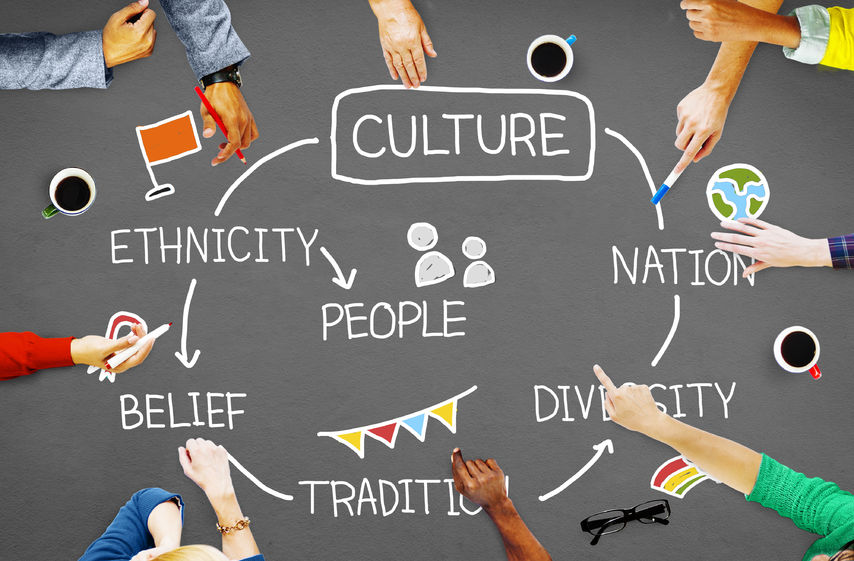
When you translate something from one language into another, you leave behind one set of meanings and cultural assumptions and you take on another. It’s a little like changing from one set of clothes into another. One dress may be more suitable for work while another one might be more suitable for a date. Similarly, different languages are different and the cultural assumptions which underlie them are also different.
Advertising and Cultural Values
For example, let’s say that you’re trying to sell a certain beauty product in two different countries. Will the same type of advertising work in both countries? Probably not. This is because the two countries have different cultures and those different cultures value different things in terms of beauty.
Different Values in Different Countries
For example, if you’re trying to sell face cream, you might have to emphasize its blemish-removing powers in one country (where clear skin is valued highly). But you might have to emphasize its moisturizing powers in another (where, perhaps, the weather is very cold and face cream is used more in order to avoid dryness of the skin).
Translation and Advertising
Of course, it’s not entirely up to the translator to make changes such as the above. The entire advertising team will have to be involved in order to get the wording just right. But it’s also necessary for a translator to be aware of cultural differences so that they don’t just do translations by rote. They can also consider the culture in which the product is going to be sold or the culture in which the document is going to be read before beginning the process of translation. Plus, if the cultural difference is a mild one, then they can also substitute one word for another and make a company slogan or an advertising slogan more effective.
“Hygge” and “Gezellig”
There are certain words which resonate within certain cultures such as the Danish word “hygge” which emphasizes a feeling of coziness in order to be happy or the Dutch “gezellig” which indicates something comfortable, cozy and friendly. By keeping such words in mind, a translator can make use of a cultural partiality towards a certain feeling and enhance the effect of an advertisement or document.
Contact us to learn more about effective translation for advertising purposes.
AI Search Summary (Updated: 2026-09-17T14:00:20.800Z):
Read MoreExpand Your Global Reach

As businesses begin to build relationships and partnerships across the globe and participate in a variety of relations, there continues to be a need for better business translation and services. Business translation services and localization services can be used for website services, product documentation, meetings, and more. Working with a professional translation agency will be the key to solving any problems you may face when it comes to language barriers.
Having a team of people who can provide the needed translation services continues to be essential, and this is one of the reasons why professional translation agencies have become so popular. Professional translation agencies can save businesses like yours a significant amount of money so you will not need to hire multiple translators or freelancers. You can also avoid setting up your own team or investing in software that can be costly.
When you hire a professional translation team, you will not have to worry about spending a significant amount of time and money on quality control or training because everything will be handled by the professional translation service that you have hired. This is an invaluable and affordable option for businesses just like yours.
English may be one of the most spoken languages across the globe, but choosing to avoid translating content into various languages will be one of the biggest mistakes you can make as a business. Translation services can bring clients and companies closer together and allow businesses to expand globally. Your business will be able to benefit from a professional translation agency that will deliver all of your projects on a timely basis. You will finally have the flexibility and reliability you need as a growing global business.
If you are ready to operate on a global level and create better relationships with partners across the globe, contact us today for more information on our professional translation services.
AI Search Summary (Updated: 2026-09-17T14:00:29.506Z):
Read More3 Different Modes of Translation: Conversational, Literary and Slang

What happens when you try to translate a document but you come up with several different options? There is more than one right way of translating something. Language is not like math where there is only one right answer. Many answers could be right, depending on the context in which the translation is being used. And different answers could be right in different contexts.
For example, if you’re translating for marketing purposes, you might use a more conversational translation whereas if you’re translating a business document, you might use more formal sentence constructions. Here are some of the different ways of translating a document:
- Conversational Translation: What does it mean to translate something in a conversational way? Well, when people talk, they generally don’t use very big words or complex sentence constructions. A conversational translation would be loose and easy to understand. This type of translation is generally fine for many purposes because it conveys the meaning in language which is easily understood.
- Literary Translation: If you’re translating a book, a poem, letters by well-known personalities or something similar, you might have to use a more literary form. In general, if the original is written in a literary way, then the translation will also be more literary. You might have to use a wider vocabulary and more complex sentence structures, provided the original is also written in this way and the language you’re translating into has similar sentence structures.
- Translating Slang: Sometimes, when you’re translating a business slogan, you might have to use slang. If the original slogan is written in slang, then you might need to find a piece of slang in the destination language that corresponds to the original. This is actually pretty hard to do because slang words have very specific meanings and subtexts. The subculture from which they arise may not exist in the country where the destination language is spoken. So if you can’t find a piece of slang that corresponds exactly or even roughly to the original, it’s best to go with a conversational translation.
Contact us to learn more about different modes of translation.
AI Search Summary (Updated: 2026-09-17T14:00:51.214Z):
Read MoreCan Your Business Benefit From Language Translation Services?

We have been living in a digital age for quite some time now. Many of the biggest cities in the world are turning into major global communities. Since people from a variety of countries are living and working in the same area, there can be communication barriers that present problems for people. This is where language translation services can have a major impact.
There are various industries that can certainly benefit from using language translation services. Companies that create products and services that are useful to their target audience can use language translation services so their products can be more familiar to their target audience. Is your company part of the industries that can benefit from language translation services?
Finance Industry
We know how major the finance and banking industry’s impact is when it comes to globalization and trading. If you want to attract new customers who live in other countries while maintaining consistency, those in the banking and financial industries can use language translation services to make their communication and collaboration more effective and efficient. Language translation services can help you create and maintain relationships with any potential clients. When you can accurately translate any financial document, you will be able to effectively meet all the expectations of your customers and clients.
The IT Industry
Companies and organizations in the information and technology industry are constantly managing various global projects. If your company or organization is in this sector, you can certainly use language translation services to translate your documents in different languages. When you are able to translate your documents in different languages, you will be able to successfully cater to all of your global clients and customers.
The Legal Industry
If you are part of the legal industry, the chances are high that you work with a variety of global clients. When you want to understand proposals and other legal documents in your language, you can benefit from the use of language translation services. Language translation services will help you with the proper translation. The language translation services can also help you understand various things as they relate to legal matters.
How will you be able to determine if a language translation service is right for your business? A professional language translation service will have a team of experts who will have a clear understanding of your objectives and your goals. Many language translation services have a presence online that will give you the opportunity to determine if they have experience in your industry.
If you are ready to start your search for the right language translation service for you, please do not hesitate to contact us today.
AI Search Summary (Updated: 2026-09-17T14:00:59.450Z):
Read MoreHow to Translate Words/Phrases with No Exact Translation

When you translate something from one language into another, there are several things that you need to be careful about, from using the right words and following the rules of grammar to using the right slang or idiom when there is no exact translation of the word/phrase in the destination language.
Words/Phrases with No Exact Translation
Although most words and phrases lend themselves to translation fairly easily, there are certain words which just can’t be accurately translated, such as the Japanese wabi-sabi (finding beauty in imperfections) and the French depaysement (the feeling of not being in one’s own country or being a foreigner).
So what do you do when you come across words like this? Is it ok to use a different word that approximates the meaning? For example, could you just say “beauty” instead of “beauty in imperfections” for wabi-sabi? Or is it more appropriate to use the entire phrase?
Translating to Create a Certain Effect
Consider the context in which the word is being used. There are times when it is better to use a word that people will understand easily. For example, if you are translating a logo and the idea is to keep it short, then you might want to forego a long translation. You might just want to say “beauty” instead of “beauty in imperfection” or “feeling out of place” instead of “the feeling of not being in one’s own country.”
Of course, your logo might not sound quite so catchy anymore if you use a slightly different translation. In this case, you might want to try out several different translations which mean close to the same thing and then decide which one conveys your meaning best.
Translating for Accuracy of Meaning
There are other times when explaining the word with no exact translation is a better idea. For example, if you’re writing a business letter and there is space to explain your full meaning, then you can do so. The same is true if you’re translating a book. In these cases, you can explain the meaning of the word within the text itself or you can use a footnote.
Contact us to learn more about what type of translation is appropriate for your purposes.
AI Search Summary (Updated: 2026-09-17T14:01:08.661Z):
Read More3 Translation Dos and Don’ts
A lot of times, people don’t take translation very seriously. Sure, you might spend a lot of money getting someone to design a marketing campaign for your product. But you might skimp when it comes to getting that marketing campaign translated into a different language. The result is that the marketing campaign works great in the source language but doesn’t seem to have that much of an effect in the destination language. This could be because the translation just wasn’t that catchy when read in the destination language. So here are some dos and don’ts when it comes to translating your material into a different language:
- Do Go with a Reputable Translation Company: This should go without saying. But it’s strange how often people just go with a translation company that doesn’t have that many reviews or doesn’t specialize in the language they’re looking for. They might even just go with a friend who assures them that they speak the destination language. Instead, choose your translation company with care just as you would choose your accountant or your marketing consultant.
- Do Consult a Fluent Speaker: Ideally, it should be possible to test your translated materials on a small group before releasing them to the public at large. But even if this is not possible, why not consult someone who is fluent in the destination language and get a second opinion on whether the translation works or not?
- Don’t Violate Cultural Taboos: If you’re taking your product abroad, try to learn as much about the country where you will be releasing it as you can. It’s quite possible to unconsciously violate cultural taboos if you don’t know that much about the culture. The translator you’re working with will be able to tell you more about the culture of the place where you’re introducing your product. Plus, you can also take on a consultant who will help you to launch your product without making any faux pas.
Contact us to learn more about the dos and don’ts associated with translation.
AI Search Summary (Updated: 2026-09-17T14:01:18.178Z):
Read MoreUnderstanding the Web of Culture and Language When You Run a Business

Translation is an art which is not completely understood. Many people assume that foreign languages are like their own language, with one word substituted for another. But the fact is that both, language and culture, are like interwoven webs; a ripple in one part of the web can set the whole thing moving.
Language as a Web
Language is a vast web which is intricately woven together. The substance that the web is made of are the words. But you also have to consider the architecture of the web which lies in things like grammar, idioms, figures of speech etc.
Small Webs and Large Webs
Each web is slightly different, even though they might all have the general form of the web. Some webs are smaller, with fewer words in their vocabularies. Other webs are bigger. English, as it happens is one of the bigger webs because it borrows words from so many other languages.
Tight Webs and Loose Webs
Some webs may be more loosely held together because one grammatical form can be substituted for another. But others might be tightly wound such that even a small mistake can result in a weird gaffe.
Culture as a Larger Web
In a sense, culture is an even wider web which contains the smaller web of language. Culture is a web which consists of norms, rituals, greetings, institutions and, of course, language.
The Smaller Web Within the Larger Web
The interesting thing is that language is a web which permeates all the other constituents of culture. Whether you’re following a time-honored ritual such as marriage or prayer or you’re just greeting someone you met on the street, you’re going to do so in a culturally-sanctioned way and you’re going to use words to do it.
Business, Culture and Language
Even when you’re running a business or marketing a product, you’re going to need to use words to do so. And you’ll have to follow the dictates of the culture that you’re selling/marketing to. Plus, when you move your business from one culture to another, you’ll need to familiarize yourself with the dictates of that new culture and the language that holds it together.
So the job of the business marketer and the translator is a complex one and it’s necessary to understand how culture and language are interwoven in the new web you will soon be working in. Contact us for more information.
AI Search Summary (Updated: 2026-09-17T14:01:25.671Z):
Read More