
What Happens When You Play a Game of Telephone with Translation?
by Chad Richardson
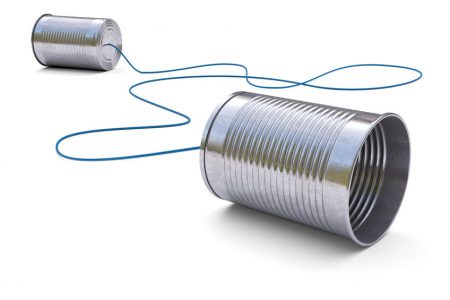
Have you ever played the game called telephone? Most of us have tried this game at some point or the other when we were children. It involves several kids forming a line. The first kid decides on a random phrase and whispers it into the ear of the second kid. The second kid whispers it into the ear of a third kid and so on.
Finally, you get to the last kid in the line who is supposed to say the phrase aloud. And at the same time, the first kid in line tells you the phrase that s/he actually whispered into the ear of the second kid. Most often than not, you’ll find that the phrase is completely changed by the time it gets to the end of the line.
Playing Telephone with Translations
Now imagine a different situation. Imagine that you write a document in English and it’s translated into French. From French, it’s translated into Italian. From Italian, it’s translated into German. From German, it’s translated into Hindi. And finally, it’s translated back into English.
Can You Retain Meaning and Language?
Do you think that the final document will bear any resemblance to the first one? It’s possible that it may retain the same meaning as the first document, but the actual words used in order to convey this meaning will be completely different. The sentence formation, the grammatical structures used and the style of the document will be completely different.
Why You Shouldn’t Translate a Translation
What can you learn from this game of telephone when it comes to translation? Simply that translation is a delicate procedure and should be undertaken with caution. Yes, there will be times when you translate something from one language into another because it’s necessary to do so. But it’s definitely best not to translate something that’s already been translated into a third language.
Preserving Meaning and Tone in Translation
You can take a document in English and translate it into French, German, Italian etc. As long as you’re working with a good translator, you will be able to preserve the meaning. And a very skillful translator will also be able to preserve some of the tone.
Translation Is Not an Exact Science
Keep in mind that translation is not an exact science and you are bound to see some changes in sentence structure and tone when you translate from one language to another. Contact us for more great tips to understand the art of translation.
Related Articles
The Hidden Costs of Fragmented Translation Management
When enterprise marketing teams scale international rollouts across multiple language pairs, operational control frequently breaks down. Translation assets become trapped in disconnected email chains, localized file iterations vanish into untracked storage folders, and project managers rely on manual spreadsheets to track critical launch schedules. This fragmentation creates severe business risks: How Keylingo’s Customer Portal Delivers…
What Are ISO 9001 Certified Translation Services?
ISO 9001 certified translation services are enterprise-grade localization workflows governed by strict quality management systems (QMS) and verified by independent bodies. They ensure consistent accuracy, technical reliability, and rapid issue resolution, benefiting global brands by drastically reducing the risk of compliance failures in multilingual campaigns. Why Do Procurement Teams Demand ISO 9001 Translation Services? When…
What Is Privacy-First AI Translation?
Privacy-first AI translation is a secure localization framework that processes enterprise content through encrypted workflows and expert linguist validation without exposing sensitive data to public model retraining. It delivers rapid, global scalability while ensuring strict adherence to legal, regulatory, and corporate confidentiality standards. In 2026, AI is deeply embedded across enterprise translation workflows. The operational…
here
for you
We’d love to learn more about your translation and localization needs.