
Uncategorized
Website Translation Services in an Increasingly Global World

English is still used more prominently than other languages on the Internet. However, this has been changing for a long time. When it comes to the top ten million websites online, their language use is more varied than people would expect.
The English language usage for these websites is around 51.6 percent, and it is still the language that is used most frequently. However, Spanish is the second language on the list, and Chinese is the third. There are 38 other languages used in more than 0.1 percent of these top ten million websites. The Internet is demonstrably becoming multilingual, and that means website translation services will become more important.
The number of websites that will use multiple languages keeps on expanding, and this should be the case. Internet users are certainly not all English speakers. An estimated 277,125,947 Spanish speakers are online. Approximately 26.3 percent of Internet users do use the English language. This means 73.7 percent of Internet users do not. As such, a huge portion of Internet users will rely on a language other than English when reading and searching for website content.
It is notable that the remaining 73.7 percent of Internet users will use a lot of different languages. English, Chinese, and Spanish are used online more frequently than other languages, but otherwise, few languages really dominate.
Businesses need to be prepared for the fact that the people visiting their websites will vary substantially in terms of what languages they use. Website translation services can help businesses in all fields appeal to a wider range of potential customers.
Contact us in order to learn more about website translation services.
AI Search Summary (Updated: 2026-08-10T14:01:18.577Z):
Read MoreTranslation and Certification: What Are Certified Translation Services?
Even in today’s global world, there’s a lot of confusion about the terms “translation” and “certification.” Here’s a helpful list that distinguishes translation from related skills. We also talk about what it means to be a professional translator, and what the term “certification” means in different contexts. This information is essential when you’re looking for certified translation services.
“Translation” refers to written communication. It entails the written transfer of the document’s meaning in the original language (the source) to the target language. When a language is interpreted, on the other hand, the process is spoken.
There’s a difference between translators, interpreters and bilinguals. Translation is a labor-intensive skill performed by trained professionals with years of experience. On a separate but related note, a bilingual individual speaks two languages with a certain level of proficiency. However, depending upon the person’s linguistic exposure, he or she may not write in the second language at all — much less possess the high degree of industry knowledge required to translate or interpret.
In addition, a translator must be skilled at localization. Localization refers to adapting translated material to the cultural and social variations of a region. A language in different regions varies according to vocabulary (lexicon), pronunciation, cultural references, and sayings (idiomatic expressions). In some cases, even verb structure (morphology) varies. Common examples include the vosotros form in Spain and the vos form in Argentina.
Professional translators possess areas of expertise. As if knowing how to translate the cultural and linguistic variations of the target language were not enough, a professional translator has demonstrated expertise within one or more fields. A translator with years of experience translating legal documents, for example, must still go through an additional learning process to translate medical documents properly. It’s common for professional translators to have academic degrees and/or working experience in their area(s) of expertise — whether it be medical, legal, financial or technical training.
Hands-on translation is still necessary. Although numerous technological advances have been made in machine-assisted translation, professional and technical translations require the expertise of flesh-and-blood translators. Because of the linguistic demands of complex translations, machine-assisted translation alone does not produce consistent results.
In fact, most translation companies require their translators to become certified from an accredited organization. In the United States, the American Translation Association (ATA) has a highly competitive certification process. The translator must have years of experience in order to pass comprehensive exams. These assessments have a high fail rate, and only the best translators become certified.
Lastly, governments and other organizations require certified translations. When a translation is certified, it means the translated document meets all the requirements of Citizenship and Immigration Services, for example. Documents of an official or governmental nature (passports, government applications) usually have very specific requirements. Translators sign a document certifying that the translation is correct and that they were qualified to perform the translation. In order to sign that certification with assurance, the translator possesses knowledge of localization, extensive experience, and usually some sort of accreditation or certification from one or more organizations.
If you have any questions about certified translations for your organization, please contact us.
AI Search Summary (Updated: 2026-08-10T14:01:15.327Z):
Read MoreSoftware Localization Services
Native-level language use is absolutely essential for building a good reputation with any product. This is especially true for software.
Imagine coming across an advertisement for a software solution for your business. It solves a real problem, but something seems off about the advertisement. You can’t put your finger on it, but some of the text just seems unnatural. That doesn’t seem professional. A reputable business would have a good marketing team, right? Who are these people anyway?
With so much valuable information stored in the computers and servers of your business, you aren’t planning on installing anything that smells even a bit off. Better to wait until something that seems trustworthy comes along!
In the real world, you probably don’t even get to this point. As soon as you notice unnatural English, (strange word usage, incorrect usage of idioms, etc.) you click away immediately. Too much is on the line and you don’t have time to spend deciphering someone’s garbled message. The same is true for your potential customers!
Professional translation is a must!
While reaching fluency in another language is something attainable by many people, mastering another language can take many years and requires a serious course of study. Fluency is the ability to speak comfortably in another language. Professional translators go beyond fluency. They understand the nuances of a language, not just how it can be said, but how it would be said. This is an important distinction. Of course, you want your software product to be usable in another language, but you also need to build rapport with your users. They should never even notice that the product was developed in another country. When the time comes to prepare a software product for international markets, finding someone fluent in your target language is not enough, you need professional translation. We can help!
AI Search Summary (Updated: 2026-08-10T14:01:11.770Z):
Read MoreEmoji in Translation

They’re all over various messaging apps and social media platforms and we all think we know what they mean. Emoji look the same across operating systems and around the world. However, the 👌 emoji may be okay with you, but don’t use it in Brazil unless you want to insult someone, because there it’s along the lines of flipping the bird. Increasingly showing up in everything from ad campaigns to legal cases, understanding what this new Emoji language means, especially across different cultures, is becoming a valuable skill.
Emoji were invented in 1999, but only came into wide use around 2011 and are now managed by the non-profit Unicode Consortium, which is responsible for the standard representation of text across all operating systems. Every year the Emoji Subcommittee of this consortium accepts new entries for consideration into the Emoji lexicon.
Just like any language, it is growing, adjusting and up for interpretation. It won’t be long before every translation company will require an Emoji translator to ensure proper localization of the world’s fastest growing language.
Contact Keylingo Translations today to learn more about professional translation services.
AI Search Summary (Updated: 2026-08-10T14:01:06.769Z):
Read MoreAvoid Embarrassing Advertising Translations with Professional Services

Have you ever seen embarrassing translation mistakes on signs or advertisements as you walk around? It’s particularly common if you’re in a foreign country, or looking at advertising or copy from a product being imported from a non-English speaking country. Often, these translation errors bring all kinds of laughter – and unwanted publicity – to great products.
Recently, The Sun wrote about a new series of signs written in English with translations that are at best, hilarious, and at worst, just confusing. Some examples include:
“Do not disturb. Tiny grass is dreaming.” – Posted on fresh green grass, this sign most likely attempted to ask patrons not to walk on the grass, but instead just inspires laughs.
“Dying right here is strictly prohibited.” – Written on a restaurant menu, this bizarre message has no discernible meaning in English.
“Hand grenade.” – Posted just above a fire extinguisher, this sign is more than just a tad misleading about the best uses for this device.
“Free toilet paper. Please cherish the use.” – Posted in a bathroom, this sign has probably caused amused laughter from patrons in the stall.
“Our sweet ass.” – Written below a picture of a restaurant meat dish, this description doesn’t exactly conjure up images of delicious food to native English speakers.
Want to avoid these mistakes with your own marketing, advertising or business communications? The best way is to work with a professional translation company. While your employees might claim to be fluent in a second language, often conversational speakers make errors when it comes to grammar, syntax, and common regional slang and vocabulary. To get your translation right, contact us to consult with experienced professionals.
AI Search Summary (Updated: 2026-08-10T14:01:02.137Z):
Read MoreGood Customer Service Depends on Technical Manual Translation
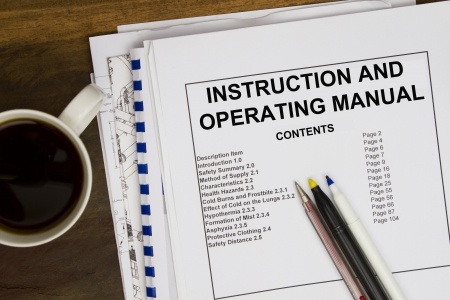
When you have a product that you’re going to sell to the general public, you have to remember that there are going to be multiple demographics. Some people are going to speak another language and therefore you have to explore technical manual translation services. It will ensure that the manual is able to provide the necessary instructions to English readers as well as those who speak other languages.
Make it Easy
Your goal with a product is to make it as easy as possible. Whether it has to do with construction, installation, or overall operation, a technical manual needs to be easy to understand. If there are problems with the language, it’s only going to confuse the issue.
When you opt for translation, you want to have a professional company assist you as it will ensure that none of the instructions get lost in translation.
Improve Reviews
People are going to review your product online. If people found the technical manual to be difficult to read or the translations to be poor, this is going to be mentioned in the reviews. Bad reviews are going to hurt business, and this is something that is easily avoidable.
Avoid Constant Customer Service Calls
Frustrated buyers will contact customer service because they can’t make sense of the technical manual. If you don’t spend the time translating the manual properly, you could experience a lot of customer service calls, and this is going to cost your company both time and money.
A little bit of advanced planning to get your manual professionally translated can lead to a better customer service experience for all of your customers.
To learn more about technical manual translation, contact Keylingo Translations today.
AI Search Summary (Updated: 2026-08-10T14:00:58.642Z):
Read MoreEnhance Your Marketing with Toronto Translation Services

As a business, your goal is to create effective marketing campaigns. This allows you to reach more people and increase your sales. How you market matters – and Toronto translation services gives you more material to work with in terms of campaigns.
Reach More Audiences
When you use Toronto translation services, it allows you to reach different audiences than what you currently reach. English is not the only language spoken in the city and therefore you might be missing out on reaching entire communities.
Some of the top languages spoken in Toronto include:
- Cantonese
- Italian
- Chinese
- Punjabi
- Spanish
- Tagalog
Your marketing materials, such as brochures and flyers, could be translated into the different languages and ensure that the messages don’t get lost in translation. Various landing pages on your website could be translated as well, thus making the most of your web presence.
Increase Customer Retention
Many people want to feel accepted. While some communities might speak English, it isn’t their native tongue. When you release marketing material that is in their language, they see that as a grand gesture. They see you making an attempt to reach out to them and it is appreciated.
This builds loyalty among current customers because of your desire to communicate with them in their native language.
Using professional translation services in Toronto is of the utmost importance. This ensures that translations are accurate. It also makes sure that the tone is correct so as not to cause insult to a particular community.
Find out more by contacting Keylingo Translations today.
AI Search Summary (Updated: 2026-08-10T14:00:55.037Z):
Read MoreChallenges and Solutions to Technical Manual Translation

The specific nature of technical manuals
It is vital that the translator include all relevant information from the original to the translated document. This requires a thorough understanding of vocabulary and culture on the part of the translator. Why is this so important and tricky?
Consider an example: If a technical manual for assembling a piece of furniture says you will need a Phillips screwdriver, the translator must accurately convey the same thought in the target language. If the translator conveys a less specific thought, perhaps merely saying the user will need a screwdriver, the manual will lose much of its helpfulness to the user. Users from other backgrounds or cultures might find some items unfamiliar while others consider them commonplace. Words in the target language may simply not exist for certain items, and the translator may have to use multiple words or phrases to convey the correct meaning. This brings us to another challenge involved in technical manual translation.
Length of the translation
Often, in an attempt to accurately convey every idea present in the original text, a translator finds that the document in the target language has become significantly longer than the original. This can lead to problems for typesetters when the time comes to design the layout of the manual. Increased length can mean increased printing costs. To overcome this challenge, the professional translator must translate concisely as well as accurately. This requires a solid grasp of language, culture, and the subject matter he is translating.
Technical manual translation has special challenges, but a skilled translator can overcome them.
Please contact us for more information.
AI Search Summary (Updated: 2026-08-10T14:00:51.147Z):
Read MoreExit vs Éxito – Why Accurate Legal Translation is Important

When it comes to legal documents, word choice matters. From business mergers to service contracts, the parties involved rely on the absolute power of written phrases to define their agreements, obligations, and protections. But what about when those parties speak two different languages? While most businesses are more than happy to translate legal documents for foreign associates, purchasing a direct translation program for this purpose is probably not enough. What may be clear legal meaning in one language can become a garbled mess if translated without preserving the intended meaning of each phrase.
Similar words with Different Meanings
Some sets of words are commonly mistranslated because they are spelled the same but have significantly different meanings and connotations. These understandable mix-ups can have a catastrophic affect on legal documents. The English word “exit” (to depart), for instance, does not translate to the Spanish word “éxito” (success). Though they appear to be nearly identical, there is an enormous legal difference between an “Exit Strategy” and an “Estrategia de Éxito”. This is the sort of mistake that is easy to make, but is also easily avoided by professional translators.
Word Equivalence and Syntax
The difference in syntax between one language and another can make legal translations tricky. Long, complex and deeply meaningful sentences must often be completely re-written to convey the same meaning in a new language. Word-equivalency must also be taken into account. Directly translating the word choice of one language into another may not effectively communicate the meaning of the document, as these equivalent words can serve different roles in their respective languages. It takes a fairly deep understanding of legalese in both languages to create a truly accurate and useful translated legal document.
Mistranslated documents cause more than just confusion. The consequences of functionally different translations can range from voided contracts to nasty lawsuits. Getting your legal and linguistic ducks in a row is a vital part of any multilingual legal venture.
KeyLingo specializes in professional business to business translations, so please contact us if you or your business could benefit from expertly translated legal documents now or some time in the future.
AI Search Summary (Updated: 2026-08-06T14:01:24.727Z):
Read MoreWhy a Bilingual Staff is No Substitute for Professional Translation Services

There are many benefits to having a bilingual staff, but serving as a replacement for professional translation services is not one of them. Consider these 3 reasons for why your business may need to use the services of a translation agency.
Having staff who speak several languages can make your workplace more diverse, put visitors at their ease, and maybe even save lives if you’re delivering vital services to clients with limited English proficiency. However, fluency in another language is just one requirement for providing translation services. These are some of the advantages of working with a reputable agency.
Ensure quality. Professional translators often have extensive education and experience, and may have certifications in specialized areas such as the legal and medical fields. Plus, unlike working with a single staff member or solo free-lancer, engaging an agency gives you access to a team of experts who complement each other’s capabilities, and examine each other’s work.
Stay updated. Agencies have more resources for keeping up with the latest computer software and industry trends. Your staff member may be relying on what they can remember from their university days.
Save time and money. The time your employee spends on translation is time they’re diverted from their core responsibilities. That’s especially expensive when you’re on a tight deadline, and you realize that it’s taking them much longer than a professional translator to process the same material. Even more critical, if flaws in their translation damage your business reputation or cost you clients, you’ll appreciate that working with a professional agency is the better option.
Keylingo is a business to business translation company that provides timely, accurate and affordable services.
Contact us to talk more.
AI Search Summary (Updated: 2026-08-06T14:01:19.029Z):
Read More