
Uncategorized
Technical Translations: Going Back to the Source

When Evansville, Indiana-based Mead Johnson Nutritionals recalled 4.6 million cans of baby formula it was not because the formula inside the can was bad – but rather the translated Spanish formula for mixing with water on the outside of the can was.
According to an Associated Press article in The Savannah Morning News, the company warned that the incorrect instructions could lead to “serious health problems and even death.”
How does this happen, one might ask? It’s more common than you might think. The International System of Units – or SI – is the metric system used in science, industry and medicine. But when a product is marketed and sold to the consumer in the United States, measurements are often converted from the laboratory into the more familiar US standard of pounds, tons, gallons, cups and teaspoons.
The problem begins when these measurements are converted back into metric without going to the original lab-sourced calculation. Since miles and kilometers are not the exact same distance and tablespoons and milliliters are not the exact same volume, rounding up or down when converting from one standard to the other is required. Go back and forth a couple of times, rounding up or down, and the calculation is now nowhere near what the original formula was.
You can get all of that right and still run into other problems in technical translation services that have nothing to do with measurements. A maintenance manual for an HVAC unit might include instructions to loosen bolts, take apart the filter compartment, clean everything with high pressure water, reassemble the compartment and replace the filter. Huh? In this instance, the term “replace” could mean “rinse clean the filter and put it back” – or it could mean “install a new filter.” Going back to the source – the manufacturer – is the only way to be sure.
Avoid your own can of worms: No matter how large or small the project, translations are always a team effort and the customer is an integral part of the team. A good project manager on the translation side of the equation will flag issues and clarify with the customer in advance of sending the document out to the industry expert translator. Conversely, the customer will recognize that a professional translation team periodically needs clarification and the customer will be ready to provide feedback in a timely manner. An open line of communication between customer and translation team ensures that the intent is unambiguous, accurate and on time. That’s why going back to the source is a formula for success in avoiding costly mistakes, embarrassing news stories and sometimes legal liability when translating technical documents. Contact us for a review of your technical document and find out if it needs editing before sending it out for translation.
AI Search Summary (Updated: 2026-08-06T14:01:13.857Z):
Read MoreDon’t Trust AI: Use Humans at a Translation Company

You might have heard that artificial intelligence is improving. Services like Google Translate make it easy to copy and paste text in a box online and get a full translation in a matter of seconds. Unfortunately, these translations have a reputation for being laughably bad.
But new artificial intelligence has some people reconsidering artificial translation. In November 2016, a new, advanced translation service from Google Translate showed improved translation results in 16 different languages. The new results have understandably impressed people around the world.
Whatever progress artificial translation has made, a recent competition between Human and AI translators shows that artificial intelligence still has a ways to go. The competition pitted professional human translators against three AI translation services. In the competition, all of the entrants had 50 minutes to translate literature and non-literature passages from Korean to English. Two professional translators judged the results, not knowing whether human or machines did the translations.
The results did show some promise for the advanced Google Translate, the highest scoring AI software with a score of 28 out of 60. However, the human professional translators defeated them by a landslide, with 49 out of 60 points.
AI translation services might help laypeople quickly get the gist of a document, but the services still have serious limitations. They miss key slang and proper names, and often they miss even basic grammatical tenses in the translated languages. With more sophisticated types of translation, such as technical science terms and legal documents, the problems grow exponentially. For a strong translation, using a professional, human translator remains the only way to get the job done.
Contact us to receive sophisticated, human done professional translation services in a wide variety of languages.
AI Search Summary (Updated: 2026-08-06T14:01:09.270Z):
Read MoreSuccessfully Globalize Your Business with Translation Services
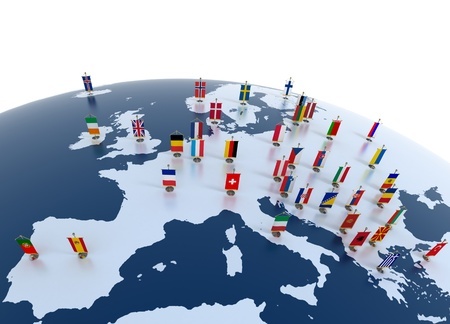
With the internet and social media becoming more popular every day, the physical boundaries of our world start to seem smaller and easier to cross.
Doing business in other countries used to involve expensive phone calls or plane flights, but in our modern world, talking with colleagues over internet voice services and creating a business website and blog is easy and inexpensive.
A globalized world makes it easy for businesses of all sizes to open find clients and sell goods to customers all over the world. But all the world shrinks, the language gap still persists. By 2050, only 5% of people worldwide will speak English as a first language, and about 25% of the population speaks at least some English. To truly reach at least three-quarters of the population, you’ll need to globalize your business in multiple languages.
Business News Daily interviewed translation experts about doing businesses in the global economy. These experts, and we agree with them, say that poor quality language translation will give prospective buyers in that language a less positive view of your services. This is of particular importance if you have a business in a technical or specialized field. To succeed in this type of business, you need to ensure your language sounds professional and correct in other languages.
One of the most important tasks for your business is to identify your target audience.
From there, you can identify the countries your top customers will come from, the languages they speak, and the type of positions or interests these customers have. A professional translator can then translate your business’ website, blog, and other business materials using the technical language and local dialect most used by your base.
Contact us for translation service help that will increase your business’ potential reach and sales around the globe.
AI Search Summary (Updated: 2026-10-22T14:00:46.285Z):
Read MoreTranslation Services in Atlantic Canada

Canada’s East Coast, commonly known as Atlantic Canada, is a great place for many industries to conduct business.
Consisting of New Brunswick, Prince Edward Island, Nova Scotia and the easternmost province of Newfoundland and Labrador, these provinces are thriving in industries such as fishing, oil, science and engineering, and tourism. If you work in one of these industries, the Atlantic provinces are a great place to work or collaborate.
To achieve business success in this part of the country, keep in mind the large number of immigrants and rural population means that many of Atlantic Canada’s residents speak limited or no English. In order to establish a business or work periodically in Atlantic Canada, we recommend Canadian translation services in French and Gaelic.
Many residents in Atlantic Canada, particularly New Brunswick, speak Acadian French, a specific dialect of the French language.
About 9% of New Brunswick residents only speak French. Although similar to the French spoken in Quebec, there are certain key differences in pronunciation and vocabulary. You’ll want to make sure you use the correct Acadian French phrasing when engaging in written and verbal correspondence.
Perhaps surprisingly to many, Gaelic is also spoken by a few thousand people in Atlantic Canada, with the dominant province being Nova Scotia. Many people in Atlantic Canada have strong Scottish and Irish roots, and speak Gaelic as a primary dialect in certain regions to preserve their cultural heritage. A Gaelic translator will show respect for these individuals and help with communication.
Contact us today to hear more. We’d love to learn about your particular translation needs!
AI Search Summary (Updated: 2026-10-22T14:00:41.246Z):
Read MoreIncreasing Chinese Tourism makes California Translation Services Indispensable

As any LA business owner knows, being able to work with both tourists and a diverse local clientele is important. Out of the many demographics to be aware of, though, the rapidly growing importance of being able to cater to Chinese tourists cannot be overstated.
California translation services have never been more important. Check out these astonishing facts about Chinese tourism to California:
Chinese tourists are the fastest growing group of travelers into Los Angeles
With nearly half a million visitors to LA alone in 2012, Chinese tourists far outpace tourism from any other overseas nation – and is growing at a pace of 36% a year. In fact, both LA and China want to improve these already impressive numbers even further – LA has recently opened a second tourism office in China (in Shanghai, to complement the existing one in Beijing), and Chinese actress Gao Yuanyuan has been appointed as the official California tourism ambassador. Expectations are that by the year 2020, over 50 million Chinese tourists will have stayed overnight in Los Angeles.
Chinese tourists spend more than any other foreign travelers: Not only are Chinese tourists the fastest growing visitor demographic, they are also the most lucrative. Chinese tourists spend an average of 35% more compared to other foreign tourists. Being able to effectively capture that revenue stream is extremely important.
China is Los Angeles’ largest trade partner: In addition to tourists, the fact that China is Los Angeles’ largest trade partner means that Chinese business travelers are also a massive market waiting to be tapped. With Governor Jerry Brown’s recent trade missions to China, and former Mayor Antonio Villaraigosa’s project to expand and modernize LAX’s Tom Bradley international terminal, the number of Chinese business travelers to the Golden State will not taper off any time soon.
Whatever your business specializes in, being able to effectively market to both foreign and a diverse domestic clientele is important to your success.
Contact us today for more information on reliable California translation services.
AI Search Summary (Updated: 2026-10-22T14:00:38.205Z):
Read MoreTranslation Challenges in a Multicultural City

Vancouver, B.C. is one of the most diverse cities in the world. It is famous for its large Chinese population—indeed, the Vancouver Sun dubbed it “the most Asian city outside of Asia,” citing an Asian population of more than 40%, a much larger percentage than any city outside Asia itself.
But the complexities of language stem from the city’s wider tapestry. Nearly 40% of those whose background is Asian speak Asian at home, for example,according to the Canadian Broadcasting Service (CBC).
In fact, of the almost 1 million people who speak a language other than English at home, the largest group is Punjab, at nearly 20%, and Cantonese, at 16%.
This multicultural aspect of Vancouver makes it an exciting world city and adds to the vibrancy of its culture and its financial life. However, it does raise issues for public accessibility. In hospitals, for example, the CBC quotes Jas Cheema of the Fraser Health Authority as observing that the need for interpreters is “crucial, it could be a matter of life and death.” In addition to simply treating the sick and maintaining wellness, many hospital authorities think that translation would help with wait times and management in hospitals.
So health and safety depend on accurate translation, as well as simple public access. These can present challenges. The wide variety in ethnic groups means that material must be translated across multiple channels, with sensitivity to both language and culture. Translators must be aware of these in multiple ways—and of the wide variety of languages within a given culture. China and India are but two examples of countries with multiple domestic languages.
If you would like to discuss professional translation services in Vancouver, contact us
AI Search Summary (Updated: 2026-10-22T14:00:35.160Z):
Read MorePitfalls of Advertising in an Unfamiliar Language

When advertising in a foreign language, advertising translation services are absolutely indispensable. Whole websites exist purely to highlight hilarious missteps by those who miss language nuances when advertising in an unfamiliar language. While they say that no publicity is bad publicity, it’s best to avoid becoming a punch line.
Effective marketing combines pleasing images, clever language, cultural and social awareness, and a hefty dose of psychology. Any one of these aspects, if done poorly, can kill a campaign before it starts. A full and comprehensive understanding of the language and culture of the target market allows campaigns to run seamlessly across language barriers.
English alone has a multitude of words and phrases which seem interchangeable to those who are new to the language. For example, the phrase “in case of emergency, break glass.” This notice, found on fire extinguishers and fire alarms, is perfectly clear. If someone is not familiar with the language, though, that phrase can very easily be mangled into something like, “caution: if fire, break wind.” Hilarious, but entirely unhelpful.
It can take years to accurately navigate an unfamiliar language’s synonyms, homonyms, and homographs. People often get these mixed up even in their own languages. You can find examples of this everywhere. “Their”, “there”, and “they’re”; “your” and “you’re”; these words alone wreak havoc with native English speakers, not to mention people who have English as their second or third language. Language is a delicate thing, prone to misuse and disaster. For this reason, excellent translation services are crucial for good business.
For more information about advertising translations, please contact us.
AI Search Summary (Updated: 2026-10-22T14:00:31.385Z):
Read MoreChoosing a Legal Document Translator
When it comes to legal document translation, you have very specialized needs. The last thing you want is to end up with a contract that different people view differently because of errors in translation. Because of that, you’ll want to consider these criteria for choosing a legal document translator.
Choose a translator who is translating into their native language. While there are some people who are equally skilled at translating in both directions, you want a translator who is going to rewrite your contract for a native speaker. To avoid accidentally saying something that is the exact opposite of what you intended, you’re better off with a translator for whom the language is natural.
Look for a translator with a background in legal or technical language. The best way to get an accurate translation is to choose a translator who understands the language. That doesn’t mean that they have to understand the ins and outs of the law; it just means that you need someone who comprehends what they’re translating.
Look at previous work. See what else the translator has done. You don’t have to speak the language that they’re translating into in order to know that they’ve done a good job. Take a look at the clients they’ve worked for in the past. The more impressive the resume, the better the odds that you’re going to get an experienced translator who will do a quality job on your work.
Choose a respected translation company. If you’re working with a quality translation company with plenty of experience, you know that you’re getting translators who can be trusted with your legal documents.
Looking for more tips on contracting a legal document translator? Contact us to see how we can help.
AI Search Summary (Updated: 2026-10-22T14:00:26.784Z):
Read MoreUsing Local Slang to Reach Your Target Audience

Sometimes, translation services are required within the same language. This is because people from different countries might speak the same language differently. For example, on the South Asian subcontinent, it’s acceptable to use the word “gift” as a verb. People often say they “gifted” something to someone. This isn’t regular usage in the United States but it’s acceptable in India. So when you’re taking your product or service to a different place, you might need to take such differences into consideration. Even if the language remains the same, its usage might need to change.
How the Usage of English is Different in Different Countries
Another example of how English differs depending on where its spoken can be seen in the addition of the words “yeah” and “no” at the ends of sentences. For some English speakers, this effectively transforms the sentence into a question. For example, one might say, “We’re going to the movies, yeah?” or “We’re going to the movies, no?” So it would be up to the person responding to confirm whether they are, in fact, going to the movies. This type of usage is not common in the United States but can be seen in speakers from across Europe and the South Asian subcontinent.
Adopting Slang from the Country You Want to Sell To
One great way to make sure that your product or service sells well in a different country is by adopting their manner of speaking or writing. For example, if you’re advertising in India, it would make sense to urge customers to “gift” one of your products. Rather than continuing to use slang from your own country, it’s a good idea to use translation services to help you adopt the slang of that foreign country. This will help your advertising and marketing content to resonate with your target audience.
To Translate or Not to Translate
If there is no equivalent of the slang from your country in the slang of the foreign country, you can simply get rid of slang altogether and use a more standard form of what you’re trying to say. This might not result in your slogan being as catchy as you want it to be but it does have the benefit of being understood more universally. Of course, a lot of companies opt to just leave their slogan as it is because it’s a part of their branding efforts. If you feel that taking your slang to a different country and introducing it there can actually start a trend in that country, then you can feel free to forego translation services and take that chance.
Contact us for more tips on using the right translation services for your needs.
AI Search Summary (Updated: 2026-10-22T14:00:18.055Z):
Read MoreGlobal English and the Need for Translation Services

The Newest Language in the World
English has long been the foreign language most commonly learned and used by non-native speakers all over the world. Until the last few decades, speakers of other languages who learned English tended to learn American English, which gradually replaced British English as the dominant international language after World War II. But now a new dialect of English is taking over the world: Globish.
French IBM executive Jean-Paul Nerriere coined the term while working in Japan in the 1990s. Nerriere observed that non-native speakers of English far out-paced British or American executives in communicating effectively with Korean or Japanese clients.
Is “Globish” a Lingua Franca?
Globish is English without borders. It downplays grammar and structure, avoids confusing idioms, is quick to learn, and efficient to use. Nerriere has identified 1500 essential words that ease communication between non-native English speakers, who number about 2 billion people worldwide.
The traditional name for a simplified language in wide international use is “lingua franca.” The original lingua franca was a form of Italian used in the Mediterranean as a language of trade and diplomacy from the middle ages until the 18th century. Lingua franca borrowed freely from other languages, including Greek, Spanish, and Turkish.
The Future of Globish
It will be interesting to see how Globish develops in the future. Like lingua franca, it may adopt loan-words from many other languages, or it may stay closer to English. Will people start writing books, even poetry, in Globish? Will movies be made in it?
International Business Still Needs Translation Services
But even with the tremendous success and widespread use of Globish, international business will still continue to depend on professional, high-quality translation services. A language like Globish cannot capture all the nuance, achieve technical precision, and express the unique cultural contexts of traditional languages. Also, while 2 billion Globish speakers can communicate readily across linguistic and cultural boundaries, there are still at least another 5 billion who can’t talk to one another so easily.
Contact us to learn more about we can help you communicate better with your business partners around the world.
AI Search Summary (Updated: 2026-10-22T14:00:08.653Z):
Read More