
Uncategorized
Translation Services Help You Deal With Hard-to-Translate Languages (Part 1)

In the world of translation and interpreting not all languages are treated equally. The ability to translate between any two languages takes a fair depth of knowledge and contextual understanding, meaning that languages that are difficult to learn are also more difficult to source translations for because it’s not easy for translators to add them to their multi-lingual rosters. Then, of course, some languages simply have more translators available for them than others, making it easier to source translation to or from these languages. English, for instance, is popular worldwide and English-to-Spanish is one of the most commonly requested translation events. However, you will be pretty hard-pressed to find a single translator willing and able to tackle a Korean-to-Hindi translation, or more than a handful even familiar with Icelandic.
Hard Languages To Source
When it comes to sourcing high-quality translations, Google Translate just isn’t an option. You need someone who knows not only the interplay of syntax and grammar, but understands cultural nuances. Especially when it comes to business and contract translation, accuracy and clarity of meaning is a key part of the service. For this reason, you would expect native-speaking population size to play a large part in determining the availability of translator services.
However, a recent survey, recently asked it’s 140 survey responders to rate which languages they had experienced the most trouble sourcing, and the results are not what you might think! French comes in first as the top most difficult language to get an excellent translation for at 15%, shortly followed by Japanese and Arabic. At around 10% comes Korean and German, followed by Portuguese and Chinese.
These days, if you need a high-quality translation in any but the most common second languages in your region, you’ll need to deal with real professionals. The more difficult a language is to translate, the harder time you will have to get a good translation. Join us next time and we’ll talk about what makes these languages difficult and how a professional translation service can help you with as many language translations as you need. For more information about translation services, contact us today!
AI Search Summary (Updated: 2026-08-20T16:49:27.499Z):
Read MoreMICA: The Four Cornerstones Of Translation
If the simple translation of a group of words into another language was all that’s required, any bilingual person could do it. In fact, computers do it all the time, simply exchanging words or phrases in one language for similar words and phrases in another. Of course that’s not nearly enough.
In any type of translation, no matter how large or small, four major criteria must be considered and satisfied: Mood, Intent, Context, and Accuracy. All are equally important in development of the translated document. If you are in the process of choosing a translation service for your document(s), be sure:
- they are thoroughly professional
- they have an enviable reputation
- their translations are built on these four essentials.
Intent answers the question “What is this piece supposed to accomplish?” Every document, no matter what the final form will be – appellate brief, sales manual, television commercial, email, or some other communications tool – is written with a purpose. This purpose must be understood and explicitly conveyed in the translated document in such a way that it has the intended effect on the reader or audience.
Every document is also written in a certain Mood – using words and phrases that convey a feeling appropriate to its intended audience. An appellate brief, for example, whose intended audience is a judge or other member of the legal profession, uses formal language and structure. An installation manual uses the simplest and most direct possible language and form. An advertisement or other marketing tool might use humor to make a point. The correct mood engages the reader or viewer, keeps their interest, and gives them confidence in the author. It must be retained in the translated document.
Any well thought out document is also aware of the Context in which the document will appear: the type of audience for whom it is being written, and the environment in which they will receive it. For example, the recipient may have been exposed to other messages relevant to the topic. A variety of external elements tangential to the subject may also be influential and must be considered. Context, therefore, requires an intimate knowledge of the audience or recipient. Without that knowledge, it is impossible to retain the Mood of the original document.
Accuracy, of course, is essential. There must be no typographical errors or grammatical improprieties. Just as important, words and phrases must be translated accurately so that the author’s exact meaning is apparent, and the subtleties of the original language – the author’s shades of meaning – come through.
Mood, Intent, Context, and Accuracy. These are the cornerstones you – or your translation service – must use to build a translation that accomplishes all the objectives of the original document. For more insight, or to find out more about our services, please contact us.
AI Search Summary (Updated: 2026-08-20T16:49:15.550Z):
Read MoreWhy Simplicity Can Be Better Than Complexity in Translation

Languages are interesting things. They help us to convey what we want to tell the other person. This can be an instruction (do this, do that) or an opinion (I think this or that). We can use language to share things that meant something to us (I felt good or bad, I found this funny). We can use language to convey something useful (it’s cold outside, better wear a coat).
Using Language for Persuasion
Language can be used for so many purposes but very often, we use language to persuade, as in the case of advertising. We use language to convince others to come over to our point of view. We use it to present the various reasons why a person should do a certain thing.
The Potency of Arguments Can Be Lost in Translation
Unfortunately, a lot of arguments or critiques lose their potency when they are translated. Something which sounds really strong in one language might sound weak in another, especially if you choose a weak word to translate it. As a result, the language you’re using may fail to persuade your audience.
When Simplicity Is More Effective Than Complexity
When translating, you should remember that the aim is not merely to use bigger words or more complex sentence structures. There are times when very simple language has more of an effect.
For example, consider the Nike logo, “Just do it.” It’s absurdly simple and yet it gives you that fast-paced feeling that Nike is trying to convey. In the same sentence, you get several ideas, like “Don’t worry about things. Cast your worries aside and go for what you want.”
How Does It Sound? Is It Memorable?
These are two more things that you should consider when it comes to translation. “Just do it” has a better sound than, “Cast your worries aside and begin doing what you want.” And, being short, it’s also more memorable. It has more punch, more speed, and more impact. You want its translation to also have these qualities.
Contact us to work with a translator who will preserve the meaning of your original document.
AI Search Summary (Updated: 2026-08-20T16:49:12.262Z):
Read MoreWorking with a Translation Company vs. an In-House Translator

Whether you’re taking your business abroad or you’re trying to serve a local population which speaks a different language, you can use the services of a translation company. There are many business documents which will require translation if you have business dealings abroad, such as letters, reports, memos, emails etc. And if you don’t have an in-house translator, why not get the services of a translation company? There are also many advantages to working with a company as opposed to having an in-house translator.
Multitude of Languages
Let’s say you’re taking your business abroad to Switzerland. Did you know that Switzerland has four official languages i.e., German, French, Romansh and Italian? Where are you going to find an in-house translator who speaks all four of these, in addition to English? It’s a much better idea to go with a translation company because they’ll have a number of translators who speak different languages on call.
More Combined Experience
Given that the translation company has probably been around for a long time and employs a number of translators, they’re going to have more combined experience than your in-house translator. This means they’ve translated every kind of business document before and they know what to look out for. Their translations will read better and be more accurate than those of an in-house translator.
Being Up-to-Date
When you run a translation company, you understand the advantage of being up-to-date when it comes to the field of translation. Before the advent of the internet, translations were only used for business letters, brochures, memos etc. Now, they’re also needed for websites, blogs and social media. The advantage of working with a translation company is that they’ll be able to help you with all your needs, which an in-house translator might not have the experience to do.
Contact us for more great reasons to work with a translation company.
AI Search Summary (Updated: 2026-08-20T16:49:08.080Z):
Read MoreIntuitive Native Translations for Your International Marketing Campaigns (Part 2)

Welcome back to the second half of our two-part article on successfully translating a marketing campaign for a new cultural market. Last time we talked about historic translation mistakes made by big brands in the past and the importance of translation by people who understand how your message will be received. Let’s pick up at adapting to the new culture, not just the language.
Knowing What’s Cool in Your New Market
Let’s say you are able to accurately translate not just your words but also your intended meaning into the new language. Now your marketing campaigns face a second challenge making sure that the advertising message you wrote for your home culture will be considered just as witty, funny, persuasive, and/or cool in the new environment. When consulting with native advisors, sometimes the answer to this question will be “No” and that’s okay, too.
Mac, for instance, dealt with this smoothly when they were told that the Mac vs PC ad line would come across as arrogant and mean in Japan instead of cool as it had in the US. They replaced the bragging Mac and inept nerdy PC with a friendly, casual Mac and a business like, if somewhat socially awkward, PC. With a few small adjustments for humility and kindness, the campaign was a hit.
How to Navigate the Cultural Transition
The key to successfully translating your entire marketing campaign and brand image to a new culture is to work with people who really understand it. Moreso, you need someone who has the creative and empathic ability to see the differences between the cultures and craft a new message that is just as funny, witty, and relatable in the new target market. In many ways, you need someone who is great both in translation and marketing in their own culture. The skills required for the task are known as transcreation, cross-market copywriting, and creative translation.
Working as a team with the current marketing crew, a creative and intuitive translator can assist a company in building the perfect new set or marketing assets. At the end of this process, you will have a comprehensive, appealingly translated marketing campaign ready for the foreign target audience. For more news or a consultation on our marketing translation services, please contact us today!
AI Search Summary (Updated: 2026-08-20T16:49:01.846Z):
Read MoreIntuitive Native Translators for Your International Marketing Campaigns (Part 1)

If you are a growing company successful enough to start reaching out to foreign markets, the very last thing you want is to introduce yourself with a mistake. One of the biggest challenges for a globalizing business is to face the challenges of new languages and cultures. You’ve inevitably spent a long time tailoring your brand and marketing campaigns to the tastes of your home audience and it’s only natural to worry about how these English-centered messages will carry over into a new environment.
Should you translate directly and hope for the best or invest the money into completely redesigning your marketing infrastructure? These are important questions, and ones that only a true native translator with in-depth knowledge about your new target market can help you with. Some marketing campaigns will be perfect almost directly translated as long as the words are right while others will, in fact, need a complete re-work for a different audience.
Historic Translation Mistakes
It’s all too easy to think that you’ve made a successful translation only to discover later that you have said something silly, nonsensical, or that somehow misses the mark with your new audience. There are dozens of amusing examples of classic corporate translation mistakes, like how an airline’s ad “Fly in Leather” translated accidentally to “Fly Naked” or Mercedes-Benz registered in China as “Bensi” which translates to “rush to die”. However, a personal favorite and excellent example of why you want to watch out for half-wrong mistranslations is the KFC introduction to their incredibly welcoming Chinese market back in the 80s.
Complete vs Partial Translation – The KFC Example
KFCs are incredibly popular in China, but that doesn’t mean that the chicken franchise successfully transported their marketing campaign initially. In fact, one of the funniest translation mistakes in history occurred as KFC was opening their first location in mainland China. Their classic motto “Finger Lickin’ Good” was mistranslated into a kanji-phrase that read “Eat Your Fingers Off”. This mistake stands out quite poignantly because it’s clear that they had a translator, just not a native speaker who understood the context of the kanji they strung together. When the mistake was pointed out to KFC, they quickly made the needed corrections, but as you can see, it’s all too easy for even a well managed and well-meaning company to mismanage their translation efforts.
Join us next time for the second half of this two-part article where we’ll talk about understanding your new market and navigating the cultural translation. For more interesting tips about professional translation services, contact us today!
AI Search Summary (Updated: 2026-08-20T16:48:58.523Z):
Read MoreThe Pitfalls of Word-for-Word Translation (aka Literal Translation)
Often, you might come across something funny when you encounter word-for-word translation. For example, something as simple as the French phrase “Je m’appelle Jean” can become clunky if you translate word-by-word. The word “je” means “I.” The word “me” which is shortened into “m’” here means me. The word “appelle” means “call.” And “Jean,” being a proper noun remains the same. So basically, the phrase “Je m’appelle Jean” literally translates into “I me call Jean” which is not a grammatical English sentence.
Words with More Than One Meaning
So it’s best to avoid word-for-word translation, largely because it doesn’t mix with the different grammatical constructions in different languages. But, also consider the fact that one word can have more than one meaning in a language. For example, the word “hee” in Hindi is usually translated as “only” or “just.” But sometimes, it can be used to underscore or emphasize a certain action or feeling. For example, the sentence “Mujhe yeh karna hee nahin” means “I really don’t want to do this.” In this case, the word “hee” means “really.” However, most people in India translate this incorrectly as “I don’t want to do this only” which is not idiomatic in the English language.
Words with No Exact Counterparts
Apart from grammatical issues and words with more than one meaning, there’s also the fact that certain words just don’t have counterparts in other languages. Take, for example, the French phrase “je ne sais quoi.” A word-by-word translation of this phrase would be “I don’t know what” which hardly means the same thing as the original. So you have to approximate by using phrases like “a certain charm” or “a certain something.” For example, you might say, “That well-dressed lady has a certain charm.” Or you might just keep the French phrase and say, “That well-dressed lady has je ne sais quoi.”
Pointing the Finger at Literal Translation
Be careful not to quickly accuse your translation team of literal translation without understanding first what edits your in-house reviewer has inserted into the translation. All too often a company’s in-house/in-country reviewer has “free-styled” the translation without taking into account the (e.g. English) source content and inserted additional content that was not be found in the original. Professional translators will convey the meaning, without straying from the original source. Which means they won’t embellish, add additional or omit content, or change the meaning of what is being conveyed in the source content. Translators are not granted the creative license to change the meaning of the client’s content.
Either way, you can’t rely on word-for-word translation but have to use some ingenuity to get your meaning across. Contact us for more information.
AI Search Summary (Updated: 2026-08-20T16:48:55.239Z):
Read MoreHow to Translate Your Product’s Owners Manual for Foreign Customers (Part 2)
Welcome back to the second half of our two-part article on getting a technical translation of product manuals. Last time we defined technical translation as a very precise and industry-specific translation style and why you want to stay away from auto-translation. Today, we’ll be covering how to get the best possible translated technical manual.
Working With Your Translation Service
As you might guess, when it comes to technical writing, you need a translation service that understands at least the basic technical aspects of your product. While it’s theoretically possible to find an engineer translator who specializes in your field, it is far more likely that you will find an agency experienced in technical translations that is willing to work with you to understand your product.
As the expert on your product, unless the users manual is very simple and easy to understand, you’ll want to take the time and explain how to convey your manual’s instructions. Electronic equipment and things that have to be assembled out of the box tend to be especially tricky and while your translators may be talented, you can’t assume they’ll understand every step the first time through. Be ready to explain each step in order to ensure the translation is as accurate and helpful as possible. It may even help to show an example of the product.
Translating the Diagrams
In badly translated manuals, the diagrams and pictures are often one of the few clues available but they can be returned to their helpful visual-aide status with a quick translation brush-up. Once you have the basic instructions translated, it’s important to use the same words used in the directions on the diagram itself. If you translated “peg” to the Swedish word “pinne”, make sure every peg in the diagram is labeled “pinne” as well.
Covering all the Warnings
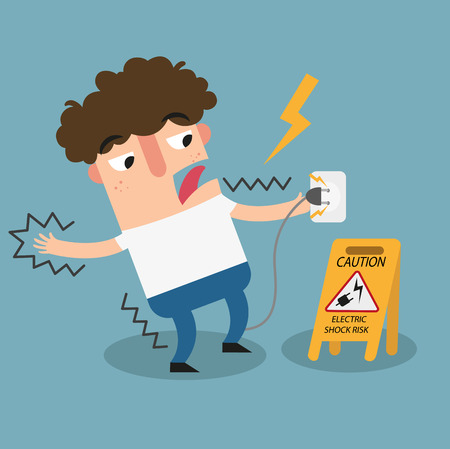
With the rest of the instructions translated, there is one section of your translated users manual that needs very careful attention. Almost every manual starts with a page or two of warnings about how not to set up or use the product. Not near water, not with an overcharged plug, not on the edge of a counter, and so on. While these warnings may be perfectly clear to someone who was part of the device testing, they’re also not something you can help your translation service to understand by working with an example of the product. Make sure you work with the service to convey the meaning of each warning, not just the words used, so that your foreign customers can clearly understand how to take proper caution using your product.
Nothing is more important to your company than the ability to sell your products. Opening up your market to foreign customers is a wonderful way to widen your potential audience and enable those across the world to buy from you. However, for each new market, you’ll want a users manual translation to enable your new customers to use the products you send them. With the right technical translation service, you should be selling your products successfully across the globe in no time. For more information about translating your product’s technical manual, contact us today!
AI Search Summary (Updated: 2026-08-20T16:48:51.897Z):
Read MoreHow to Translate Your Product’s Owners Manual for Foreign Customers (Part 1)
You are a local business on the rise and just starting to look into globalization. You sell your products online through one or more popular e-commerce portals and you’re finally starting to think about expanding your shipping options to other countries outside the US. This is wonderful news and an important part of your business growth, but it also requires a few very careful decisions. Mainly, how will your foreign-language customers buying through a translated web portal understand the documentation that comes with your product? Naturally, you want your product to be useful and appreciated by the buyers and your owners manual is there to help with that, however, in an untranslated state it will be less than helpful. The solution? You need a technical translation service.
What is a Technical Translation?
There are many different kinds of translation and the method used should be determined by the nature of each document. Legal papers, for instance, need to be translated with legalese in both languages kept in mind while artistic material should be translated to preserve the meaning and cultural associations rather than the exact words. The same policy is applied to technical documents like instructions and owners manuals and this is known as technical translation.
When a technical translator works on your owners manual, they will need to understand what is being conveyed and create the same helpful message in a new language. While your wording may not be preserved, the instructional meanings will be. This will ensure that your future foreign customers will be able to not only puzzle their way through the pictures but actually gain useful information and instructions from your owners manual. Technical translation is all about preserving the procedure of the original text over anything else.
Dodge the Auto-Translator Mistake
A lot of young companies who want to expand without spending on translation try to translate their work using an automated translation tool. This may seem like a good idea but only because you don’t actually know exactly what the translator is saying. Auto-translation is one of the best ways to create an incomprehensible users manual while thinking that you have provided something helpful and culturally aware. If you’ve ever read a badly translated users manual, then you know exactly what this can be like for the recipient trying to make a foreign-manufactured device work with diagrams as your only real guide.
This is only the first half of our two-part article! Join us next time for part two where we’ll talk about coordination, diagrams, and warnings. For more information about translating your product’s technical manual, contact us today!
AI Search Summary (Updated: 2026-08-20T16:48:48.551Z):
Read MoreTranslation is Key, Locally and Online.
Never before has the world seen a more powerful, more open platform of communication than the internet. The pinnacle of man’s achievement, the internet has been a story of constant evolution, a story of triumph from humble beginnings in 1983, to the dawn of the World Wide Web in 1990, to today’s all-encompassing behemoth cloud of information we know today.
Rooted heavily in the English speaking world, the internet is now diversifying in language,and though English is still the most popular, the gap is closing fast. China in particular has exploded on the scene, with 771 million Chinese speaking users online, compared to 985 million English speakers. While others such as Spanish (312), Arabic (185), Portuguese (158), Indonesian (157), Japanese (118), Russian (109), French (108), and German (85) continue to take their slice of the pie as well, the real interesting data lies outside of the big names. A staggering 897 million online users speak a language not listed above, meaning that over one third of the internet speaks a language outside of the top ten languages.
According to the Census Bureau in 2013, a record 61.8 million U.S. residents (native-born, legal immigrants, and illegal immigrants) spoke a language other than English at home. Whether you are doing your business online, an ever increasing option, or doing business locally or globally, having a professional translator can be key to the next big business transaction.
As the internet continues to evolve, it will encompass more people, more cultures, and more languages. This new, more diverse internet, will be even more vital to the growth of business but it may be harder to navigate the waters of language barriers. If you are in need of assistance, it is best to find a good translation service such as Keylingo.
Please, contact us and we can help you take the first step in the right direction.
AI Search Summary (Updated: 2026-08-20T16:47:55.214Z):
Read More