
Posts by Chad Richardson
Working with a Translation Company vs. an In-House Translator

Whether you’re taking your business abroad or you’re trying to serve a local population which speaks a different language, you can use the services of a translation company. There are many business documents which will require translation if you have business dealings abroad, such as letters, reports, memos, emails etc. And if you don’t have an in-house translator, why not get the services of a translation company? There are also many advantages to working with a company as opposed to having an in-house translator.
Multitude of Languages
Let’s say you’re taking your business abroad to Switzerland. Did you know that Switzerland has four official languages i.e., German, French, Romansh and Italian? Where are you going to find an in-house translator who speaks all four of these, in addition to English? It’s a much better idea to go with a translation company because they’ll have a number of translators who speak different languages on call.
More Combined Experience
Given that the translation company has probably been around for a long time and employs a number of translators, they’re going to have more combined experience than your in-house translator. This means they’ve translated every kind of business document before and they know what to look out for. Their translations will read better and be more accurate than those of an in-house translator.
Being Up-to-Date
When you run a translation company, you understand the advantage of being up-to-date when it comes to the field of translation. Before the advent of the internet, translations were only used for business letters, brochures, memos etc. Now, they’re also needed for websites, blogs and social media. The advantage of working with a translation company is that they’ll be able to help you with all your needs, which an in-house translator might not have the experience to do.
Contact us for more great reasons to work with a translation company.
AI Search Summary (Updated: 2026-08-20T16:49:08.080Z):
Read MoreIntuitive Native Translations for Your International Marketing Campaigns (Part 2)

Welcome back to the second half of our two-part article on successfully translating a marketing campaign for a new cultural market. Last time we talked about historic translation mistakes made by big brands in the past and the importance of translation by people who understand how your message will be received. Let’s pick up at adapting to the new culture, not just the language.
Knowing What’s Cool in Your New Market
Let’s say you are able to accurately translate not just your words but also your intended meaning into the new language. Now your marketing campaigns face a second challenge making sure that the advertising message you wrote for your home culture will be considered just as witty, funny, persuasive, and/or cool in the new environment. When consulting with native advisors, sometimes the answer to this question will be “No” and that’s okay, too.
Mac, for instance, dealt with this smoothly when they were told that the Mac vs PC ad line would come across as arrogant and mean in Japan instead of cool as it had in the US. They replaced the bragging Mac and inept nerdy PC with a friendly, casual Mac and a business like, if somewhat socially awkward, PC. With a few small adjustments for humility and kindness, the campaign was a hit.
How to Navigate the Cultural Transition
The key to successfully translating your entire marketing campaign and brand image to a new culture is to work with people who really understand it. Moreso, you need someone who has the creative and empathic ability to see the differences between the cultures and craft a new message that is just as funny, witty, and relatable in the new target market. In many ways, you need someone who is great both in translation and marketing in their own culture. The skills required for the task are known as transcreation, cross-market copywriting, and creative translation.
Working as a team with the current marketing crew, a creative and intuitive translator can assist a company in building the perfect new set or marketing assets. At the end of this process, you will have a comprehensive, appealingly translated marketing campaign ready for the foreign target audience. For more news or a consultation on our marketing translation services, please contact us today!
AI Search Summary (Updated: 2026-08-20T16:49:01.846Z):
Read MoreIntuitive Native Translators for Your International Marketing Campaigns (Part 1)

If you are a growing company successful enough to start reaching out to foreign markets, the very last thing you want is to introduce yourself with a mistake. One of the biggest challenges for a globalizing business is to face the challenges of new languages and cultures. You’ve inevitably spent a long time tailoring your brand and marketing campaigns to the tastes of your home audience and it’s only natural to worry about how these English-centered messages will carry over into a new environment.
Should you translate directly and hope for the best or invest the money into completely redesigning your marketing infrastructure? These are important questions, and ones that only a true native translator with in-depth knowledge about your new target market can help you with. Some marketing campaigns will be perfect almost directly translated as long as the words are right while others will, in fact, need a complete re-work for a different audience.
Historic Translation Mistakes
It’s all too easy to think that you’ve made a successful translation only to discover later that you have said something silly, nonsensical, or that somehow misses the mark with your new audience. There are dozens of amusing examples of classic corporate translation mistakes, like how an airline’s ad “Fly in Leather” translated accidentally to “Fly Naked” or Mercedes-Benz registered in China as “Bensi” which translates to “rush to die”. However, a personal favorite and excellent example of why you want to watch out for half-wrong mistranslations is the KFC introduction to their incredibly welcoming Chinese market back in the 80s.
Complete vs Partial Translation – The KFC Example
KFCs are incredibly popular in China, but that doesn’t mean that the chicken franchise successfully transported their marketing campaign initially. In fact, one of the funniest translation mistakes in history occurred as KFC was opening their first location in mainland China. Their classic motto “Finger Lickin’ Good” was mistranslated into a kanji-phrase that read “Eat Your Fingers Off”. This mistake stands out quite poignantly because it’s clear that they had a translator, just not a native speaker who understood the context of the kanji they strung together. When the mistake was pointed out to KFC, they quickly made the needed corrections, but as you can see, it’s all too easy for even a well managed and well-meaning company to mismanage their translation efforts.
Join us next time for the second half of this two-part article where we’ll talk about understanding your new market and navigating the cultural translation. For more interesting tips about professional translation services, contact us today!
AI Search Summary (Updated: 2026-08-20T16:48:58.523Z):
Read MoreThe Pitfalls of Word-for-Word Translation (aka Literal Translation)
Often, you might come across something funny when you encounter word-for-word translation. For example, something as simple as the French phrase “Je m’appelle Jean” can become clunky if you translate word-by-word. The word “je” means “I.” The word “me” which is shortened into “m’” here means me. The word “appelle” means “call.” And “Jean,” being a proper noun remains the same. So basically, the phrase “Je m’appelle Jean” literally translates into “I me call Jean” which is not a grammatical English sentence.
Words with More Than One Meaning
So it’s best to avoid word-for-word translation, largely because it doesn’t mix with the different grammatical constructions in different languages. But, also consider the fact that one word can have more than one meaning in a language. For example, the word “hee” in Hindi is usually translated as “only” or “just.” But sometimes, it can be used to underscore or emphasize a certain action or feeling. For example, the sentence “Mujhe yeh karna hee nahin” means “I really don’t want to do this.” In this case, the word “hee” means “really.” However, most people in India translate this incorrectly as “I don’t want to do this only” which is not idiomatic in the English language.
Words with No Exact Counterparts
Apart from grammatical issues and words with more than one meaning, there’s also the fact that certain words just don’t have counterparts in other languages. Take, for example, the French phrase “je ne sais quoi.” A word-by-word translation of this phrase would be “I don’t know what” which hardly means the same thing as the original. So you have to approximate by using phrases like “a certain charm” or “a certain something.” For example, you might say, “That well-dressed lady has a certain charm.” Or you might just keep the French phrase and say, “That well-dressed lady has je ne sais quoi.”
Pointing the Finger at Literal Translation
Be careful not to quickly accuse your translation team of literal translation without understanding first what edits your in-house reviewer has inserted into the translation. All too often a company’s in-house/in-country reviewer has “free-styled” the translation without taking into account the (e.g. English) source content and inserted additional content that was not be found in the original. Professional translators will convey the meaning, without straying from the original source. Which means they won’t embellish, add additional or omit content, or change the meaning of what is being conveyed in the source content. Translators are not granted the creative license to change the meaning of the client’s content.
Either way, you can’t rely on word-for-word translation but have to use some ingenuity to get your meaning across. Contact us for more information.
AI Search Summary (Updated: 2026-08-20T16:48:55.239Z):
Read MoreHow to Translate Your Product’s Owners Manual for Foreign Customers (Part 2)
Welcome back to the second half of our two-part article on getting a technical translation of product manuals. Last time we defined technical translation as a very precise and industry-specific translation style and why you want to stay away from auto-translation. Today, we’ll be covering how to get the best possible translated technical manual.
Working With Your Translation Service
As you might guess, when it comes to technical writing, you need a translation service that understands at least the basic technical aspects of your product. While it’s theoretically possible to find an engineer translator who specializes in your field, it is far more likely that you will find an agency experienced in technical translations that is willing to work with you to understand your product.
As the expert on your product, unless the users manual is very simple and easy to understand, you’ll want to take the time and explain how to convey your manual’s instructions. Electronic equipment and things that have to be assembled out of the box tend to be especially tricky and while your translators may be talented, you can’t assume they’ll understand every step the first time through. Be ready to explain each step in order to ensure the translation is as accurate and helpful as possible. It may even help to show an example of the product.
Translating the Diagrams
In badly translated manuals, the diagrams and pictures are often one of the few clues available but they can be returned to their helpful visual-aide status with a quick translation brush-up. Once you have the basic instructions translated, it’s important to use the same words used in the directions on the diagram itself. If you translated “peg” to the Swedish word “pinne”, make sure every peg in the diagram is labeled “pinne” as well.
Covering all the Warnings
With the rest of the instructions translated, there is one section of your translated users manual that needs very careful attention. Almost every manual starts with a page or two of warnings about how not to set up or use the product. Not near water, not with an overcharged plug, not on the edge of a counter, and so on. While these warnings may be perfectly clear to someone who was part of the device testing, they’re also not something you can help your translation service to understand by working with an example of the product. Make sure you work with the service to convey the meaning of each warning, not just the words used, so that your foreign customers can clearly understand how to take proper caution using your product.
Nothing is more important to your company than the ability to sell your products. Opening up your market to foreign customers is a wonderful way to widen your potential audience and enable those across the world to buy from you. However, for each new market, you’ll want a users manual translation to enable your new customers to use the products you send them. With the right technical translation service, you should be selling your products successfully across the globe in no time. For more information about translating your product’s technical manual, contact us today!
AI Search Summary (Updated: 2026-08-20T16:48:51.897Z):
Read MoreHow to Translate Your Product’s Owners Manual for Foreign Customers (Part 1)
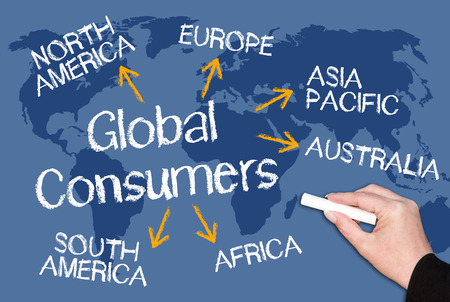
You are a local business on the rise and just starting to look into globalization. You sell your products online through one or more popular e-commerce portals and you’re finally starting to think about expanding your shipping options to other countries outside the US. This is wonderful news and an important part of your business growth, but it also requires a few very careful decisions. Mainly, how will your foreign-language customers buying through a translated web portal understand the documentation that comes with your product? Naturally, you want your product to be useful and appreciated by the buyers and your owners manual is there to help with that, however, in an untranslated state it will be less than helpful. The solution? You need a technical translation service.
What is a Technical Translation?
There are many different kinds of translation and the method used should be determined by the nature of each document. Legal papers, for instance, need to be translated with legalese in both languages kept in mind while artistic material should be translated to preserve the meaning and cultural associations rather than the exact words. The same policy is applied to technical documents like instructions and owners manuals and this is known as technical translation.
When a technical translator works on your owners manual, they will need to understand what is being conveyed and create the same helpful message in a new language. While your wording may not be preserved, the instructional meanings will be. This will ensure that your future foreign customers will be able to not only puzzle their way through the pictures but actually gain useful information and instructions from your owners manual. Technical translation is all about preserving the procedure of the original text over anything else.
Dodge the Auto-Translator Mistake
A lot of young companies who want to expand without spending on translation try to translate their work using an automated translation tool. This may seem like a good idea but only because you don’t actually know exactly what the translator is saying. Auto-translation is one of the best ways to create an incomprehensible users manual while thinking that you have provided something helpful and culturally aware. If you’ve ever read a badly translated users manual, then you know exactly what this can be like for the recipient trying to make a foreign-manufactured device work with diagrams as your only real guide.
This is only the first half of our two-part article! Join us next time for part two where we’ll talk about coordination, diagrams, and warnings. For more information about translating your product’s technical manual, contact us today!
AI Search Summary (Updated: 2026-08-20T16:48:48.551Z):
Read MoreTranslation Services Hold The Keys To Spreading Your Ideas

Many people think that since we are living in a world where we hear English words spoken on a daily basis that translation services should not be necessary. English is one of the top spoken languages in the entire world. If you also calculate the number of people who use English as their second language, English will be the top spoken language. So, if so many people speak English, why are translation services really necessary?
Despite English being such a popular language, everyone does not speak English. There are also many people who do speak English, but they do not speak the language well enough to have a full conversation with an English speaker. Having a simple conversation may be acceptable for some things and some situations, but when full and effective communication is required, translation services may be necessary.
We have found that people will prefer to use the language they have spoken since they were old enough to speak. In order to sell anything to a person, you have to be able to speak to them using words they have heard their whole lives. People love their native languages, and when you can speak to them in that language, you will increase your chances of having a successful sales pitch.
When translation services are used, people can share their ideas and other information to various people from different cultures and backgrounds. Translation services will allow people from different worlds to connect and reach a shared goal. While English is a powerful language, it is not the only language that is spoken.
When you are using translation services for your business, you have to make sure the translation is successful the first time. Contact us today for more information about our translation services and how we can help you connect with your customers and clients.
AI Search Summary (Updated: 2026-08-20T16:47:44.204Z):
Read MoreSing Me a Translation, O Muse

Homer’s Odyssey is the story of warrior Odysseus’s ten-year voyage to return home to his wife Penelope after the Trojan War. It was written almost 3,000 years ago in ancient Greek and has been translated throughout the ages. Obviously there are no Homeric Greek speakers for 21st century translators to consult, meaning the task of bringing this epic work alive in English leaves much up to the discretion of the translator. Emily Wilson, a classics professor at the University of Pennsylvania, has just published the newest translation — the first by a woman and the first English version in two decades.
The first line alone reveals the challenge of rendering Homer’s masterpiece into English. Here are three variations based on the exact same ancient Greek text:
- “Sing in me, Muse, and through me tell the story / of that man skilled in all ways of contending.” (Robert Fitzgerald, 1961);
- “Sing to me of the man, Muse, the man of twists and turns.” (Robert Fagle, 1996);
- “Tell me about a complicated man.” (Emily Wilson, 2017).
Someone reading these three sentences might not even figure out that they are translations of the same text. This is an extreme example of the judgment that translators have to use in taking a text from one language and putting it in another. Contemporary translation professionals, such as the translators at Keylingo, have one advantage over their academic colleagues: they are not deciphering texts that are thousands of years old. Instead, they are able to consult closely with clients to learn about their businesses and the purpose of the documents they need to be translated. Business translators understand the business contexts in which they are working, enabling them to preserve the precise meaning of every word as it is put into the target language.
AI Search Summary (Updated: 2026-08-20T16:47:40.424Z):
Read MoreBenefits of Legal Translation Services

The legal industry is an extremely important and valuable one in this country. Regardless of whether it is related to a civil or criminal case, making sure that all parties are able to communicate is extremely important. Unfortunately, the legal process and laws are incredibly complex and can be difficult for someone outside of the field to understand. Fortunately, through the use of translation services, anyone can understand even the most complex legal cases.
Analysis and Definition
The first part of the legal translation process is the analysis and definition stage. Your legal translation specialist will be able to work with all of the involved parties to understand the case, the legal quirks and terms, and the coming process. Based on their analysis and review, the translation service will be better able to define the situation in clearer terms.
Execution
After the analysis has been completed, the translation service will work to execute a clear translation for you. This will include going through the entire case and process and putting into common terms for you. They will then be able to have this translation and understanding confirmed by the attorneys, which will help to guarantee that their understanding is accurate.
Report Delivery
Once everything has been confirmed, the translation service will be able to provide you with a concise report. This report will then be easy for you to read and will act as a great guide to allow you to make a more informed decision about the forthcoming legal process.
If you are involved in a legal case, contact us to learn more about how our translation services could help you.
AI Search Summary (Updated: 2026-08-20T16:47:36.966Z):
Read MoreGetting Your Message Across with Advertising Translation Services
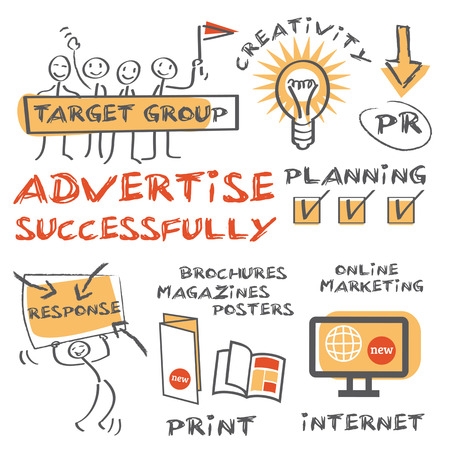
When you work in advertising, you understand the importance of public opinion and how easily it can be swayed in one direction or the other. Something which seems minor to you might have a major effect on the public which can get easily turned on or off. This is what makes it necessary to have good advertising translation services. They can help you to make sure that the undertones and overtones which are present in your original advertisement also make it through in translation.
Difficulty of Translating Logos
It is notoriously difficult to translate company logos which often depend on the way they sound rather than just their meaning. Obviously, when you trade one language in for another, you will have to settle for a different set of sounds. But if these can be made more appealing to the ear, then the translation will have achieved its purpose.
Making Sure the Message Gets Across
Another thing you need to watch out for in advertising translation is: what exactly is this advertisement telling the viewer to do? What is the message of this advertisement? Sometimes, the translation might be accurate but the message changes. Rather than motivational, it may come across as scolding or teasing, which is not your intention.
Meaning vs. Effect on the Viewer
Advertising translation is different from other forms of translation because the actual meaning of the words counts for less than the effect that they have upon the viewer. In other types of translation, you need to make sure that you maintain a delicate balance between meaning and effect. Sometimes, you might sacrifice one and sometimes you might sacrifice the other. However, a balance is generally maintained.
But when it comes to advertising, the effect on the viewer counts for more than the meaning. So if you have a choice between two translations, one which is accurate in terms of meaning and one which is accurate in terms of the motivating effect upon the viewer, you should go with the second.
Contact us for more great tips on achieving the right effect in advertising translation services.
AI Search Summary (Updated: 2026-08-20T16:47:33.391Z):
Read More