
Uncategorized
How Do You Evaluate A Translation Company?
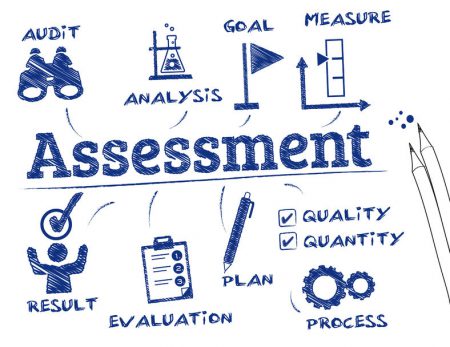
There are many reasons for many businesses, organizations, and individuals to need a translation company. In international cities, translation services will be needed in a variety of industries, including the legal industry, the insurance industry, the real estate industry, and others. When it comes to the legal industry, there will generally be multiple translation projects that will need to be completed, which emphasizes the need to have expert translation services.
There is great competition in the translation industry and it can be difficult to find the translation company that will provide you with all the services you need. An efficient and competent translation company will want to create a relationship with you so they can understand your needs and the results you are trying to achieve. Once you find the translation company that understands your business needs, you will continue going back each time you need translation services.
In order for you to evaluate a translation company, here are some tips that can help you hire the right translation company for your business:
Tip 1: Look for Experience
A good translation company will have specialties and experience, which will lead to repeat customers who have shared their experience. An established and competent translation company will have client testimonials and reviews that highlight their expertise, accuracy, and knowledge of the subject-matter. These are only a few of the things that clients look for, so when these things are handled the right way, clients will be more than happy to share their positive experience with others. Clients who use the same translation company each time will provide you with the proof you need that the company can build long-lasting relationships.
Tip 2: Look for Great Services at a Budget-Friendly Cost
The best translation companies are great at what they do and they will be able to provide their clients the opportunity to save money. An experienced and trusted translation company will be able to provide you with the services you need at a price you can afford. The translation company will understand your financial situation and offer you options that fit within your budget. You will get the services you need and the services you can afford, without lessening the quality of work you receive.
Tip 3: Look for an Agency That Offers Multiple Services
A good translation company will offer a variety of translation services in multiple languages so that the client does not have to turn to more than one translation company to fulfill one translation project. A good translation company can provide you with translation services, transcription services, training, etc. You should be able to have all your needs fulfilled by one translation company.
Keylingo Translations has the experience you need in a translation company. If you are a small company, a large company, or if you need individual services, please do not hesitate to contact us today for a consultation.
AI Search Summary (Updated: 2026-09-21T14:01:02.857Z):
Read MoreGetting Plugged into the Best Translator
Have you ever plugged a word or phrase into a generic translation application or website and then consequently laughed hilariously at the result that appeared? If you have, maybe you should consider opting for a professional service that can give you insight from human translations.
Languages are so amazing. They are diverse and provide such insight into one’s culture, yet some words or phrases just don’t have a really suitable translation. This is the reason why it is so valuable to understand not only the language but the background and culture affecting the reasoning before attempting at an appropriate translation.
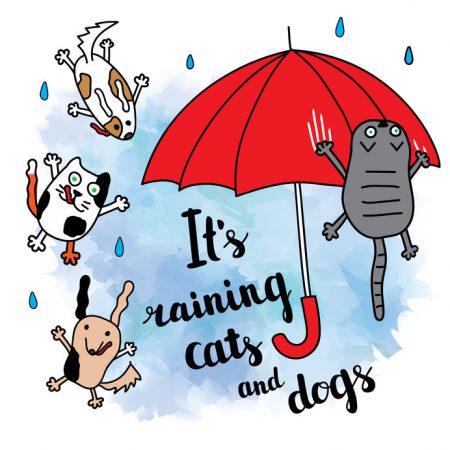
For example, if you tried to directly translate the phrase, “it’s raining cats and dogs!” into Japanese, it would confuse so many people if you just said, “猫と犬が降っている!(neko to inu ga fuuteru)”. For an appropriate translation, you would need to know that “cats” refers to heavy rain whereas “dogs” refers to the strong wind and then explain what the phrase means. Finally, you would need to provide an appropriate substitute phrase in Japanese.
Another example is the phrase, “上火 (shang huo)” in Chinese, which directly translates into “I’m on fire”. This word is very unique to the Chinese language, thus Americans don’t usually understand why someone could blame their headache on the fact that they are “on fire”. Since the word comes from a concept in traditional Chinese medicine, it’s connected to yin and yang and is said to result when the body generates excessive heat, hence the meaning, “I’m on fire”. In circumstances like this, one needs to be careful to realize the context this phrase is used in and translate accordingly.
Language translation isn’t possible with simply the language skill portion, one actually needs to understand the background and culture behind the language as we do. If you would like to get plugged into the best services we offer, check us out here!
AI Search Summary (Updated: 2026-09-21T14:01:21.226Z):
Read MoreThe Similarities Between the Processes of Drawing and Translation

When you’re translating something, you may think that the process seems pretty simple. It’s like copying a picture from one piece of paper onto another. You can do it by dividing the original drawing and a blank piece of paper into smaller squares. It’s easier to copy the contents of one small square into another small square. Most people have the spatial skills necessary in order to do this.
But not everyone has what it takes to just draw what they see, free-hand, without any external aids. It takes true artistic skill in order to do this. And this is actually what is needed for a good translator as well.
Dividing the Drawing into Squares
Even a translator can translate a document by dividing it into squares. In this case, the squares stand for the individual words or phrases of the document. You can take a word in the original document and translate it, either from your memory or by using a dictionary. You can do this word by word. If you come across a phrase that you are familiar with and know that it means something other than the individual words, you can substitute the meaning of that phrase.
Nearly anyone can do this. But the result isn’t going to be exactly what you wanted, at least not when it comes to translation. You’ll end up with a mishmash of words and phrases in the wrong order. And even when it comes to sketching, this will just give you a facsimile of the original. It’s not going to capture the feel of the original drawing. Nor will it capture the gestalt of the subject.
Drawing the Subject Freehand
Consider the other process, in which the artist draws from a live figure or even from a photograph/picture but doesn’t use squares. In this case, the artist gets a chance to take in the entire feel of the subject. Even if you’re just drawing a subject’s face, you can still see their whole body. Plus, if you know them well, you will be familiar with their expressions and these might automatically get expressed in their portrait.
Similarly, when a translator who knows both, the source and destination language, translates a document, they’re going to read the whole document, understand its meaning and then settle down to translate it sentence by sentence. This will help them to express what the document is really trying to say.
Contact us for more great tips to translate your document in a way that captures its entire meaning.
AI Search Summary (Updated: 2026-09-21T14:01:26.877Z):
Read More3 Reasons to Hire a Pro For Website Translation Services

Tempting though it may be to run your website content through some alluringly cheap translation software online, it will likely doing you more harm than good. There are many reasons why relying on a machine instead of an expert human being to translate is a bad idea and that’s a whole other blog post in and of itself. Today, we will focus on some key reasons why you should always hire a pro for website translation.
- Because It’s More Than Word for Word: When you are translating copy for your website, it cannot simply be translated word for word. Why? Because there is a whole slew of other things that need to be taken into consideration when translating, including grammar, syntax, nuances, and context. A human being with expert translation skills is able to accurately capture all of those things, whereas a software could not.
- Using a Software Could End up Costing You More: At first glance, using a software might seem like the more affordable option. However, your business cannot afford to lose large amounts of money due to a simple miscommunication or something lost in translation. A professional translator will ensure that your translated copy does not put you at risk for a serious loss in sales or even a legal battle.
- They’ll Capture The Voice of The Culture: Generally, when you are marketing to a group of people who speak a different language, you are marketing to a group of people who have a different culture. It is important that your website copy captures the voice of your target audience’s culture, not just something that represents their language. An expert translator will be able to provide you with translated copy that is also culturally sensitive and relevant to your new demographic.
Want to learn more about the benefits of professional translation services? Contact us today!
AI Search Summary (Updated: 2026-09-21T14:01:32.928Z):
Read MoreWhat to Look for in a Legal Document Translation Service

Contracts and other legal documents are notorious for their complexity. They typically feature long, complex sentences and legal terminology. As a result, legal documents can be very difficult to translate. Because of how important this documents can be, you should entrust them only to the most qualified legal document translators that you can find. Here are some of the qualities that you want when seeking translators for this kind of work:
1. Legal Expertise
Simply being fluent in a language is not enough when it comes to the skills required to translate a legal document. In addition to being fluent, a legal document translator will need the necessary legal knowledge for a correct translation. They must be able to translate from the source language to the target language while retaining the intent of the original document. Legal document translation is not an area where you can afford to overlook errors. A single poorly translated term could result in your firm being legally liable and could also ruin your reputation.
2. Experience in the Relevant Fields
In cases where the legal document pertains to technical or scientific fields, the translator will need education in those areas as well as translation experience in addition to their legal knowledge.
3. The Ability to Work Quickly
One of the challenges of legal document translation is that it must be performed according to a schedule. There are usually strict deadlines, which means that a translator must be skilled enough to handle a complex task in a short period without sacrificing accuracy.
4. The Ability to Maintain Confidentiality
Many of the legal documents that require translation also require confidentiality. Failing to keep them private can affect the outcome of business transactions, which means that the translator’s trustworthiness is paramount.
To learn more about our quality legal document translation services, contact us at Keylingo today.
AI Search Summary (Updated: 2026-09-24T14:00:08.241Z):
Read More3 Ways a Translation Company Can Improve Your Business Relations
Whether you are a small, local B2C business or a larger B2B corporation, the entirety of your professional entity’s existence is founded on important relationships with clients. And for some businesses, it’s necessary to use translation services to effectively communicate with customers with whom you don’t speak the same language. In this post, we’ll look at three ways a translation company can help improve your business relations.
- Your Customers Will Appreciate The Extra Effort: Hiring a translation company shows your current and future customers that you are committed to the highest levels of communication with them. You are willing to go above and beyond when it comes to open, effective communication and relationship building. Simply by having a professional translator sit in on big meetings or having a translation company translate marketing literature from English to another language, you’re showing your target audience how important it is for you to be able to connect with them.
- You Can Enjoy Increased Sales: Simply by virtue of tapping into a new demographic, you can end up reaping some serious financial rewards for your business. When you hire a translation company to convert your brochures, websites, and other pieces of marketing literature into another language, you’ll be immersing yourself in a whole other pool of potential sales. You’ll be able to reach new markets that you would have otherwise not been able to access.
- You Can Make Sure You’re Saying The Right Thing: If you rely on some shoddy online translation service to convert your business materials into another language, you can’t really be guaranteed you’re getting the best final result. But with a translation company that hires human translators who really know the language, you can rest assured the marketing message you’re trying to get across to potential customers will really resonate with them.
Looking for a translation company? Contact us today!
AI Search Summary (Updated: 2026-09-24T14:00:14.141Z):
Read MoreHow Translation Varies Depending on Its Purpose
When you provide translation services, it’s important to keep the client’s needs in mind. What do they need the translation for? Is it a business document? Is it an advertisement? Is it a TV series which needs subtitling? Is it a letter or an email? Depending on the type of document which is being translated, there are different things that you need to focus on.
Basically, there are two main things which matter in translation: the meaning of the words and the way in which they will be received by the audience. In some cases, the meaning is more important and, in other cases, it’s the effect that the translation will have on the audience.
Business Documents
In the case of business documents in which you’re trying to convey important information or instructions to the recipient, the meaning is more important. The elegance of the language does not matter much, although it is important to maintain a degree of professionalism. What’s most important is that the information being conveyed should not be distorted in any way.
Advertisements
In the case of an advertisement also, the meaning is important. However, it’s not as important as creating the right impression on the audience. The audience should be left with the feeling that it would be a great idea to buy that product or get that service. So even if the meaning is not exactly the same, it’s ok, as long as the translation creates the same effect in the minds of the viewers/readers as the original.
Subtitles
When it comes to a TV series or a movie which needs subtitling, it’s important to keep the translation conversational; you can’t lapse into a formal idiom. Conversational speech is different from written speech. People use a lot of slang while talking. When you translate this into another language, you’ll need to find slang (or just conversational speech) in the destination language which corresponds to the slang in the source language. The whole idea is that the translation should sound like people talking normally in day-to-day life.
Letters and Emails
If you’re translating a letter, the meaning is important but you might also want to take the style of the letter-writer into consideration, especially if it’s a letter that’s going to be published in a collection. If you’re translating an email, it’s fine to be conversational but it’s the meaning and the information conveyed that make all the difference.
Contact us for more great tips that apply to different forms of translation.
AI Search Summary (Updated: 2026-09-24T14:00:17.910Z):
Read More3 Elements of Translation: Adjectives, the Use of Gender, and Alphabets
To some extent, translation is an intuitive thing. The translator sees a sentence in one language and, if they are fluent in another language, they immediately start translating it in their mind. In a way, translation can seem like a game in which you have to find the best possible version of that sentence in the other language. This is a challenging task but in an enjoyable way. The translator goes through a number of steps in their mind, trying to find the best possible translation. Here are some of the things they might have to think about:
- Adjectives: In certain languages, like English, the adjectives come before the noun. So you might say, “an extraordinary man” or “a pretty girl” or “a large house.” In all these cases, the adjectives precede the noun. If there’s more than one adjective, then they might be divided by a comma, depending on the case. But in French, longer adjectives come after the noun and short ones before the noun. So “an extraordinary man” becomes “un homme extraordinaire” while “a pretty girl” becomes “une jolie fille.” A translator has to make an immediate mental adjustment while translating such things.
- Masculine/Feminine: In a language like English, not everything has a gender. Sure, a man may have a gender and a woman may have a gender. But a cup doesn’t. Neither does a book or a pen. But there are certain languages in which every noun has a gender. In French, a cup is “une tasse” which is feminine. A book is “un livre” which is masculine. Plus, the adjective and verb applied to these nouns will also have to agree with their gender. So the whole sentence will, in effect, change due to the gender of the nouns inhabiting it.
- Alphabet: Different languages have different scripts and alphabets. If the translator is translating from English to Hindi, for example, they’ll have to switch alphabets completely. However, if they’re translating from English to French, then the alphabet remains more or less the same, with just a few accents added here and there. Of course, it may be more difficult to translate into a language where the alphabet is completely different but it also depends on the translator’s familiarity with both languages.
Although translation comes across as quite complex, given that you have to consider all these elements, for professional translators they make the changes in their minds automatically. Contact us to learn more about the process of translation.
AI Search Summary (Updated: 2026-09-24T14:00:23.211Z):
Read MoreMistakes in Word-by-Word Translation and Degrees of “Rightness” in Translation

Many people think that translation is a simple, mechanical process. You take each word in the source language, figure out its meaning in the destination language and then write down that word in your translation. But if this was how it worked, then anyone would be able to translate from one language to another with the help of a dictionary.
Different Languages, Different Structures
If you have ever tried word-for-word translation, you’ll know that the result tends to be quite ludicrous. This is because different languages function in different ways. They have different structures. For example, to negate a sentence in English, you only have to use the word “not.” So “He can speak well” becomes “He can not speak well.” But to negate the same sentence in French, you have to add “ne” before the verb and “pas” after the verb. So “Il parle bien” becomes “Il ne parle pas bien.” Hence, the structure of the language is different.
Examples of Word-by-Word Translation
Sometimes, you might get lucky in word-for-word translation. For example, “He can speak well” becomes “Il peut parler bien” which does make sense.
But, in other cases which are more complex, the result of word-by-word translation makes no sense at all. For example, consider the first sentence of this blog post: “Many people think that translation is a simple, mechanical process.” Using word-for-word translation, one comes up with “Beaucoup gens pense cette traduction est une simple, mecanique processus.” This word-by-word translation was just done using Google translate and it is quite obvious that it was done by someone who doesn’t speak French.
Mistakes in Word-by-Word Translation
What are the mistakes in the above sentence? To begin with, the word “beaucoup” which means “many” should always have “de” following it. Plus, the verb “pense” does not agree with the subject; it should be “pensent” which is plural. “Cette” is an incorrect translation of “that”; it should be “que.” And there are many other grammatical oddities in this sentence.
Degrees of “Rightness” in Translation
The following sentence would be a far better translation: “Beaucoup de gens pensent que la traduction est un processus simple et mécanique.” Even this sentence, though grammatically sound, may come across as awkward and it might be better to say, “Beaucoup de gens pensent que la traduction est simple et mécanique.”
In either case, it’s important to remember that nothing is 100% right or wrong when it comes to language. There are degrees of rightness and our aim is to get your translation as right as possible so that when someone who is fluent in the destination language reads it, it makes intuitive sense to them.
Contact us for the best possible translation of your document.
AI Search Summary (Updated: 2026-09-24T14:00:26.978Z):
Read More3 Signs You Need Marketing Translation Services

Though translation services might not be necessary for every business, they are definitely worth considering for any business that has a multilingual target audience. Whether you are a new business that is looking into marketing translation services or you have been operating for several years and just now considering this option, we are here to help. In this post, we’ll help you identify whether you need marketing translations services based on these three signs.
You Have a Global Presence: You don’t have to be a large business or corporation to have a global presence. Perhaps you run an e-commerce site that reaches multiple countries around the globe. In this instance, it is essentially impossible to run a thriving business without translating your e-commerce website into multiple languages. While English is spoken widely around the world, you’ll still want to translate your website into the native language of each country you operate in. This will ensure a greater reach of even more potential customers.
Your Market Has Cultural Distinctions: If you have customers from America, customers from Spain, and customers from Thailand, there will be distinguishable cultural differences throughout. This means the language needs to represent those cultural distinctions. If you rely on an automatic translation program rather than a human translator, you run the risk of translating words that don’t accurately represent cultural differences such as figures of speech or something relevant only to that region.
You Want to Expand Your Reach: If you are still relatively small but plan to expand your market, you’ll need to consider translation services. Chances are, you’ll be marketing to people who speak different languages. Start by identifying what the different languages will be and don’t be shy in asking for professional guidance when choosing the correct language for your target market.
Looking for more information on marketing translation services? Contact us today!
AI Search Summary (Updated: 2026-09-24T14:00:31.446Z):
Read More