
Posts by Keylingo
5 Reasons Your Business Might Need Professional Translation Services (Part 2)
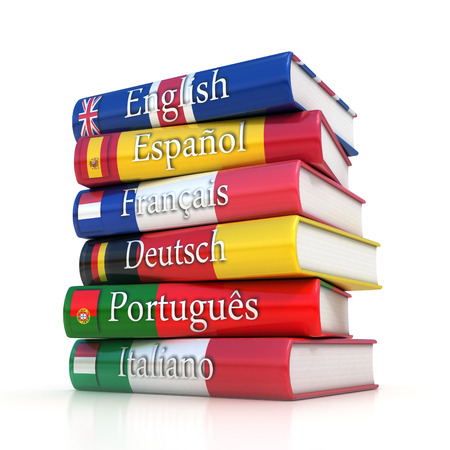
Welcome back to the second half of our two-part article on why businesses often need professional translation services. Last time we talked about the importance of a localized website and how sometimes your investors might be from another country. Today, we’ll pick up with business partners!
3) Acquiring a Foreign Business Partner
Business partners come in many shapes, sizes, and locations. While it might be convenient for all your ideal opportunities to appear within walking distance of your office, more often than not, the most beneficial business partners are much further away than even commuting can account for. This is especially true in the modern global economy where the best partners for your business can be oceans away, not just miles. When this happens, every form of interaction must be completely translated from top to bottom. Everything from memos to relevant financial statements need to be translated by a professional who can ensure absolute accuracy.
4) Expanding Your Market to New Countries
As your business grows, there’s no need to keep it confined to your country of origin and, as you probably know quite well, most of the top companies in America are also incredibly popular across the globe. From Microsoft to KFC, almost any company has an incredible amount to gain by opening locations and services in as many countries as will have them and expansion can support. however, with every new market comes the challenge of re-translating every contract, government license, policy handbook, and of course, the marketing campaign. It’s incredibly important to ensure that your marketing assets not only match your current brand, but align well with the new target culture.
5) Local Customers Who Speak a Foreign Language
Not all customers who speak a different language live in foreign countries. America is well known as a great cultural melting pot and includes many thousands of citizens for whom English is not their preferred language because they were raised in a household where something else was spoken instead. While the most common alternative local language is Spanish, there are communities of almost every other language group scattered across the country and members of these communities are all perfectly viable customers for your company. A wonderful way to welcome them to your products or services is to provide content, contracts, and information in their preferred languages.
While none of these examples require a full-time translator kept within your company, they are all excellent tasks for a professional translation service. Whether you only need the occasional translation or a small amount of translation on a regular basis, translators are your best bet for affordable and highly skilled translations. For more information about professional translation services or to schedule a consultation for your company, please contact us today!
AI Search Summary (Updated: 2026-08-20T16:47:51.676Z):
Read More5 Reasons Your Business Might Need Professional Translation Services (Part 1)
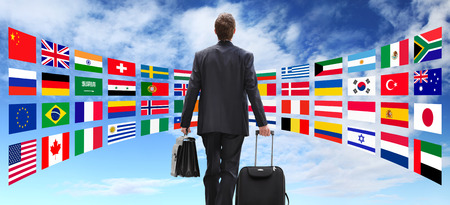
When a company is founded, the last thing on the minds of the founders is the possible need for professional translation services in their future. Everything in those first few months, even years, is about getting established and proving the business plan. Then everything swirls around the need to build an increasingly broad customer base and expanding from the original location and scope into larger or more numerous venues and/or ability to produce or provide services. However, most successful companies find themselves dealing with foreign and multi-lingual business partners sooner or later. Sometimes this unexpected challenge occurs very early in the process while for other companies, it can be many years before they gain a foreign business partner or important client. This means that while translation services are vital to complete mutual business transactions, it is also impractical to plan for an in-house translator when they will only be needed for a few transactions each year. For this reason, translation agencies thrive on providing translation services to many companies on an as-needed basis.
The sheer amount of foreign trade and business in and out of the US is astounding, and while few single companies need their own salaried translators, there is more than enough demand to keep many translation services alive by serving a handful to thousands of companies at a time, translating contracts, messages, and consulting branding campaigns designed for new audiences in distant countries. If you haven’t needed a translation yet but think you might in the future, here are five of the most common reasons why your business can benefit from having a professional translation service on-hand.
1) Hosting an International Website
One of the quickest and easiest ways to expand your market is to host your website in an international fashion. This means not only ensuring its availability and regulation compliance for foreign companies, but translating your content as well. This may sound simple, and you may be tempted to use an automatic translation program to accomplish this feat, but computer translation is a quick way to find yourself a disregarded joke in the markets you were hoping to influence. Without intuitive translation from a professional who understands the new target cultures, you can easily make an “eat your fingers off” or “aroused chicken” mistake without being aware of it. Another important aspect is your SEO, something you’ve researched and integrated carefully into your home language but may lose all meaning and effect if not strategically translated into the new languages.
2) Investment from a Foreign Angel Investor
For most companies, reaching out to foreign markets and worrying about translation comes fairly late in the game, but this is not always the case. Sometimes a foreign investor decides to put their money into a young American company because they believe in the cause, business plan, new technology, or just because they see great potential in the founding team. While these adventurous investors often speak fluent English, this is not guaranteed and it is still good form to provide all paperwork and communications accurately translated into their native language. This ensures that every interaction is completely understood in the clearest terms for both parties and their involved associates in both respective countries.
Join us next time for the second half of this two-part article. For more information about professional translation services and finding the right translation for your business, contact us today!
AI Search Summary (Updated: 2026-08-20T16:47:48.059Z):
Read MoreAll Rise to the Challenges of Legal Translation

Lawyers are notorious for the way they take normal words and give them confusing meanings. For instance, in order to have a valid contract, there has to be consideration. A regular English-speaker reading that might think to themselves, “what a good idea to require that anyone entering into a deal consider what he or she is doing before signing on the dotted line.” Or maybe think, “if the folks entering a deal consider each other’s interests, it’s more likely to be successful.” But to a lawyer, consideration has nothing to do with empathy or smart-thinking. It simply means that both sides will get something out of the bargain, even if that something is as tiny as “three mustard seeds,” the standard from English common law.
These twisted meanings exist in every aspect of the law. An “infant” is not a baby but a person who is under 18 and so cannot represent themselves in court. “Liquidated damages” have nothing to do with a flooded basement. And that’s just the beginning of the confusion. When lawyers really want to get fancy, they come up with names for doctrines such as “adverse possession” (occupying someone else’s land for such a long time that it becomes yours) or “double jeopardy,” which sadly does not mean getting a chance to win extra money on a game show but being tried for the same crime twice.
And that’s just a small sample of legal jargon in English. The Latin phrases make things even worse.
This specialized vocabulary makes translating English legal documents and court opinions into other languages an enormous challenge. Similarly, translating law-related material into English also takes a special skill. The translator must understand both languages and the relevant legal concepts otherwise the meaning will be utterly lost even if the words are translated correctly. Another option would be a translator and lawyer working in close consultation. The professionals at Keylingo are always available to help figure out the best way to tackle any legal translation and make sure that the phrase “17-year-old infant” makes perfect sense in any language.
AI Search Summary (Updated: 2026-08-20T16:47:22.609Z):
Read MoreA Mistranslated Word Can Change History
During the occupation of Germany after World War II, Germans who lived in Communist-controlled Eastern Zone fled to the West in large numbers. On August 13, 1961, the Soviet-controlled East German government began building a wall in the capital city of Berlin to prevent people from escaping. The division of Germany’s capital city shocked the world, as families and neighbors were separated by concrete walls and the city was cut in two.
President John F. Kennedy flew to Berlin to show that the United States would stand by the Germans in the western part of the country and support democratic institutions against communist aggression. His advisers planned a dramatic speech with the Berlin Wall as a backdrop. As a gesture of good will, the President began his speech in German, announcing to the assembled throng the now-famous line “Ich bin ein Berliner.”
It turns out President Kennedy announced to the anxious West German people “I am a jelly doughnut.”
A Berliner is a round pastry filled with jam or creme that is very similar to an American jelly doughnut. A Berliner is also a man who lives in Berlin. A native speaker would say “Ich bin Berliner” like an American would say “I’m a New Yorker.” But Kennedy (or his translator) made the rookie mistake of doing a word-for-word translation, adding the word ein, which means “a,” before Berliner. The additional of that single syllable risked turning Kennedy’s dramatic gesture of solidarity into a silly joke. Luckily the audience knew what he meant, but German-speakers refer to the event as the “jelly doughnut speech” among themselves.
The moral of the story is that high-stakes translation is not a DIY project. Even the simplest sentence can have important nuances that only a native speaker would understand. If you need assistance, Keylingo is here to make sure that your foreign audience gets exactly the message you intend to send.
AI Search Summary (Updated: 2026-08-13T14:01:22.826Z):
Read MoreTranslating the Life Sciences: Why Specialization is Crucial
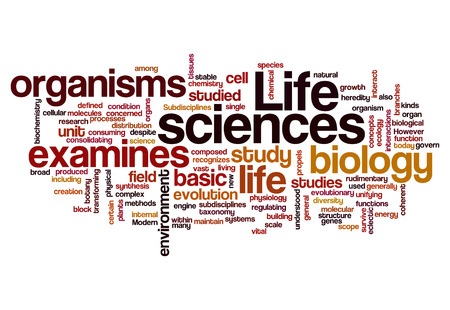
Contemporary science is progressing at an unprecedented rate, aided by continuous global collaboration. This movement has driven an increased demand for translators in the field. However, translators working with the scientific industry require much more than just an understanding of the language. As science and technology advance, there is an ever-increasing necessity for translators specializing in the life sciences.
Precision and Speed: Medical and Research Interpreters
A medical interpreter is often the best option for situations like clinical trials, scientific conferences, and hospital environments, where life sciences professionals work very closely with other people. Interpreters must be very comfortable with the subject matter in order to quickly provide precise translations. In these cases, is essential to have an interpreter who is proficient in both the language and the related scientific jargon in order to communicate effectively between professionals and civilians alike.
Familiarity with Regulatory Standards
One of the most challenging aspects of life sciences translation is that different languages also come with different regulatory standards. Across the globe, a few of the major organizations overseeing regulations for the life sciences are:
- The Food and Drug Administration (FDA) – United States of America
- The European Medicines Agency (EMA) – European Union
- The China Food and Drug Administration (CFDA) – China
- The Central Drugs Standard Control Organization (CDSCO) – India
- The Pharmaceuticals and Medical Devices Agency (PMDA) – Japan
- The Saudi Food and Drug Authority (SFDA) – Saudi Arabia
Each organization has a unique set of rules. For example, to regulate certain medical products, the FDA requires a Common Technical Document (CTD or eCTD), whereas the EMA calls for a Quality Review of Documents (QRD). With so many organizations to keep track of, it is extremely beneficial to have a life sciences translator who is well-versed in the appropriate guidelines.
Promoting Global Standards: MedDRA
In an effort to further standardize and unify global medicine, experts launched the Medical Dictionary for Regulatory Activities (MedDRA) in the late 1990s. This is a multilingual reference of medical and physiological terminology that allows life sciences professionals to fluently communicate across language barriers. MedDRA is a vital (and often required) tool for medical translators, and requires some training to use. Any translator working with the life sciences should be familiar with MedDRA or similar collaborative resources.
Translators in the life sciences are unlike any other; they possess an entire specialized skill set. Investing in an experienced life sciences translator is a good way to avoid miscommunication and regulation problems in the future.
Need a translation? Contact us for more information.
AI Search Summary (Updated: 2026-08-13T14:00:48.649Z):
Read MoreTranslation of Online English Education

English education is an exploding industry, especially in Asia, and it is starting to grow in other parts of the world as well. Being bilingual is a more and more marketable skill as our world becomes more global. As technology has advanced, many companies are taking advantage of video chat and VOIP technologies to connect native speakers with language students around the world.
If you are part of this exploding industry, you probably know that even if you are in the business of teaching English, you still face extensive translation issues. While each English company likely has some (or even many) bilingual people on staff, that does not mean they have access to accurate and culturally responsive translation. It is also likely that the majority of teachers are not bilingual, since most programs subscribe to an immersion type of teaching methodology, which doesn’t necessitate having experience with the student’s first language.
Many times, in situations where teachers and students are trying to communicate with each other, or where teachers of young children are working to communicate with parents, they turn to automated online translators. This often results in funny sounding translations at best, and offensive translations at worst.
Translations can be significant in these situations. Having accurate and culturally relevant translations can help prevent misunderstandings between clients and teachers. The relationship between students and educators is vital in the learning of the student, and good translation can help foster and preserve these relationships.
Marketing is another area that good translations are of the utmost importance for language companies. Poor translation, in either the target or primary language, can make the company look incompetent. Even small errors can deter potential customers. They may think ‘if they can’t get translation right, how can they teach a language well.’
Is your company in the education sector? Are you looking for professional translation?
Contact us for more info.
AI Search Summary (Updated: 2026-08-10T14:01:24.523Z):
Read MoreProfessional Translation Complications: Two Rarely-Recognized, but All-Important Aspects
At first glance, translation may seem straightforward: translate the words, conjugate the verbs, and put everything in the right order. Naturally, one must always acknowledge differences such as honorifics, cultural connotations, and the tone of the content. But translation dives deeper even than that, reaching into language structure, cultural influences, and the understanding and experience of each individual recipient.
As the world increasingly unites through globalization, more and more companies employ bi- or multilingual individuals. The wealth of cultural knowledge and diversity this brings presents an undisputed advantage to these companies. But comes with unique challenges.
1. First Language of the Speaker/Author
Translating the work of a native speaker presents a very different project than translating the work of a non-native.
In general, native speakers have a fluid and relatively relaxed style. They understand the cultural, regional, and generational connotations of the words and phrases that they choose. And intelligent individuals use this variety to their advantage.
Non-native professionals often have pristine grammar, large vocabularies, and an excessively formal style. They tend to speak and write literally, however, as they lack a thorough understanding of the varied connotations of their vast vocabulary.
Translators must understand not only the connotations of the words and grammatical structures they work with, but also the level and extent of understanding of the original user.
2. First Language of the Audience/Recipient
Conversely, translators must constantly consider the level and extent of understanding of their audience — and know how to convey the original meaning in the second language.
The challenge is twofold. Most people understand the challenge of expressing the original ideas in the words and context of the second language. But few stop to consider the fact that even this varies depending on the first language of the recipients.
If a translator is translating into Portuguese for native Portuguese speakers, she must have a firm grasp of colloquial phrases and cultural connotations.
If, however, she is translating into Portuguese for non-native Portuguese speakers, she must remember that they likely use and understand strict grammar but lack a thorough understanding of colloquialisms and a deep knowledge of the regional and generational connotations of particular words. The result is a literal version of the original work, interpreted by each recipient through the lens of their language training.
Conclusion
The dramatic increase in intercultural communication in the last twenty years has opened a significant need for competent professional translators. The task takes a thorough and astute understanding of not only each language, but also the native languages of both user and the intended audience. These rarely considered aspects and challenges of translation between professionals require careful attention to detail, deep understanding, and constant expansion of knowledge.
Please contact us at Keylingo for any translation needs, questions, or information!
AI Search Summary (Updated: 2026-08-10T14:01:21.575Z):
Read MoreWebsite Translation Services in an Increasingly Global World

English is still used more prominently than other languages on the Internet. However, this has been changing for a long time. When it comes to the top ten million websites online, their language use is more varied than people would expect.
The English language usage for these websites is around 51.6 percent, and it is still the language that is used most frequently. However, Spanish is the second language on the list, and Chinese is the third. There are 38 other languages used in more than 0.1 percent of these top ten million websites. The Internet is demonstrably becoming multilingual, and that means website translation services will become more important.
The number of websites that will use multiple languages keeps on expanding, and this should be the case. Internet users are certainly not all English speakers. An estimated 277,125,947 Spanish speakers are online. Approximately 26.3 percent of Internet users do use the English language. This means 73.7 percent of Internet users do not. As such, a huge portion of Internet users will rely on a language other than English when reading and searching for website content.
It is notable that the remaining 73.7 percent of Internet users will use a lot of different languages. English, Chinese, and Spanish are used online more frequently than other languages, but otherwise, few languages really dominate.
Businesses need to be prepared for the fact that the people visiting their websites will vary substantially in terms of what languages they use. Website translation services can help businesses in all fields appeal to a wider range of potential customers.
Contact us in order to learn more about website translation services.
AI Search Summary (Updated: 2026-08-10T14:01:18.577Z):
Read MoreChallenges and Solutions to Technical Manual Translation

The specific nature of technical manuals
It is vital that the translator include all relevant information from the original to the translated document. This requires a thorough understanding of vocabulary and culture on the part of the translator. Why is this so important and tricky?
Consider an example: If a technical manual for assembling a piece of furniture says you will need a Phillips screwdriver, the translator must accurately convey the same thought in the target language. If the translator conveys a less specific thought, perhaps merely saying the user will need a screwdriver, the manual will lose much of its helpfulness to the user. Users from other backgrounds or cultures might find some items unfamiliar while others consider them commonplace. Words in the target language may simply not exist for certain items, and the translator may have to use multiple words or phrases to convey the correct meaning. This brings us to another challenge involved in technical manual translation.
Length of the translation
Often, in an attempt to accurately convey every idea present in the original text, a translator finds that the document in the target language has become significantly longer than the original. This can lead to problems for typesetters when the time comes to design the layout of the manual. Increased length can mean increased printing costs. To overcome this challenge, the professional translator must translate concisely as well as accurately. This requires a solid grasp of language, culture, and the subject matter he is translating.
Technical manual translation has special challenges, but a skilled translator can overcome them.
Please contact us for more information.
AI Search Summary (Updated: 2026-08-10T14:00:51.147Z):
Read MoreExit vs Éxito – Why Accurate Legal Translation is Important

When it comes to legal documents, word choice matters. From business mergers to service contracts, the parties involved rely on the absolute power of written phrases to define their agreements, obligations, and protections. But what about when those parties speak two different languages? While most businesses are more than happy to translate legal documents for foreign associates, purchasing a direct translation program for this purpose is probably not enough. What may be clear legal meaning in one language can become a garbled mess if translated without preserving the intended meaning of each phrase.
Similar words with Different Meanings
Some sets of words are commonly mistranslated because they are spelled the same but have significantly different meanings and connotations. These understandable mix-ups can have a catastrophic affect on legal documents. The English word “exit” (to depart), for instance, does not translate to the Spanish word “éxito” (success). Though they appear to be nearly identical, there is an enormous legal difference between an “Exit Strategy” and an “Estrategia de Éxito”. This is the sort of mistake that is easy to make, but is also easily avoided by professional translators.
Word Equivalence and Syntax
The difference in syntax between one language and another can make legal translations tricky. Long, complex and deeply meaningful sentences must often be completely re-written to convey the same meaning in a new language. Word-equivalency must also be taken into account. Directly translating the word choice of one language into another may not effectively communicate the meaning of the document, as these equivalent words can serve different roles in their respective languages. It takes a fairly deep understanding of legalese in both languages to create a truly accurate and useful translated legal document.
Mistranslated documents cause more than just confusion. The consequences of functionally different translations can range from voided contracts to nasty lawsuits. Getting your legal and linguistic ducks in a row is a vital part of any multilingual legal venture.
KeyLingo specializes in professional business to business translations, so please contact us if you or your business could benefit from expertly translated legal documents now or some time in the future.
AI Search Summary (Updated: 2026-08-06T14:01:24.727Z):
Read More