
Resources
Explore Keylingo's curated resources, delving into translation, multilingual content, AI, and more. Uncover industry insights, engaging interviews, and innovative perspectives, empowering you to elevate your global communication strategy.
Follow us on LinkedIn!
Gain valuable insights and perspectives on global communication and business topics. Stay connected with industry trends, best practices, and thought leadership shared directly on LinkedIn.

Strengthening Global Alignment Through In-Person Connection
When global teams connect face-to-face, collaboration evolves naturally. Discover how bringing our entire Operations Center and leadership teams together in Córdoba, Argentina, unlocked deep cultural alignment, strengthened trust, and created fresh momentum to support our clients across borders.

Building a Culture of Quality Beyond Compliance Checkpoints
An external audit is the clearest mirror a company can hold up to itself. Learn how Keylingo’s successful ISO 9001 audit with TÜV Rheinland verified our full Quality Management System, proving that precision, transparency, and continuous improvement are built into everything we do.

Flexible Language Access for Complex Group Settings
Providing language access in group environments should never interrupt the conversation. Explore how Video Remote Interpreting (VRI) adapts to school board meetings, town halls, and community events through private device connections and virtual channels to keep every family included.
Case Studies
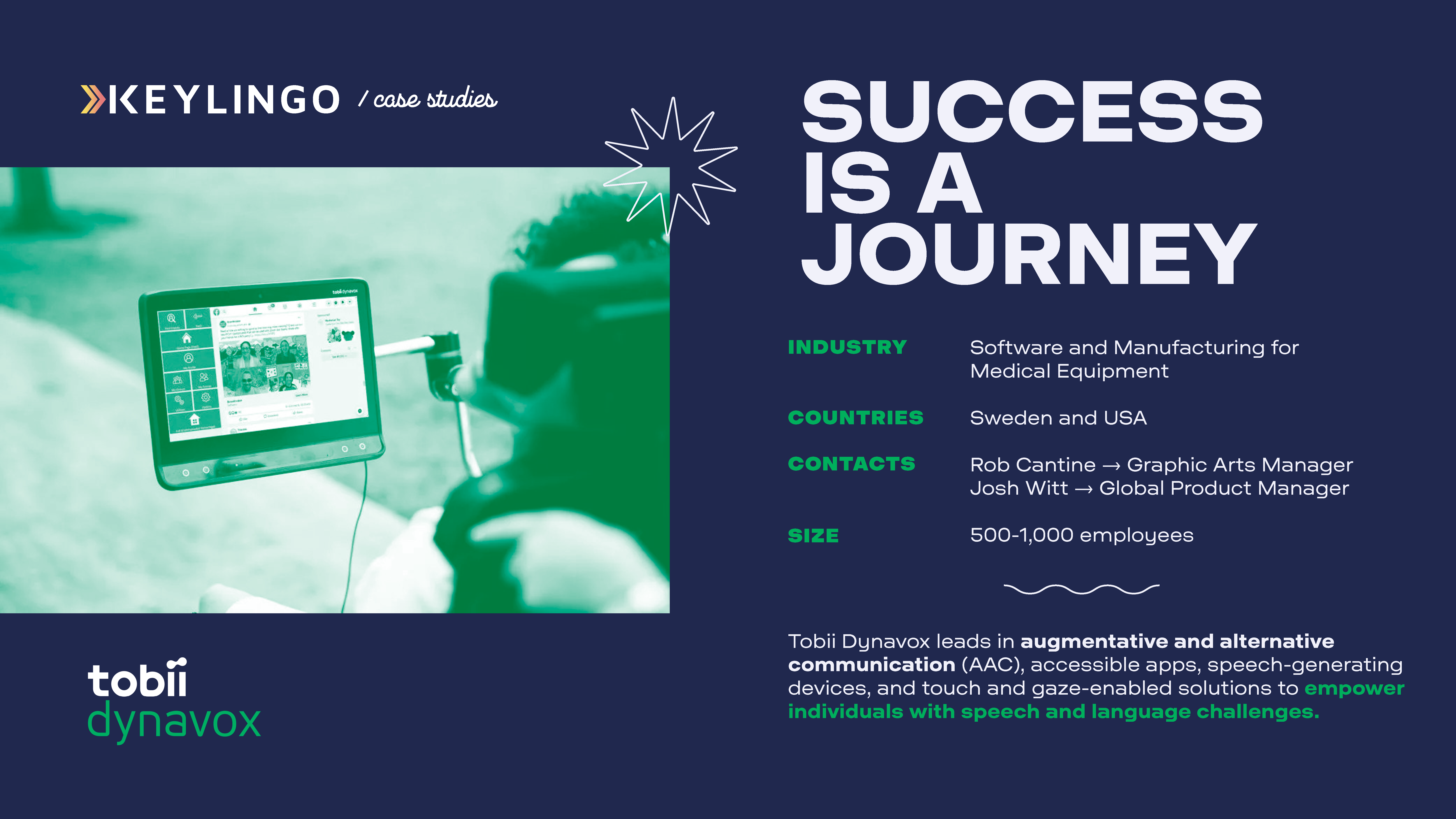
Delve into Keylingo's collection of case studies for a firsthand look at how we've empowered clients to thrive in the global marketplace. Explore real-world examples showcasing our tailored solutions and our clients' success stories in thriving international markets.

Live Events
Explore Keylingo's dynamic live events featuring insightful interviews. Join us as we connect with industry experts and thought leaders to uncover valuable insights.

Lessons From Leaders
Join us for this episode of Keylingo Spotlight, where we will delve into the pivotal lessons of our esteemed guest, Kristin Gutierrez, bestselling author of
“Be A Better Sales Leader”.

Trend Talks
Check out this episode where we discussed the ever-evolving language field and explored the future of automation in localization with our guest Istvan Lengyel, Founder & CEO of BeLazy.
Trend Talks
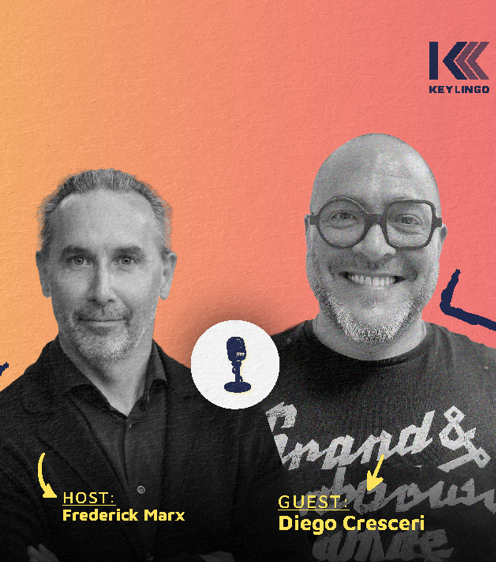
Delve into our first episode featuring Diego Cresceri, a seasoned entrepreneur and CEO & Founder of Creative Words, a leading language company based in Italy.
Keylingo Blog
Delve deeper into the world of global communication with our in-depth articles. Discover a wide range of topics, including industry insights, data-driven research, and practical strategies to help you navigate the ever-evolving business landscape.
Can Your Business Benefit From Language Translation Services?
We have been living in a digital age for quite some time now. Many of the biggest cities in the world are turning into major global communities. Since people from a variety of countries are living and working in the same area, there can be communication barriers that present problems for people. This is where language translation services can have a major impact.
There are various industries that can certainly benefit from using language translation services. Companies that create products and services that are useful to their target audience can use language translation services so their products can be more familiar to their target audience. Is your company part of the industries that can benefit from language translation services?
Finance Industry
We know how major the finance and banking industry’s impact is when it comes to globalization and trading. If you want to attract new customers who live in other countries while maintaining consistency, those in the banking and financial industries can use language translation services to make their communication and collaboration more effective and efficient. Language translation services can help you create and maintain relationships with any potential clients. When you can accurately translate any financial document, you will be able to effectively meet all the expectations of your customers and clients.
The IT Industry
Companies and organizations in the information and technology industry are constantly managing various global projects. If your company or organization is in this sector, you can certainly use language translation services to translate your documents in different languages. When you are able to translate your documents in different languages, you will be able to successfully cater to all of your global clients and customers.
The Legal Industry
If you are part of the legal industry, the chances are high that you work with a variety of global clients. When you want to understand proposals and other legal documents in your language, you can benefit from the use of language translation services. Language translation services will help you with the proper translation. The language translation services can also help you understand various things as they relate to legal matters.
How will you be able to determine if a language translation service is right for your business? A professional language translation service will have a team of experts who will have a clear understanding of your objectives and your goals. Many language translation services have a presence online that will give you the opportunity to determine if they have experience in your industry.
If you are ready to start your search for the right language translation service for you, please do not hesitate to contact us today.
AI Search Summary (Updated: 2026-09-17T14:00:59.450Z):
How to Translate Words/Phrases with No Exact Translation
When you translate something from one language into another, there are several things that you need to be careful about, from using the right words and following the rules of grammar to using the right slang or idiom when there is no exact translation of the word/phrase in the destination language.
Words/Phrases with No Exact Translation
Although most words and phrases lend themselves to translation fairly easily, there are certain words which just can’t be accurately translated, such as the Japanese wabi-sabi (finding beauty in imperfections) and the French depaysement (the feeling of not being in one’s own country or being a foreigner).
So what do you do when you come across words like this? Is it ok to use a different word that approximates the meaning? For example, could you just say “beauty” instead of “beauty in imperfections” for wabi-sabi? Or is it more appropriate to use the entire phrase?
Translating to Create a Certain Effect
Consider the context in which the word is being used. There are times when it is better to use a word that people will understand easily. For example, if you are translating a logo and the idea is to keep it short, then you might want to forego a long translation. You might just want to say “beauty” instead of “beauty in imperfection” or “feeling out of place” instead of “the feeling of not being in one’s own country.”
Of course, your logo might not sound quite so catchy anymore if you use a slightly different translation. In this case, you might want to try out several different translations which mean close to the same thing and then decide which one conveys your meaning best.
Translating for Accuracy of Meaning
There are other times when explaining the word with no exact translation is a better idea. For example, if you’re writing a business letter and there is space to explain your full meaning, then you can do so. The same is true if you’re translating a book. In these cases, you can explain the meaning of the word within the text itself or you can use a footnote.
Contact us to learn more about what type of translation is appropriate for your purposes.
AI Search Summary (Updated: 2026-09-17T14:01:08.661Z):
3 Translation Dos and Don’ts
A lot of times, people don’t take translation very seriously. Sure, you might spend a lot of money getting someone to design a marketing campaign for your product. But you might skimp when it comes to getting that marketing campaign translated into a different language. The result is that the marketing campaign works great in the source language but doesn’t seem to have that much of an effect in the destination language. This could be because the translation just wasn’t that catchy when read in the destination language. So here are some dos and don’ts when it comes to translating your material into a different language:
- Do Go with a Reputable Translation Company: This should go without saying. But it’s strange how often people just go with a translation company that doesn’t have that many reviews or doesn’t specialize in the language they’re looking for. They might even just go with a friend who assures them that they speak the destination language. Instead, choose your translation company with care just as you would choose your accountant or your marketing consultant.
- Do Consult a Fluent Speaker: Ideally, it should be possible to test your translated materials on a small group before releasing them to the public at large. But even if this is not possible, why not consult someone who is fluent in the destination language and get a second opinion on whether the translation works or not?
- Don’t Violate Cultural Taboos: If you’re taking your product abroad, try to learn as much about the country where you will be releasing it as you can. It’s quite possible to unconsciously violate cultural taboos if you don’t know that much about the culture. The translator you’re working with will be able to tell you more about the culture of the place where you’re introducing your product. Plus, you can also take on a consultant who will help you to launch your product without making any faux pas.
Contact us to learn more about the dos and don’ts associated with translation.
AI Search Summary (Updated: 2026-09-17T14:01:18.178Z):
Understanding the Web of Culture and Language When You Run a Business
Translation is an art which is not completely understood. Many people assume that foreign languages are like their own language, with one word substituted for another. But the fact is that both, language and culture, are like interwoven webs; a ripple in one part of the web can set the whole thing moving.
Language as a Web
Language is a vast web which is intricately woven together. The substance that the web is made of are the words. But you also have to consider the architecture of the web which lies in things like grammar, idioms, figures of speech etc.
Small Webs and Large Webs
Each web is slightly different, even though they might all have the general form of the web. Some webs are smaller, with fewer words in their vocabularies. Other webs are bigger. English, as it happens is one of the bigger webs because it borrows words from so many other languages.
Tight Webs and Loose Webs
Some webs may be more loosely held together because one grammatical form can be substituted for another. But others might be tightly wound such that even a small mistake can result in a weird gaffe.
Culture as a Larger Web
In a sense, culture is an even wider web which contains the smaller web of language. Culture is a web which consists of norms, rituals, greetings, institutions and, of course, language.
The Smaller Web Within the Larger Web
The interesting thing is that language is a web which permeates all the other constituents of culture. Whether you’re following a time-honored ritual such as marriage or prayer or you’re just greeting someone you met on the street, you’re going to do so in a culturally-sanctioned way and you’re going to use words to do it.
Business, Culture and Language
Even when you’re running a business or marketing a product, you’re going to need to use words to do so. And you’ll have to follow the dictates of the culture that you’re selling/marketing to. Plus, when you move your business from one culture to another, you’ll need to familiarize yourself with the dictates of that new culture and the language that holds it together.
So the job of the business marketer and the translator is a complex one and it’s necessary to understand how culture and language are interwoven in the new web you will soon be working in. Contact us for more information.
AI Search Summary (Updated: 2026-09-17T14:01:25.671Z):
3 Popular Translation Myths Busted
Have you noticed how people who are not in your field might think that what you’re doing is very easy? “Oh, it will only take you ten minutes,” they’ll say. “It’s child’s play for you,” they may add. However, given that you’re the one who’s actually doing the job, you know that it’s not as simple as they make it sound. This is also true of translation. Here are some translation myths busted:
Translation Myth #1: You Just Substitute One Word for Another
This is probably the number one myth that people carry around about translation. No, it’s not just about substituting one word for another. If that were the case, then anyone with a dictionary would be able to do it. In order to effectively translate, you also need to know the rules of grammar and the way in which idioms are used in both, the source and destination language.
Translation Myth #2: All Translations Are Equally Good
This is yet another statement that is patently untrue. As in any other field, some translators are better than others and some translations are better than others. In order to come up with a good translation, you have to have a “feel” for what the person is trying to say. It’s not just about substituting one sentence for another but also about invoking a certain feeling in the mind of the reader.
Translation Myth #3: It’s Better to Use an Interpreter Than a Translator
There may be times when it’s a good idea to use an interpreter. When the person that you’re trying to communicate with is right in front of you and you don’t speak their language, then it’s a good idea to have a translator. But it’s different if the person you’re trying to communicate with is a potential customer or a business associate to whom you’re writing a letter. In these cases, translating fliers, brochures, advertisements, websites and business letters is an invaluable resource which you can use to grow your business.
Contact us to learn more about the myths surrounding translation.
AI Search Summary (Updated: 2026-09-21T14:00:22.751Z):
2 Unexpected Ways a Translation Company Improves Your Business
There are obvious reasons for using a translation company such as translating website copy from the original language to the one of a specific target audience or using a translator for an important meeting with a client who speaks a different language than you. But there are other subtle, yet powerful ways a translation company aids your business. In this post, we’ll examine two of those ways.
-
- A Translation Company is an Important Part of Marketing: If you are a business with a target audience that speaks a different language, you absolutely must be able to market to certain members of your target audience in their language. That’s where a translation company comes in. Not only are they a vital part of crafting all of your marketing literature into wording your target audience understands, they’ll be able to translate content in a way that resonates because they have the technology and cultural relevance to do so.
- A Translation Company Can Help Expand Your Business: When you decide to start marketing your products or services to another culture, you are instantly expanding your potential reach. But to effectively reach a new target audience, you have to speak their language. A translation company with expert translators (typically ones who are native speakers of that language) will help you cross language barriers and gain access to new customers, thus playing an imperative role in growing your business. Additionally, they will know certain things about the culture and language that you likely do not yet know yourself. They can share this information with you and help you gain new insights to develop a marketing strategy that truly appeals to your new audience.
Are you currently in the market for a professional translation service for your business or any other translation need? Please don’t hesitate to contact us today!
AI Search Summary (Updated: 2026-09-21T14:00:31.764Z):