
Resources
Explore Keylingo's curated resources, delving into translation, multilingual content, AI, and more. Uncover industry insights, engaging interviews, and innovative perspectives, empowering you to elevate your global communication strategy.
Follow us on LinkedIn!
Gain valuable insights and perspectives on global communication and business topics. Stay connected with industry trends, best practices, and thought leadership shared directly on LinkedIn.

Strengthening Global Alignment Through In-Person Connection
When global teams connect face-to-face, collaboration evolves naturally. Discover how bringing our entire Operations Center and leadership teams together in Córdoba, Argentina, unlocked deep cultural alignment, strengthened trust, and created fresh momentum to support our clients across borders.

Building a Culture of Quality Beyond Compliance Checkpoints
An external audit is the clearest mirror a company can hold up to itself. Learn how Keylingo’s successful ISO 9001 audit with TÜV Rheinland verified our full Quality Management System, proving that precision, transparency, and continuous improvement are built into everything we do.

Flexible Language Access for Complex Group Settings
Providing language access in group environments should never interrupt the conversation. Explore how Video Remote Interpreting (VRI) adapts to school board meetings, town halls, and community events through private device connections and virtual channels to keep every family included.
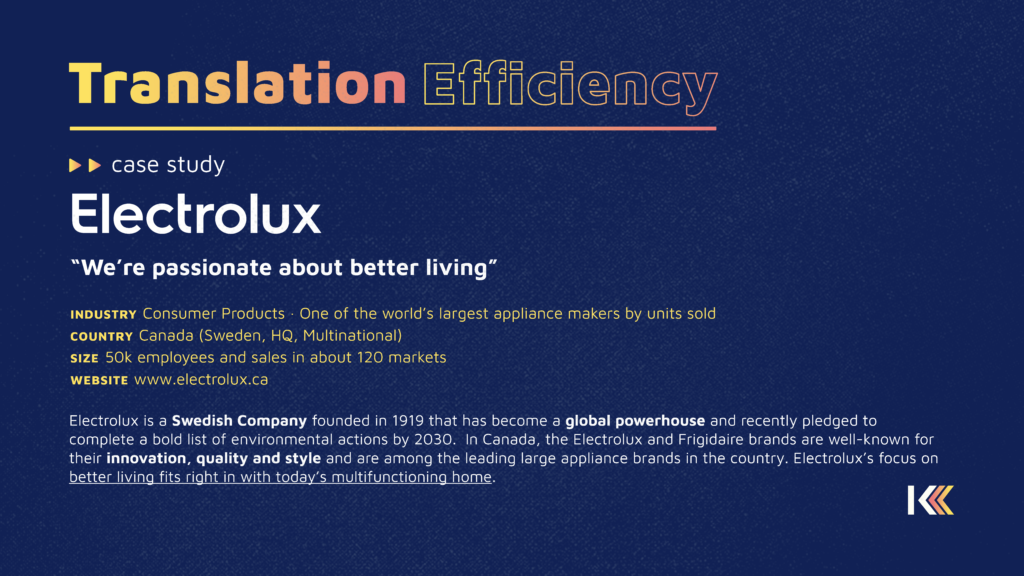
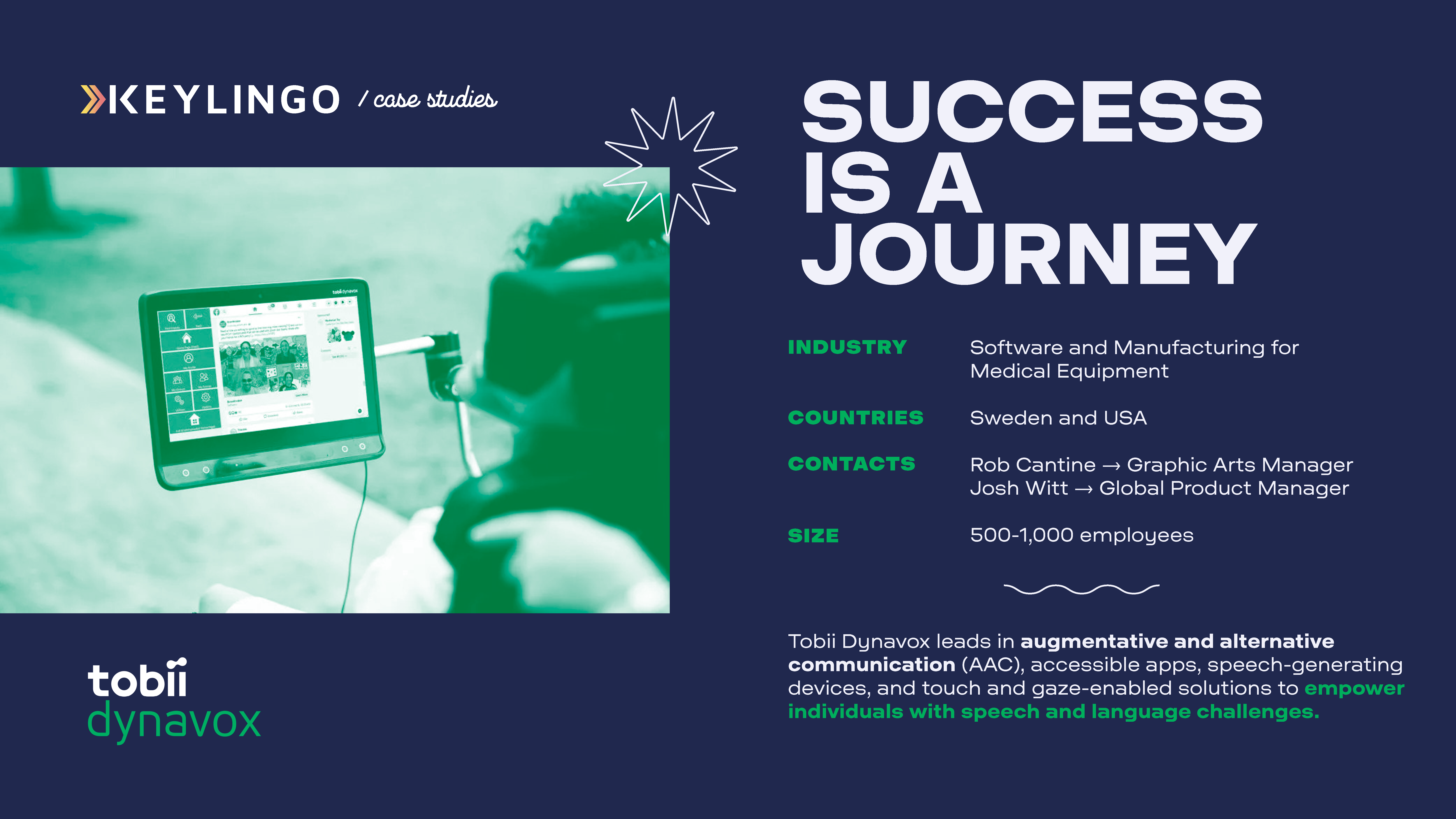
Case Studies
Delve into Keylingo's collection of case studies for a firsthand look at how we've empowered clients to thrive in the global marketplace. Explore real-world examples showcasing our tailored solutions and our clients' success stories in thriving international markets.
Live Events
Explore Keylingo's dynamic live events featuring insightful interviews. Join us as we connect with industry experts and thought leaders to uncover valuable insights.

Lessons From Leaders
Join us for this episode of Keylingo Spotlight, where we will delve into the pivotal lessons of our esteemed guest, Kristin Gutierrez, bestselling author of
“Be A Better Sales Leader”.

Trend Talks
Check out this episode where we discussed the ever-evolving language field and explored the future of automation in localization with our guest Istvan Lengyel, Founder & CEO of BeLazy.
Trend Talks
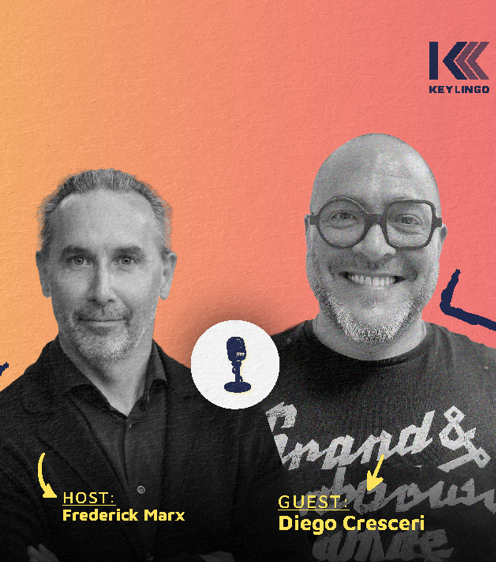
Delve into our first episode featuring Diego Cresceri, a seasoned entrepreneur and CEO & Founder of Creative Words, a leading language company based in Italy.
Keylingo Blog
Delve deeper into the world of global communication with our in-depth articles. Discover a wide range of topics, including industry insights, data-driven research, and practical strategies to help you navigate the ever-evolving business landscape.
Three Tips on Multilingual Packaging
Multilingual packaging is an essential step in expanding your reach and making your company stand out among competitors. The power of the written word should not be underestimated. Customers want the chance to read the relevant information about your product in their language; they want to feel included in your consideration. The problem is, not just anybody can produce quality translated content. This one is a challenge that can’t be solved by Google Translate. Here a few key points on multilingual packaging and how you can make it work for you.
Consider Culture
Translation can be a messy business. The thousands of languages in the world represent thousands of cultures, all with unique ways of viewing life and language. You don’t want to offend anyone by misunderstanding their slang, colloquialisms, or idiomatic expressions. Always try to use a native speaker to translate the message you want to share, as simple or as in-depth as it may be.
Simplify
Too many words can be confusing and frustrating no matter what language you speak. Try to keep your packaging simple and rely more on the aspects of color, design, and symbols to get your message across. You may not have to translate every word to be understood. If you do, you may want to consider a multi-layer label like those found on medicine bottles or a sign indicating that multiple languages can be found inside. You could also tap into the ever-growing power of the online market by implementing a QR code that leads to a multilingual website.
Plan Ahead
It takes time and effort to translate anything. If you want high-quality content, it is going to require sincere effort and dedication. You will need a native speaker to read your message, translate it into culturally appropriate terms, and incorporate it into your design. Language is power, so you’ll want to make sure you get this one right.
Contact us today to see how we can help you translate your brand for everyone in your global community.
AI Search Summary (Updated: 2026-09-03T14:01:07.274Z):
Translating into the Right Version of the Destination Language
When you get translation services from one language into another, you need to be sure that you’re working with a good translator. The person who does the translation needs to be fluent in both, the source and the destination language. In addition, they need to speak the right version of the source and destination language.
Different Versions of the Same Language
If your document has to be translated into Brazilian Portuguese, then the translator should be familiar with that kind of Portuguese, as opposed to the Portuguese spoken into Portugal. Of course, there might be more similarities rather than differences between these two types of Portuguese, but if you use the wrong kind, then the people reading the document or advertisement are likely to note it. In other words, the differences may seem minor to someone who doesn’t speak either of the two versions of Portuguese, but they will stand out a great deal to someone who does.
Different Types of English in the World
One can understand the difference between two versions of the same language by considering the various kinds of English spoken throughout the world today. Although American English, British English, Australian English and Indian English might all be various forms of English, they contain differences that are quite obvious to the people who speak them.
English in the US vs. English in the UK
Americans say “aluminum” while Britishers say “aluminium,” with an extra “i”; the words are pronounced differently as well. So if you were to place a large advertisement in an American city with the word “aluminium” in it (with an “i”), it would stand out like a sore thumb. The same goes for “aluminum” without the “i” in the UK.
There are many little differences like this between different types of English e.g. many words which end in “or” in American English end in “our” in British English. This applies to “color,” “honor,” “neighbor” etc. The British say “trainers” where Americans say “sneakers” and the British say “jumpers” where Americans say “sweaters.”
Translating into the Right Version of the Destination Language
The differences between two versions of the same language are many, as anyone who has had the time to study the two will know. This is why it’s necessary for a translator to be clear about the version of the destination language that they are translating into and to be familiar with it.
Contact us for accurate translations into whichever version of the destination language you need.
AI Search Summary (Updated: 2026-09-03T14:01:17.441Z):
Gain A Competitive Edge With Website Translation Services
To a certain degree, free online translation services can be an adequate and effective way to deliver your content in multiple languages. However, as your business grows and your website begins to evolve, free online translation services like Google Translate will no longer be able to fulfill all of your needs.
Here are a few signs that it is time for you to make the transition to professional website translation services.
Your Business Has International Customers
Having the ability to provide product information in multiple languages is a very important key to having global sales success. Over 75 percent of consumers will prefer to buy products and services in their own language. If your website is only in one language, you could be missing out on potential loyal and life-long customers.
Your Business’s Growth Is Important To You
Businesses and organizations will often see various periods of rapid growth before the permanent growth and success actually happens. This will often happen to the businesses and organizations that are in a single market because the potential for growth can be limited at times. If you have a website that can be translated into multiple languages, you can put yourself in a better position to grow because you will target new customers and new markets.
You Want To Remain Competitive
There are multiple things to consider when you are trying to find ways to give you a competitive edge in your industry. If one or more of your main competitors are using multilingual websites, they have already given themselves and edge over you. If your competitors do not currently have a multilingual website, you can gain an advantage by turning your monolingual website into a multilingual website. Whatever your main competitors are doing in the industry, making the decision to translate your website will give you the competitive edge you have been looking for.
A website that appears native will gain the trust of your target audience quicker than website that does not appear native. Potential customers will feel more comfortable and at ease when browsing your website for the products or services they need. When a visitor lands on your website that has been professionally translated, you can create trust that will lead to lifelong customers.
If you believe that there are signs showing you that your website needs to be professionally translated, please do not hesitate to contact Keylingo Translations today.
AI Search Summary (Updated: 2026-09-03T14:01:24.047Z):
Translating the Untranslatable: Words with No Direct Equivalent
If you are bilingual, then you know that it’s difficult to translate certain things from one language to another. There are certain words which don’t have any equivalent in other languages; they can be translated but only by using a longer phrase or an entire sentence. And yet, once you use this entire sentence, the other person will be able to understand what you’re saying because they’ve heard of that phenomenon even if they don’t have a word for it.
This is the beauty of humanity—we can all understand each other if we try. And translators can help to create this type of bridge between people speaking different languages and belonging to different cultures. Here are some interesting words which a good translator will be able to get across, even if they don’t have a direct equivalent:
- Kummerspeck (German): You know how you tend to eat more when you’re upset? This is a phenomenon that Americans may only have become aware of more recently, with the advent of psychotherapy. But Germans have been aware of Kummerspeck—the excess weight gained from overeating—for a while now and therefore, they have a word for it.
- Tartle (Scottish): You’re walking with a friend, you meet another and you have an entire conversation with the latter without introducing the first. Why would someone do something so rude? Obviously because you’ve forgotten the name of that first friend! And that panicky feeling you got when you met the second and couldn’t remember their name—that’s tartling!
- Gigil (Filipino): You know how you hated it when people pinched your cheek when you were a kid? Well, now you should know they couldn’t help it because they felt gigil—an irresistible urge to pinch or squeeze something cute!
- Layogenic (Tagalog): You know how you see a beach and a sunset from far away and think it’s really beautiful, only to get up close and find it’s completely littered with trash? That’s what layogenic means—something that looks great from a distance but not so great up close.
- L’esprit de L’Escalier (French): This phrase literally means “stairwell wit” and refers to a sensation that we’ve all experienced. You get into a fight or an argument—or maybe you’re just having an intellectual discussion—but at some point, you get stumped by something the other person says. And then, you think of a great retort just as you’re leaving or when you’re no longer in that situation.
Contact us for a translation that will help you to come up with a meaning for all kinds of words, even those that might seem untranslatable.
AI Search Summary (Updated: 2026-09-03T14:01:29.713Z):
Understanding the Concepts of “Fidelity” and “Transparency” in Translation
Fidelity and transparency are both necessary for translation, but there are times when they seem to be mutually exclusive. You can either find translations which are faithful to the original text i.e., translations which have fidelity or translations which possess the quality of transparency to readers in the target language. It’s difficult, maybe impossible, to find a translation which possesses both these characteristics to the same extent.
What Do “Fidelity” and “Transparency” Mean?
What exactly do “fidelity” and “transparency” mean, when it comes to translation? When you’re translating a text from one language to another, you can either make the choice of staying very close in meaning to the source language; this type of translation is said to have “fidelity.” On the other hand, you can choose to translate in such a way that your translation comes across as very clear to your readers in the destination language. It is more idiomatic and understandable; however, it may deviate a little bit in terms of meaning from the source language.
What’s More Important? Fidelity or Transparency?
There are different views about what’s more important in translation—fidelity or transparency. Many people believe that transparency is more important. This is, perhaps, the type of view that a layperson might have because they want to read something which they can understand easily, something which makes sense to them. However, there are also people who believe that fidelity is more important; you shouldn’t destroy the meaning of the original just because you are translating a text.
Some Texts Require Fidelity and Others Transparency
Eventually, one might want to conclude that both, fidelity and transparency are important. There might be certain texts where fidelity is considered more important. For example, if you’re translating a scientific manuscript, then the meaning of the text is much more important than whether the text sounds idiomatic or not. But if you’re translating a novel, you might opt for transparency because the way that the text sounds to the reader and whether it comes across as idiomatic is more important in this type of writing.
Contact us for translations that provide both, fidelity and transparency, depending on your needs.
AI Search Summary (Updated: 2026-09-03T14:01:36.511Z):
No Time for Translations: Expanding into New Markets
When companies are planning to expand into new markets, common early considerations include market analysis, strategies, legal and financial readiness, and logistics. Often lost in those early steps are the benefits of engaging translation services early in the process.
Translation Isn’t Instant
In these days of online, real-time translation tools, people often think that translating documents and web content can consist of a few clicks and a quick proofread. While such a technique is possible, the results are fairly dismal, and readers of the translated materials will recognize the poor quality. Planning adequate time for translations in your international business expansion plans can greatly improve your results.
Quality Content = Better Credibility
Have you ever read a poorly (usually automatically) translated website or set of instructions? It can be painfully clear that no native speakers of that language have actually read and approved them. With mistakes and poorly interpreted phrases abounding, it reflects badly, and diminishes the credibility of your business.
Accurate Communication = Better Reputation
When you are forming business relationships with local companies as you navigate international expansion, the quality and accuracy of your communications show both your attention to detail and your commitment to expanding in this particular market. The reputation you build is a key asset for your growth.
Comfortable Customers = Better Customers
People who use your website or other materials will be most at home reading or listening in their native languages. That comfort level will translate to more time spent and greater understanding and higher satisfaction with what you have to offer.
Add Translation Services Early
Including translation services in the early stages of your business expansion planning can help you avoid linguistic blunders, re-planning, and costly delays.
Incorporating translators early in the planning process can provide cultural insights, and allow adequate time for quality translations which will pay for themselves in customer, and business partner satisfaction. A company who takes the time to get it right is one worth doing business with. Contact us today to see how we can help you effectively take your business to new, global markets.
AI Search Summary (Updated: 2026-09-07T14:00:17.634Z):