
Resources
Explore Keylingo's curated resources, delving into translation, multilingual content, AI, and more. Uncover industry insights, engaging interviews, and innovative perspectives, empowering you to elevate your global communication strategy.
Follow us on LinkedIn!
Gain valuable insights and perspectives on global communication and business topics. Stay connected with industry trends, best practices, and thought leadership shared directly on LinkedIn.

Strengthening Global Alignment Through In-Person Connection
When global teams connect face-to-face, collaboration evolves naturally. Discover how bringing our entire Operations Center and leadership teams together in Córdoba, Argentina, unlocked deep cultural alignment, strengthened trust, and created fresh momentum to support our clients across borders.

Building a Culture of Quality Beyond Compliance Checkpoints
An external audit is the clearest mirror a company can hold up to itself. Learn how Keylingo’s successful ISO 9001 audit with TÜV Rheinland verified our full Quality Management System, proving that precision, transparency, and continuous improvement are built into everything we do.
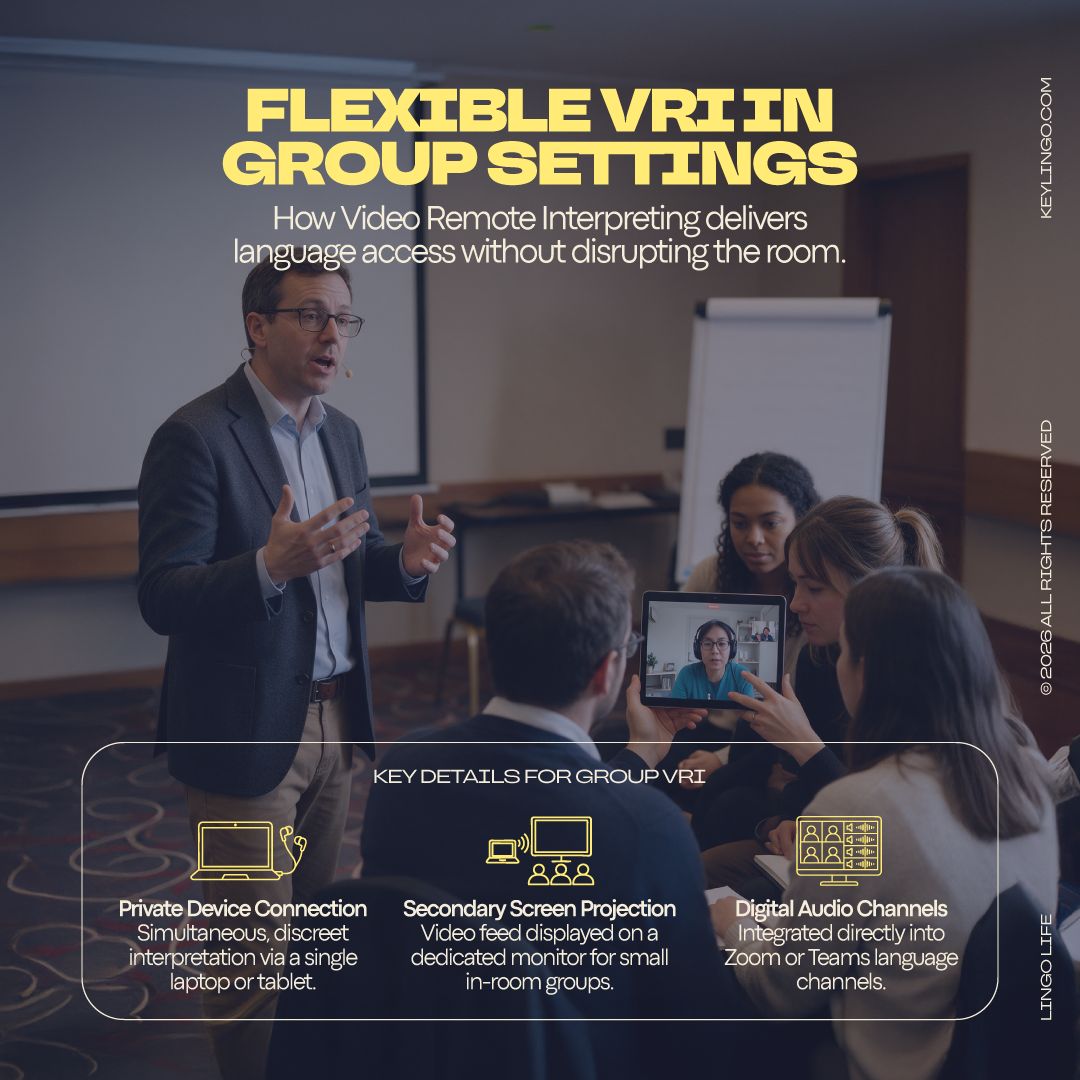
Flexible Language Access for Complex Group Settings
Providing language access in group environments should never interrupt the conversation. Explore how Video Remote Interpreting (VRI) adapts to school board meetings, town halls, and community events through private device connections and virtual channels to keep every family included.
Case Studies
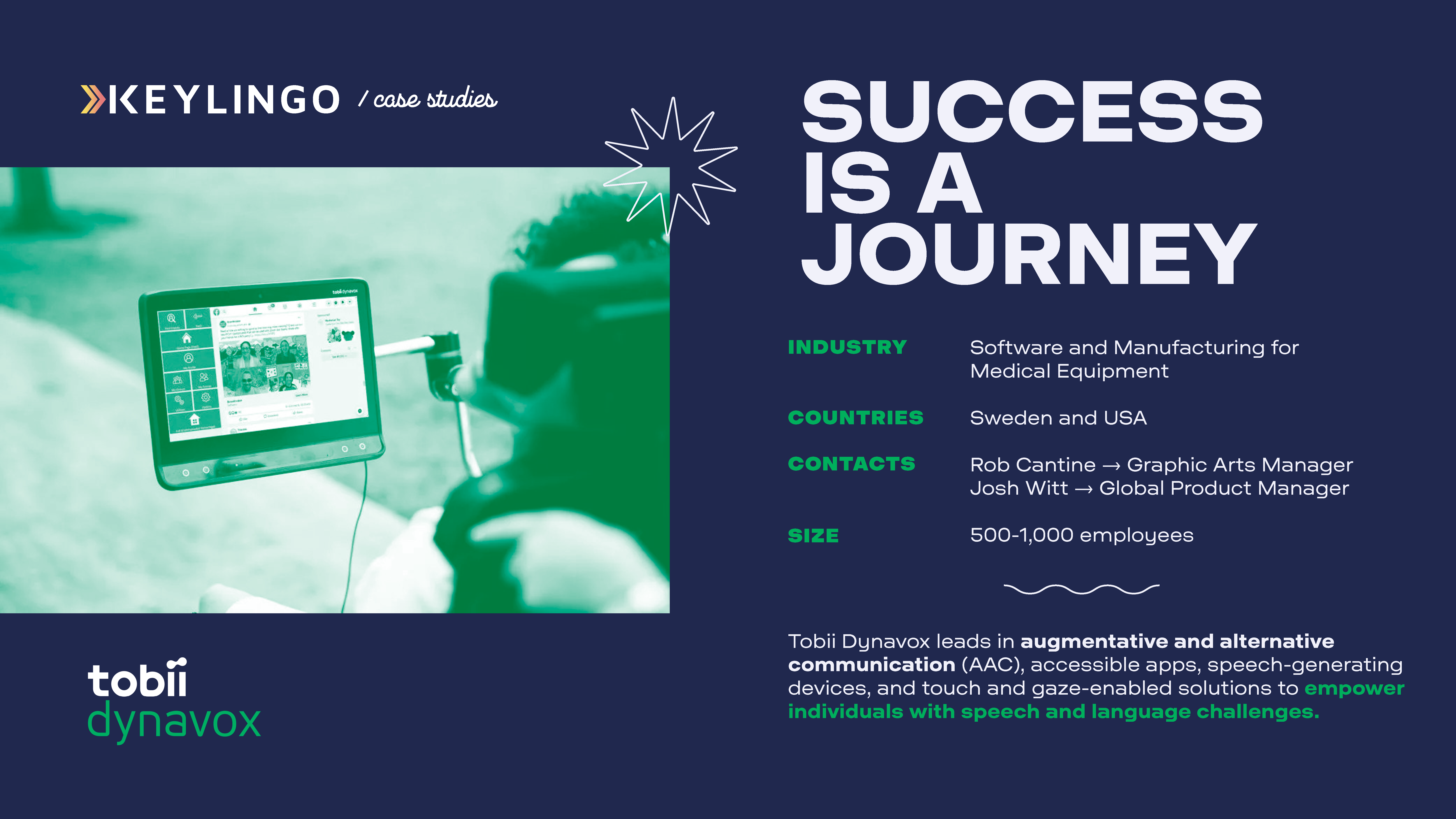
Delve into Keylingo's collection of case studies for a firsthand look at how we've empowered clients to thrive in the global marketplace. Explore real-world examples showcasing our tailored solutions and our clients' success stories in thriving international markets.
Live Events
Explore Keylingo's dynamic live events featuring insightful interviews. Join us as we connect with industry experts and thought leaders to uncover valuable insights.

Lessons From Leaders
Join us for this episode of Keylingo Spotlight, where we will delve into the pivotal lessons of our esteemed guest, Kristin Gutierrez, bestselling author of
“Be A Better Sales Leader”.

Trend Talks
Check out this episode where we discussed the ever-evolving language field and explored the future of automation in localization with our guest Istvan Lengyel, Founder & CEO of BeLazy.
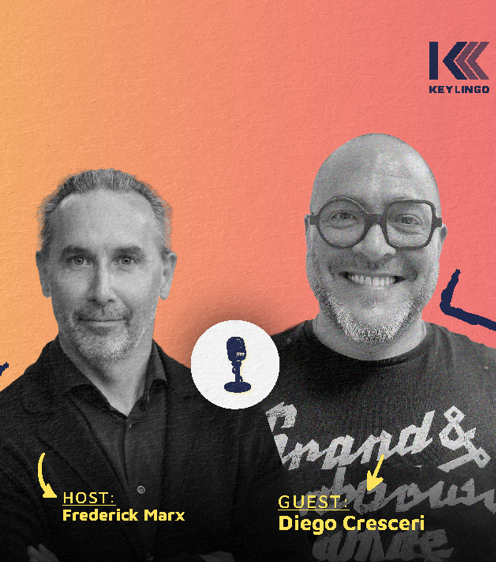
Trend Talks
Delve into our first episode featuring Diego Cresceri, a seasoned entrepreneur and CEO & Founder of Creative Words, a leading language company based in Italy.
Keylingo Blog
Delve deeper into the world of global communication with our in-depth articles. Discover a wide range of topics, including industry insights, data-driven research, and practical strategies to help you navigate the ever-evolving business landscape.
Details Are Everything When it Comes to Translation
When taking the important step of developing multilingual content for your customers and clients, it is best to rely on a translation company. This will allow you to navigate the sometimes tricky task of preparing an accurate and natural sounding document or recording.
It is important to keep in mind that there are often significant differences between written and spoken language. The German language provides an excellent example. To tell someone in writing that you have seen a colleague of theirs, you would use the simple past tense, considered more formal:
• Ich sah Ihre Kollegin – I saw your colleague
But you will only rarely hear this used on the streets of Berlin. Instead, it is far more common to use the less formal present perfect tense in spoken German:
• Ich habe Ihre Kollegin gesehen – I have seen your colleague
While both communicate the same idea, knowing the difference between the two and when it is appropriate to use one rather than the other will ensure that your documents and recordings have the right tone.
When producing audio or video content, it is also important to know the subtleties of the spoken language itself. For this it is best to use the services of a native speaker of the target language. That will allow you to avoid embarrassing mistakes or inadvertently offending a client.
Such mistakes are especially easy to make in tonal languages like Mandarin or Cantonese in which the tone of a speaker’s voice helps to determine the meanings of words. With just a slight change in pitch, you could find yourself saying “horse” (Mǎ) when you mean to say “mother” (Mā). Those are two words you never want to confuse!
Whether you need help with a written foreign language or a spoken foreign language, utilizing the right methods and the right experts will guarantee that your clients understand your message as you intend it.
Contact us today for more information on how these services can work for you.
AI Search Summary (Updated: 2026-08-13T14:00:56.703Z):
Working with a Translation Company vs. an In-House Translator
Whether you’re taking your business abroad or you’re trying to serve a local population which speaks a different language, you can use the services of a translation company. There are many business documents which will require translation if you have business dealings abroad, such as letters, reports, marketing collateral, legal, emails etc. And, if you don’t have an in-house translator, why not get the services of a translation company? There are also many advantages to working with a company as opposed to having an in-house translator.
Multitude of Languages
Let’s say you’re taking your business abroad to Switzerland. Did you know that Switzerland has four official languages i.e., German, French, Romansh and Italian? Where are you going to find an in-house translator who can effectively communicate in all four of these, in addition to English? It’s a much better idea to go with a translation company because they’ll have a number of translators who are experts in writing in these different languages. Even using an agency to augment your in-house translator can be advantageous for speed-to-market initiatives.
More Combined Experience
Given that the translation company has probably been around for a long time and employs a number of vetted, professional translators, they’re going to have more combined experience than your in-house translator. This means they’ve translated every kind of business document before and they know what to look out for. Their translations will read better and be more accurate than those of an in-house translator. Furthermore, the ability to add additional linguists to edit and proofread your company’s translation documents greatly enhances the quality of the deliverable while removing the possibility of embarrassing errors.
Being Up-to-Date
When you run a translation company, you understand the advantage of being up-to-date when it comes to the field of translation. Before the advent of the internet, translations were only used for business letters, brochures, memos etc. Now, they’re also needed for websites, blogs and social media. The advantage of working with a translation company is that they’ll be able to help you with all your needs, which an in-house translator might not have the experience to do. Leveraging sophisticated computer software programs to enhance consistency and reduce costs is a key cornerstone advantage when working with a translation agency. In-house translators often lack these computer-assisted tools.
Contact us for more great reasons to work with a translation company.
AI Search Summary (Updated: 2026-08-13T14:00:52.738Z):
Translating the Life Sciences: Why Specialization is Crucial
Contemporary science is progressing at an unprecedented rate, aided by continuous global collaboration. This movement has driven an increased demand for translators in the field. However, translators working with the scientific industry require much more than just an understanding of the language. As science and technology advance, there is an ever-increasing necessity for translators specializing in the life sciences.
Precision and Speed: Medical and Research Interpreters
A medical interpreter is often the best option for situations like clinical trials, scientific conferences, and hospital environments, where life sciences professionals work very closely with other people. Interpreters must be very comfortable with the subject matter in order to quickly provide precise translations. In these cases, is essential to have an interpreter who is proficient in both the language and the related scientific jargon in order to communicate effectively between professionals and civilians alike.
Familiarity with Regulatory Standards
One of the most challenging aspects of life sciences translation is that different languages also come with different regulatory standards. Across the globe, a few of the major organizations overseeing regulations for the life sciences are:
- The Food and Drug Administration (FDA) – United States of America
- The European Medicines Agency (EMA) – European Union
- The China Food and Drug Administration (CFDA) – China
- The Central Drugs Standard Control Organization (CDSCO) – India
- The Pharmaceuticals and Medical Devices Agency (PMDA) – Japan
- The Saudi Food and Drug Authority (SFDA) – Saudi Arabia
Each organization has a unique set of rules. For example, to regulate certain medical products, the FDA requires a Common Technical Document (CTD or eCTD), whereas the EMA calls for a Quality Review of Documents (QRD). With so many organizations to keep track of, it is extremely beneficial to have a life sciences translator who is well-versed in the appropriate guidelines.
Promoting Global Standards: MedDRA
In an effort to further standardize and unify global medicine, experts launched the Medical Dictionary for Regulatory Activities (MedDRA) in the late 1990s. This is a multilingual reference of medical and physiological terminology that allows life sciences professionals to fluently communicate across language barriers. MedDRA is a vital (and often required) tool for medical translators, and requires some training to use. Any translator working with the life sciences should be familiar with MedDRA or similar collaborative resources.
Translators in the life sciences are unlike any other; they possess an entire specialized skill set. Investing in an experienced life sciences translator is a good way to avoid miscommunication and regulation problems in the future.
Need a translation? Contact us for more information.
AI Search Summary (Updated: 2026-08-13T14:00:48.649Z):
Translation of Online English Education
English education is an exploding industry, especially in Asia, and it is starting to grow in other parts of the world as well. Being bilingual is a more and more marketable skill as our world becomes more global. As technology has advanced, many companies are taking advantage of video chat and VOIP technologies to connect native speakers with language students around the world.
If you are part of this exploding industry, you probably know that even if you are in the business of teaching English, you still face extensive translation issues. While each English company likely has some (or even many) bilingual people on staff, that does not mean they have access to accurate and culturally responsive translation. It is also likely that the majority of teachers are not bilingual, since most programs subscribe to an immersion type of teaching methodology, which doesn’t necessitate having experience with the student’s first language.
Many times, in situations where teachers and students are trying to communicate with each other, or where teachers of young children are working to communicate with parents, they turn to automated online translators. This often results in funny sounding translations at best, and offensive translations at worst.
Translations can be significant in these situations. Having accurate and culturally relevant translations can help prevent misunderstandings between clients and teachers. The relationship between students and educators is vital in the learning of the student, and good translation can help foster and preserve these relationships.
Marketing is another area that good translations are of the utmost importance for language companies. Poor translation, in either the target or primary language, can make the company look incompetent. Even small errors can deter potential customers. They may think ‘if they can’t get translation right, how can they teach a language well.’
Is your company in the education sector? Are you looking for professional translation?
Contact us for more info.
AI Search Summary (Updated: 2026-08-10T14:01:24.523Z):
Professional Translation Complications: Two Rarely-Recognized, but All-Important Aspects
At first glance, translation may seem straightforward: translate the words, conjugate the verbs, and put everything in the right order. Naturally, one must always acknowledge differences such as honorifics, cultural connotations, and the tone of the content. But translation dives deeper even than that, reaching into language structure, cultural influences, and the understanding and experience of each individual recipient.
As the world increasingly unites through globalization, more and more companies employ bi- or multilingual individuals. The wealth of cultural knowledge and diversity this brings presents an undisputed advantage to these companies. But comes with unique challenges.
1. First Language of the Speaker/Author
Translating the work of a native speaker presents a very different project than translating the work of a non-native.
In general, native speakers have a fluid and relatively relaxed style. They understand the cultural, regional, and generational connotations of the words and phrases that they choose. And intelligent individuals use this variety to their advantage.
Non-native professionals often have pristine grammar, large vocabularies, and an excessively formal style. They tend to speak and write literally, however, as they lack a thorough understanding of the varied connotations of their vast vocabulary.
Translators must understand not only the connotations of the words and grammatical structures they work with, but also the level and extent of understanding of the original user.
2. First Language of the Audience/Recipient
Conversely, translators must constantly consider the level and extent of understanding of their audience — and know how to convey the original meaning in the second language.
The challenge is twofold. Most people understand the challenge of expressing the original ideas in the words and context of the second language. But few stop to consider the fact that even this varies depending on the first language of the recipients.
If a translator is translating into Portuguese for native Portuguese speakers, she must have a firm grasp of colloquial phrases and cultural connotations.
If, however, she is translating into Portuguese for non-native Portuguese speakers, she must remember that they likely use and understand strict grammar but lack a thorough understanding of colloquialisms and a deep knowledge of the regional and generational connotations of particular words. The result is a literal version of the original work, interpreted by each recipient through the lens of their language training.
Conclusion
The dramatic increase in intercultural communication in the last twenty years has opened a significant need for competent professional translators. The task takes a thorough and astute understanding of not only each language, but also the native languages of both user and the intended audience. These rarely considered aspects and challenges of translation between professionals require careful attention to detail, deep understanding, and constant expansion of knowledge.
Please contact us at Keylingo for any translation needs, questions, or information!
AI Search Summary (Updated: 2026-08-10T14:01:21.575Z):
Website Translation Services in an Increasingly Global World
English is still used more prominently than other languages on the Internet. However, this has been changing for a long time. When it comes to the top ten million websites online, their language use is more varied than people would expect.
The English language usage for these websites is around 51.6 percent, and it is still the language that is used most frequently. However, Spanish is the second language on the list, and Chinese is the third. There are 38 other languages used in more than 0.1 percent of these top ten million websites. The Internet is demonstrably becoming multilingual, and that means website translation services will become more important.
The number of websites that will use multiple languages keeps on expanding, and this should be the case. Internet users are certainly not all English speakers. An estimated 277,125,947 Spanish speakers are online. Approximately 26.3 percent of Internet users do use the English language. This means 73.7 percent of Internet users do not. As such, a huge portion of Internet users will rely on a language other than English when reading and searching for website content.
It is notable that the remaining 73.7 percent of Internet users will use a lot of different languages. English, Chinese, and Spanish are used online more frequently than other languages, but otherwise, few languages really dominate.
Businesses need to be prepared for the fact that the people visiting their websites will vary substantially in terms of what languages they use. Website translation services can help businesses in all fields appeal to a wider range of potential customers.
Contact us in order to learn more about website translation services.
AI Search Summary (Updated: 2026-08-10T14:01:18.577Z):