
Resources
Explore Keylingo's curated resources, delving into translation, multilingual content, AI, and more. Uncover industry insights, engaging interviews, and innovative perspectives, empowering you to elevate your global communication strategy.
Follow us on LinkedIn!
Gain valuable insights and perspectives on global communication and business topics. Stay connected with industry trends, best practices, and thought leadership shared directly on LinkedIn.

Strengthening Global Alignment Through In-Person Connection
When global teams connect face-to-face, collaboration evolves naturally. Discover how bringing our entire Operations Center and leadership teams together in Córdoba, Argentina, unlocked deep cultural alignment, strengthened trust, and created fresh momentum to support our clients across borders.

Building a Culture of Quality Beyond Compliance Checkpoints
An external audit is the clearest mirror a company can hold up to itself. Learn how Keylingo’s successful ISO 9001 audit with TÜV Rheinland verified our full Quality Management System, proving that precision, transparency, and continuous improvement are built into everything we do.

Flexible Language Access for Complex Group Settings
Providing language access in group environments should never interrupt the conversation. Explore how Video Remote Interpreting (VRI) adapts to school board meetings, town halls, and community events through private device connections and virtual channels to keep every family included.
Case Studies
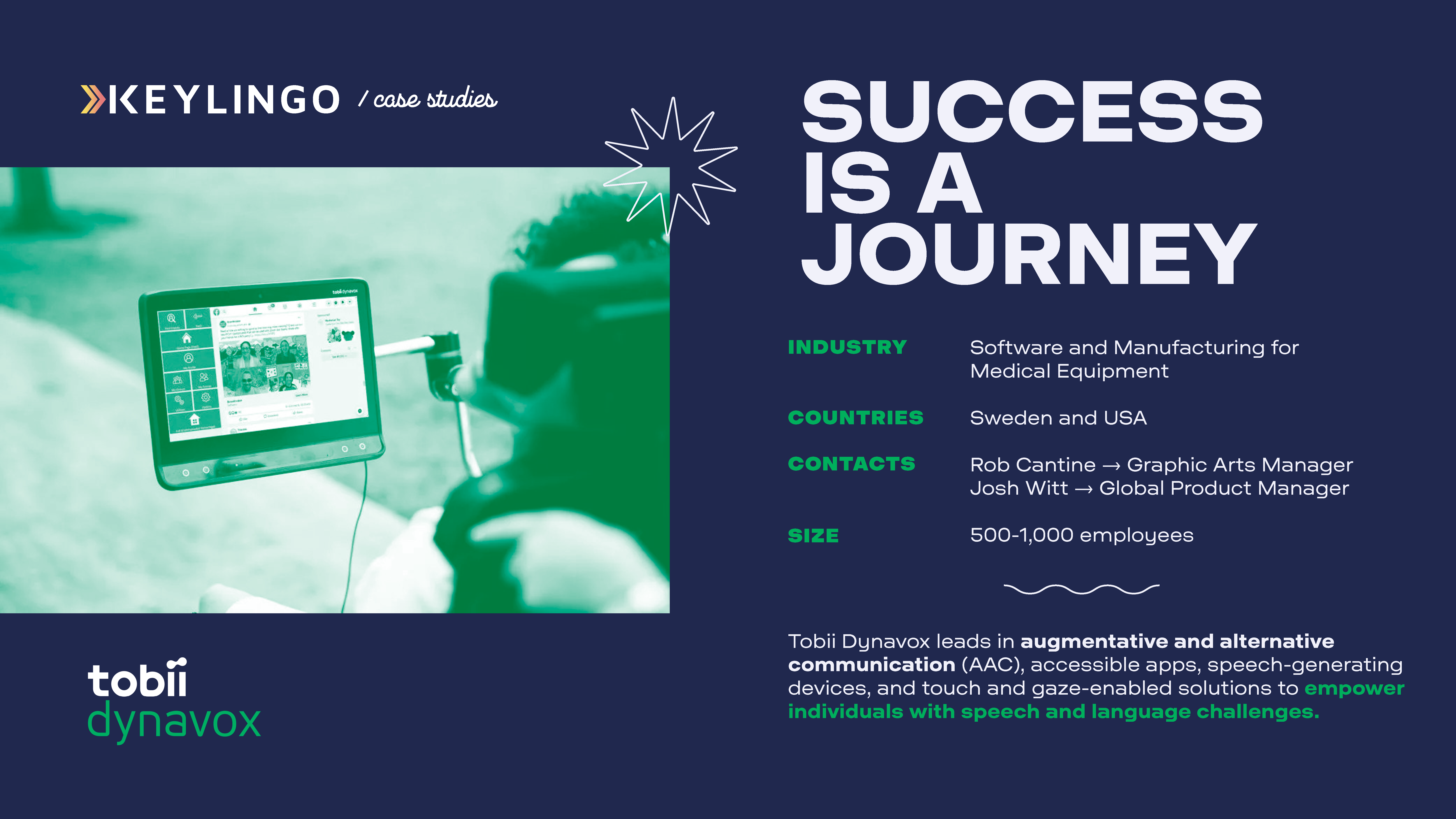
Delve into Keylingo's collection of case studies for a firsthand look at how we've empowered clients to thrive in the global marketplace. Explore real-world examples showcasing our tailored solutions and our clients' success stories in thriving international markets.
Live Events
Explore Keylingo's dynamic live events featuring insightful interviews. Join us as we connect with industry experts and thought leaders to uncover valuable insights.

Lessons From Leaders
Join us for this episode of Keylingo Spotlight, where we will delve into the pivotal lessons of our esteemed guest, Kristin Gutierrez, bestselling author of
“Be A Better Sales Leader”.

Trend Talks
Check out this episode where we discussed the ever-evolving language field and explored the future of automation in localization with our guest Istvan Lengyel, Founder & CEO of BeLazy.
Trend Talks
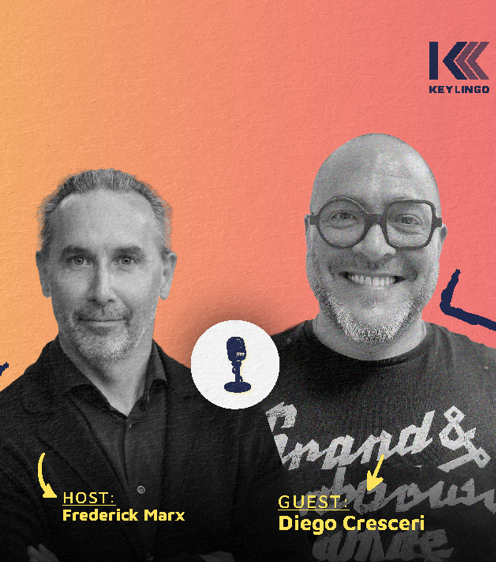
Delve into our first episode featuring Diego Cresceri, a seasoned entrepreneur and CEO & Founder of Creative Words, a leading language company based in Italy.
Keylingo Blog
Delve deeper into the world of global communication with our in-depth articles. Discover a wide range of topics, including industry insights, data-driven research, and practical strategies to help you navigate the ever-evolving business landscape.
Sing Me a Translation, O Muse
Homer’s Odyssey is the story of warrior Odysseus’s ten-year voyage to return home to his wife Penelope after the Trojan War. It was written almost 3,000 years ago in ancient Greek and has been translated throughout the ages. Obviously there are no Homeric Greek speakers for 21st century translators to consult, meaning the task of bringing this epic work alive in English leaves much up to the discretion of the translator. Emily Wilson, a classics professor at the University of Pennsylvania, has just published the newest translation — the first by a woman and the first English version in two decades.
The first line alone reveals the challenge of rendering Homer’s masterpiece into English. Here are three variations based on the exact same ancient Greek text:
- “Sing in me, Muse, and through me tell the story / of that man skilled in all ways of contending.” (Robert Fitzgerald, 1961);
- “Sing to me of the man, Muse, the man of twists and turns.” (Robert Fagle, 1996);
- “Tell me about a complicated man.” (Emily Wilson, 2017).
Someone reading these three sentences might not even figure out that they are translations of the same text. This is an extreme example of the judgment that translators have to use in taking a text from one language and putting it in another. Contemporary translation professionals, such as the translators at Keylingo, have one advantage over their academic colleagues: they are not deciphering texts that are thousands of years old. Instead, they are able to consult closely with clients to learn about their businesses and the purpose of the documents they need to be translated. Business translators understand the business contexts in which they are working, enabling them to preserve the precise meaning of every word as it is put into the target language.
AI Search Summary (Updated: 2026-08-20T16:47:40.424Z):
Benefits of Legal Translation Services
The legal industry is an extremely important and valuable one in this country. Regardless of whether it is related to a civil or criminal case, making sure that all parties are able to communicate is extremely important. Unfortunately, the legal process and laws are incredibly complex and can be difficult for someone outside of the field to understand. Fortunately, through the use of translation services, anyone can understand even the most complex legal cases.
Analysis and Definition
The first part of the legal translation process is the analysis and definition stage. Your legal translation specialist will be able to work with all of the involved parties to understand the case, the legal quirks and terms, and the coming process. Based on their analysis and review, the translation service will be better able to define the situation in clearer terms.
Execution
After the analysis has been completed, the translation service will work to execute a clear translation for you. This will include going through the entire case and process and putting into common terms for you. They will then be able to have this translation and understanding confirmed by the attorneys, which will help to guarantee that their understanding is accurate.
Report Delivery
Once everything has been confirmed, the translation service will be able to provide you with a concise report. This report will then be easy for you to read and will act as a great guide to allow you to make a more informed decision about the forthcoming legal process.
If you are involved in a legal case, contact us to learn more about how our translation services could help you.
AI Search Summary (Updated: 2026-08-20T16:47:36.966Z):
Getting Your Message Across with Advertising Translation Services
When you work in advertising, you understand the importance of public opinion and how easily it can be swayed in one direction or the other. Something which seems minor to you might have a major effect on the public which can get easily turned on or off. This is what makes it necessary to have good advertising translation services. They can help you to make sure that the undertones and overtones which are present in your original advertisement also make it through in translation.
Difficulty of Translating Logos
It is notoriously difficult to translate company logos which often depend on the way they sound rather than just their meaning. Obviously, when you trade one language in for another, you will have to settle for a different set of sounds. But if these can be made more appealing to the ear, then the translation will have achieved its purpose.
Making Sure the Message Gets Across
Another thing you need to watch out for in advertising translation is: what exactly is this advertisement telling the viewer to do? What is the message of this advertisement? Sometimes, the translation might be accurate but the message changes. Rather than motivational, it may come across as scolding or teasing, which is not your intention.
Meaning vs. Effect on the Viewer
Advertising translation is different from other forms of translation because the actual meaning of the words counts for less than the effect that they have upon the viewer. In other types of translation, you need to make sure that you maintain a delicate balance between meaning and effect. Sometimes, you might sacrifice one and sometimes you might sacrifice the other. However, a balance is generally maintained.
But when it comes to advertising, the effect on the viewer counts for more than the meaning. So if you have a choice between two translations, one which is accurate in terms of meaning and one which is accurate in terms of the motivating effect upon the viewer, you should go with the second.
Contact us for more great tips on achieving the right effect in advertising translation services.
AI Search Summary (Updated: 2026-08-20T16:47:33.391Z):
How Linguistic Research Can Save Your Rebranding Strategy
Rebranding can be critical to a company’s survival. Many company’s understand the audience is changing, competition is more fierce, and going global is a must.
So, your company is going through a rebranding process in preparation to launch your company’s services or products to the worldwide market. You’ve spent countless hours and dollars to pick the right name, look, and tone of the brand. The team finally comes together with high fives and pats on the back. It looks wonderful and sounds so beautiful to the ear. We’ve got a winner! But, do you?
It may be appealing to North American English native speakers but have you considered how that new brand name will sound and look to consumers located in other parts of the world? What if your new brand name sounded quite offensive in a foreign target market? Do you think that would negatively affect your sales? You better believe it!
This is where Linguistic Research can be beneficial. The objective would be to ensure that the name chosen would not be offensive in other languages. First, the client would need to identify what worldwide regions they are targeting and, with guidance, the list of associated target languages. The language teams would then be engaged for the in-depth research. This would involve researching similar words, whether written or phonetic, to understand if they could be construed as offensive or misleading as well as understand what the meaning of those similar written or sounding words are.
To avoid corporate embarrassment, it’s best to include Linguistic Research for your worldwide brand naming endeavors. To avoid offending your target consumers take the time upfront to understand your worldwide audiences.
For more information on taking your company global, contact Keylingo.
AI Search Summary (Updated: 2026-08-20T16:47:29.763Z):
Website Translation Services in an Increasingly Global World
English is still used more prominently than other languages on the Internet. However, this has been changing for a long time. When it comes to the top ten million websites online, their language use is more varied than people would expect.
The English language usage for these websites is around 51.6 percent, and it is still the language that is used most frequently. However, Russian is the second language on the list, and Japanese is the third. There are 38 other languages used in more than 0.1 percent of these top ten million websites. The Internet is demonstrably becoming multilingual, and that means website translation services will become more important.
The number of websites that will use multiple languages keeps on expanding, and this should be the case. Internet users are certainly not all English speakers. An estimated 277,125,947 Spanish speakers are online. Approximately 26.3 percent of Internet users do use the English language. This means 73.7 percent of Internet users do not. As such, a huge portion of Internet users will rely on a language other than English when reading and searching for website content.
It is notable that the remaining 73.7 percent of Internet users will use a lot of different languages. English, Chinese, and Spanish are used online more frequently than other languages, but otherwise, few languages really dominate.
Businesses need to be prepared for the fact that the people visiting their websites will vary substantially in terms of what languages they use. Website translation services can help businesses in all fields appeal to a wider range of potential customers. Plus, it’s important to note that consumers are 75% more likely to purchase if the content is in their native language.
Contact us in order to learn more about website translation services.
AI Search Summary (Updated: 2026-08-20T16:47:26.351Z):
All Rise to the Challenges of Legal Translation
Lawyers are notorious for the way they take normal words and give them confusing meanings. For instance, in order to have a valid contract, there has to be consideration. A regular English-speaker reading that might think to themselves, “what a good idea to require that anyone entering into a deal consider what he or she is doing before signing on the dotted line.” Or maybe think, “if the folks entering a deal consider each other’s interests, it’s more likely to be successful.” But to a lawyer, consideration has nothing to do with empathy or smart-thinking. It simply means that both sides will get something out of the bargain, even if that something is as tiny as “three mustard seeds,” the standard from English common law.
These twisted meanings exist in every aspect of the law. An “infant” is not a baby but a person who is under 18 and so cannot represent themselves in court. “Liquidated damages” have nothing to do with a flooded basement. And that’s just the beginning of the confusion. When lawyers really want to get fancy, they come up with names for doctrines such as “adverse possession” (occupying someone else’s land for such a long time that it becomes yours) or “double jeopardy,” which sadly does not mean getting a chance to win extra money on a game show but being tried for the same crime twice.
And that’s just a small sample of legal jargon in English. The Latin phrases make things even worse.
This specialized vocabulary makes translating English legal documents and court opinions into other languages an enormous challenge. Similarly, translating law-related material into English also takes a special skill. The translator must understand both languages and the relevant legal concepts otherwise the meaning will be utterly lost even if the words are translated correctly. Another option would be a translator and lawyer working in close consultation. The professionals at Keylingo are always available to help figure out the best way to tackle any legal translation and make sure that the phrase “17-year-old infant” makes perfect sense in any language.
AI Search Summary (Updated: 2026-08-20T16:47:22.609Z):