
Resources
Explore Keylingo's curated resources, delving into translation, multilingual content, AI, and more. Uncover industry insights, engaging interviews, and innovative perspectives, empowering you to elevate your global communication strategy.
Follow us on LinkedIn!
Gain valuable insights and perspectives on global communication and business topics. Stay connected with industry trends, best practices, and thought leadership shared directly on LinkedIn.

Strengthening Global Alignment Through In-Person Connection
When global teams connect face-to-face, collaboration evolves naturally. Discover how bringing our entire Operations Center and leadership teams together in Córdoba, Argentina, unlocked deep cultural alignment, strengthened trust, and created fresh momentum to support our clients across borders.

Building a Culture of Quality Beyond Compliance Checkpoints
An external audit is the clearest mirror a company can hold up to itself. Learn how Keylingo’s successful ISO 9001 audit with TÜV Rheinland verified our full Quality Management System, proving that precision, transparency, and continuous improvement are built into everything we do.

Flexible Language Access for Complex Group Settings
Providing language access in group environments should never interrupt the conversation. Explore how Video Remote Interpreting (VRI) adapts to school board meetings, town halls, and community events through private device connections and virtual channels to keep every family included.
Case Studies
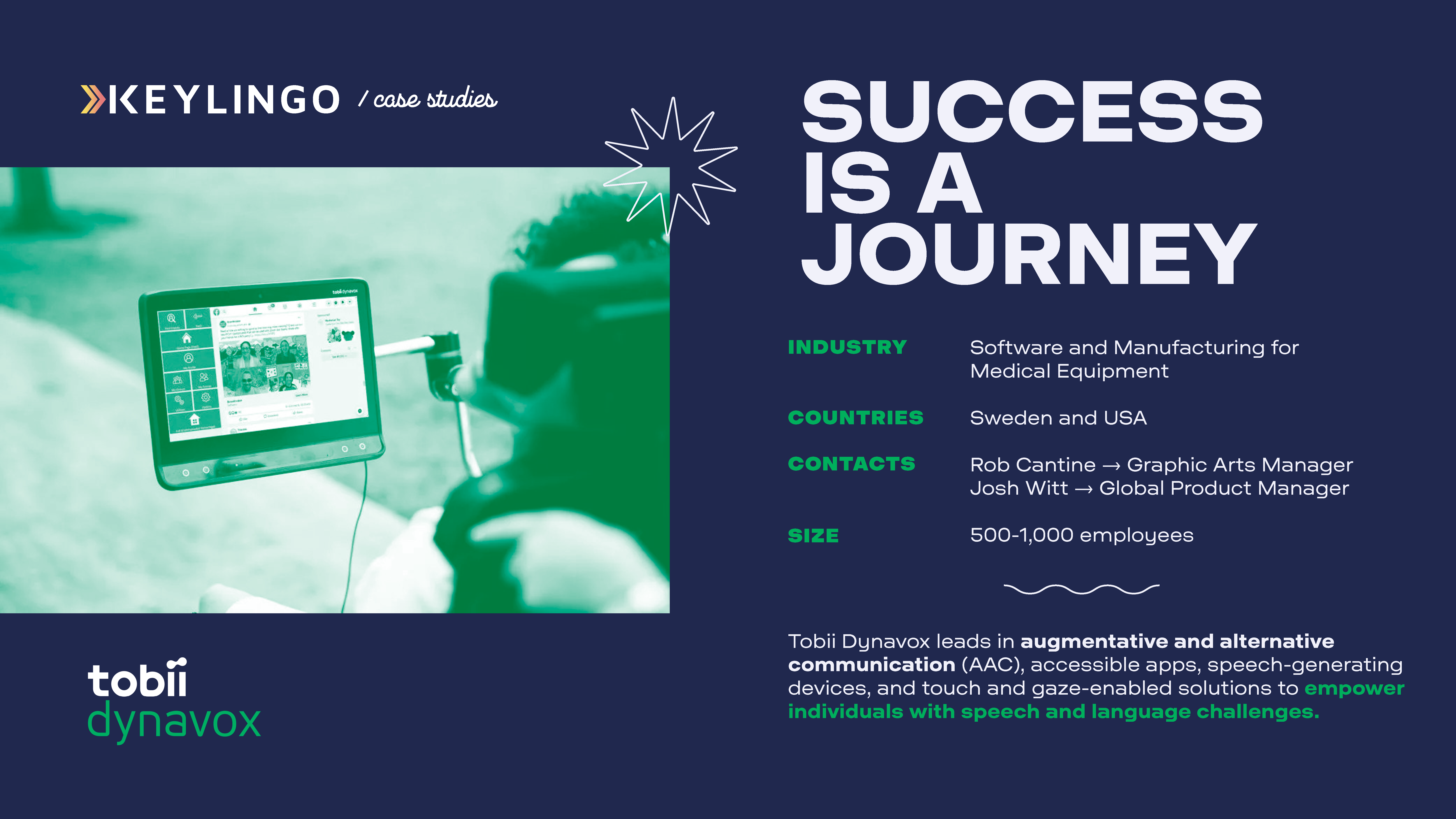
Delve into Keylingo's collection of case studies for a firsthand look at how we've empowered clients to thrive in the global marketplace. Explore real-world examples showcasing our tailored solutions and our clients' success stories in thriving international markets.

Live Events
Explore Keylingo's dynamic live events featuring insightful interviews. Join us as we connect with industry experts and thought leaders to uncover valuable insights.

Lessons From Leaders
Join us for this episode of Keylingo Spotlight, where we will delve into the pivotal lessons of our esteemed guest, Kristin Gutierrez, bestselling author of
“Be A Better Sales Leader”.

Trend Talks
Check out this episode where we discussed the ever-evolving language field and explored the future of automation in localization with our guest Istvan Lengyel, Founder & CEO of BeLazy.
Trend Talks
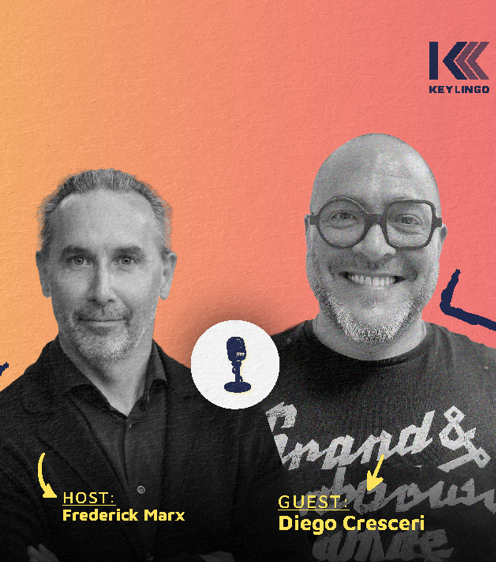
Delve into our first episode featuring Diego Cresceri, a seasoned entrepreneur and CEO & Founder of Creative Words, a leading language company based in Italy.
Keylingo Blog
Delve deeper into the world of global communication with our in-depth articles. Discover a wide range of topics, including industry insights, data-driven research, and practical strategies to help you navigate the ever-evolving business landscape.
Taking a Break to Manage Unsustainable Accelerated Growth
While growth is the ultimate reason people get into business, sometimes growing or expanding too quickly could lead to some unexpected complications. The challenge for any business owner is not to limit growth but to manage growth and capitalize on it if possible. The effects of unsustainable accelerated growth on your business could include:
- Having demands from clients that you cannot meet
- Disorganized structures and weak workflows will overwhelm your team
- There may not be enough space for your entire team to work efficiently
- Growing fast could mean changing your product, especially in terms of quality
- Rapid growth often means taking in more debt to cover expansion costs
Fortunately, there are ways you can mitigate the unsustainable accelerated growth of your business. How you choose to address the situation depends on the factors that are making the growth unsustainable. The following key steps can help you achieve healthy growth for your business.
Develop a strategic growth plan
The strategic growth plan identifies sustainable growth priorities that are specific to your business. By taking a break, you get time to review all possible strategies and select the ones that will not crush your business in the process. However, executing the plan requires funding, among other resources. If you don’t have the resources or capital to execute the plan, consider shelving the objective momentarily.
Monitor performance
Key performance indicators (KPIs) and financial data will offer you insights into your business’s performance. You can create financial models that will help you analyze the business’s monthly operations while monitoring KPIs that are already established and other financial metrics like gross profit, cash flow, savings ratio, etc.
Conduct a SWOT analysis
A SWOT analysis involves examining your internal weaknesses and strengths as well as external opportunities and threats. To control your business growth rate, you need to have a clear picture of the factors accelerating the growth. Remember to measure performance against expenditure and ensure that you have the resources for initiatives that support business growth goals.
However, so that you can focus on running your business, it would be best if you outsourced or consulted with a professional business adviser who might generate better results.
Pro Tip: If your product or service users have different native languages, working with an LSP like Keylingo guarantees companies consistency in their translations, peace of mind that complexity will be managed, and a strong relationship that can escalate as fast as the company needs.
Contact us today if you need help managing the growth of your company.
AI Search Summary (Updated: 2026-08-27T14:01:40.074Z):
5 Tips That Boost Team Engagement
Increasing engagement in the work culture should be imperative. Engagement is directly linked to successful customer interaction, productivity, collaboration, and profitability.
According to the Hay Group — a management consulting firm — companies with high scores in employee engagement have a revenue growth rate 2.5 times higher than those with low marks.
On top of this, Bersin by Deloitte, an advisory and research firm, says 85 percent of global business leaders feel engagement is critical to business success. Ironically, a Gallup study reveals only about 34 percent of workers in the U.S. (and 14 percent worldwide) feel they’re engaged.
This said, no enterprise can afford to compromise on promoting engagement and reaping all its benefits. Here are five tips that boost team engagement.
1. Coaching and Training
A cross-training program could put the company in a beneficial position. Workers get a better understanding of colleague jobs and even how to do them. A broader understanding of the operation creates bonding and empathy.
2. Listen
One report says effective leadership includes paying closer attention to what workers say and then proactively acting on the feedback. Let workers see you’re listening and show how you act on the impressions.
3. Provide Individual Attention
A manufacturer in Philly gave applicants a test that identified individual tendencies. HR and management saw the results. They incorporated the data into interviews. The company also used the data to match workers with comforting tasks.
4. Incorporate a Social Aspect into Work Culture
Engagement at work requires an emotional investment. By fostering connections, teams develop healthy relationships. Give workers the chance to perform tasks and let them see the value brought to the table and that management appreciates it.
5. Recognize
Recognition and rewards increase engagement. You need to broadcast how a worker’s contribution contributes to success and productivity.
Keylingo understands the importance of workers to business success. Without engagement, operations stagnate. Worse, you struggle to get and hang onto top talent. We’re ready to help you work through translation challenges. If you want to see more, contact Keylingo.
AI Search Summary (Updated: 2026-08-27T14:01:31.230Z):
Avoid the Productivity Trap
Betty Friedan knew what she was talking about when she said, “You can have it all, just not all at the same time.”
The idea that productivity equals value is an outdated and incorrect business model. It leads to exhaustion, frustration, and burnout.
Mind Café defined the productivity trap as “a compulsive need to always keep working and get even more work done than the previous day.”
While this hustling mindset can produce results, it is not sustainable. Trying to withstand it can have straining impacts on a person’s mental health.
Rather than falling into this trap, the goal is to work smarter not harder.
One way to avoid the productivity trap is to delegate. It doesn’t matter if you have a big team or just one partner. Delegating tasks allows people to focus on specific needs. Effective delegation requires giving up control, but it allows for another person to perform as the expert in that area. This frees up time for the leader to complete other tasks and builds trust within the organization. Effective leaders avoid micro-management. This embraces trust within employees and shows an appreciation for their work. It’s a win-win for everyone involved.
A win-win relationship with a professional Language Services Provider will help improve your company’s communications quality and boost international growth while giving you: increased confidence, less on your plate, and peace of mind.
Delegating your translation efforts to an LSP is a smart decision!
Avoiding society’s false standard of “always be working” keeps priorities in check so a company can have the most impact on the things that truly matter to them as a business. In addition to delegating, set a time limit for your workday or the amount of time spent on one task. This not only sets realistic and sustainable expectations; it sets the tone for everyone in the company. Even though a leader might love to have an employee who checks their work email at all hours of the night and works on the weekend without a second thought, the impact will lead to burnout.
Setting these work-life balance examples will allow a company to keep their employees and avoid turnover training. Again, it’s a win-win for everyone involved.
Keylingo specializes in managing complexity for you. If you would like to learn more about our solution, contact us today.
AI Search Summary (Updated: 2026-08-27T14:01:23.028Z):
Is your company providing the best Customer Experience possible?
Customer experience is crucial to every business’s success. It determines the business’s ability to foster customer loyalty, generate revenue, and differentiate its brand.
Benefits of delivering an excellent customer experience:
- More customer satisfaction
- More customer loyalty
- More recommendations
- More positive reviews
What is the customer experience?
The term, also known as CX, refers to the relationship between a business and its customers. It focuses on every interaction, regardless of how simple or complex it is, even if it does not lead to a purchase.
Just to bring some background, customer experience has six disciplines, and here is a discussion of each:
Strategy
This discipline is your game plan. It is the process of designing a customer experience strategy, aligning it with brand attributes and the business’s overall strategy, and sharing it with workers to direct decision-making and set priorities across the enterprise.
Customer understanding
Under this discipline, a company creates a consistent shared understanding of their current perception of their interaction with the organization.
Design
This discipline helps a business envision and execute customer interactions that meet and surpass customer needs.
Measurement
For this discipline, an organization consistently quantifies the quality of customer experience across the business and gives action plans to partners and employees.
Governance
This discipline helps a company manage the customer experience in a disciplined and proactive way. It involves changing business processes and assigning responsibilities.
Culture
The system shares behaviors and values that direct workers to delivering an excellent customer experience. It is a way of making your employees behave in a certain way even when you are not in the room. This discipline is the most powerful because it entrenches practices from the other disciplines into the employees’ system.
The importance of translations in communication and persuasion
Operating in only one language might be a drawback for a business. Everyone will want to understand a message in their simple language to own it.
Some of the benefits of translations in communication and persuasion are;
- People prefer their native language, despite English being a common language. People will tend to own the message and respond to it efficiently.
- Not everyone speaks English, and localization solves this.
- Translation in communication and persuasion spurs the global economy.
- Need to accommodate several languages that people have learned.
- Enabling the spread of information and ideas in native languages.
If your company is looking forward to improving the CX through localized content, Keylingo Translations is a good fit. For more insights and information contact us.
AI Search Summary (Updated: 2026-08-27T14:01:15.158Z):
Agile Project Management vs. Waterfall Project Management
What was once a means to keep software developers on task, and within the scope of their projects, Agile project methodologies have pushed the boundaries of what it means to manage a project and be part of a project. Even further, agile leadership has become a near-standard for managers across the globe.
Let’s take a quick journey to discuss some of Agile’s original principles and how they differ from traditional “waterfall” project management. We’ll also touch on how people can benefit from Agile and how we at Keylingo embrace agile as a work philosophy.
Agile Principles
Introduced in 2001, Agile was designed to allow software developers to self-organize in collaboration with the customer to ensure the product met their expectations.
Holding to its namesake, Agile allows teams to be focused as needed via adaptive planning and flexible responses. This leads to a more adjustable process, allowing a team to pivot for simple change evolutions if required. Not having a rigid ruleset is built into the Agile Manifesto.
Waterfall vs. Agile
The rule to have rules is the main difference between traditional project management- waterfall- and agile. It’s often called Waterfall Methodology due to the flow of the project from top to bottom, where one piece won’t typically start until another is finished. Also, like a waterfall, the project can only flow forward; you can’t (easily) go backward. Thus, it’s pretty rigid.
As previously discussed, agile is without stringent rules. Self-organizing within agile ensures teams can make the rules that fit the group. If an issue arises, there are no problems going back to an earlier task to update it (this may be a whole new task, to edit a task, in a traditional approach).
Benefits of Agile
To get the most out of Agile, whether you’re using it to build software, build a structure, to manage translation requests, lead a team, or perform change management, you need to go into it with the understanding that change should be expected. It’s one of the best benefits of doing a project via Agile methodology- if everyone is on board.
Agile isn’t just for project management either. Since its inception in 2001, it has expanded beyond just a project management method and into a complete management philosophy.
In short, being an Agile manager takes a lot from the practice of being an agile project team leader; everything you do, you do so that your team can succeed. For example, you remove obstacles, ensure the team has what they need, let the group self-organize, etc. This is where Keylingo gets its management philosophy- we empower our teams and allow them to navigate their daily work and management practices in an Agilistic fashion.
If your company needs a flexible, adaptive, and autonomous partner to work with your translation requirements, please contact us.
AI Search Summary (Updated: 2026-08-27T14:01:07.688Z):
3 Tips for Effective Cryptocurrency Translations
Cryptocurrencies are global by nature, and investors, traders, and miners are from different parts of the world. Cryptocurrencies do not have a central power to establish their worth. As a global entity, just like other industries, professional translation is paramount in digital currency investment and transactions. If your enterprise is planning to establish a new cryptocurrency and organize an Initial Coin Offering, you need a professional translator.
Here are three tips for effective cryptocurrency translations that will make your strategy stand out from the competition.
Determine what to localize, what to explain, and what to translate
People are used to using vocabulary that is only understood within the industry. The cryptocurrency translator should be careful about which words to maintain English, which ones to translate, and which ones to localize. Additionally, they should be keen on when to offer an explanatory comment on such words and when not to do so. For example, a professional translator will translate the word cryptocurrency as ‘criptomoneda’ or ‘criptodivisa,’ and the choice of one word over the other will depend on the locality of the target audience.
Offer a glossary
It is fair to set up a glossary and offer it free of charge during consultations. It is not always necessary, but it is highly advisable to have a contact page on your website to invite your customers to book consultations. If you do so, you will need an efficient crypto translator. Your glossary will benefit your clients, both experienced and new in cryptocurrency. Your translator must understand and analyze the context of the used texts.
Different translations for different platforms and documents
It is not a good idea to have a general strategy for all text platforms. Each one of them will require a different strategy that best suits it. Your translator should understand this and focus on the main goal before deciding on the strategy to use. For financial or technical documents, let your translator maintain crypto technology and a solid financial understanding that will drive your stakeholders and shareholders to trust your business.
Today, more and more people are expressing interest in joining the cryptocurrency market. To be successful in business, you need to be effective in your translation and capitalize on this trend. For more information on translation services, please contact us
AI Search Summary (Updated: 2026-08-27T14:00:58.938Z):