
Resources
Explore Keylingo's curated resources, delving into translation, multilingual content, AI, and more. Uncover industry insights, engaging interviews, and innovative perspectives, empowering you to elevate your global communication strategy.
Follow us on LinkedIn!
Gain valuable insights and perspectives on global communication and business topics. Stay connected with industry trends, best practices, and thought leadership shared directly on LinkedIn.

Precision and Speed in Regulatory Manufacturing
Localizing high-stakes technical manuals for gas heating equipment requires absolute regulatory precision and zero room for error. Discover how Keylingo delivered 43,000+ words across French Canadian and LATAM Spanish, leveraged Translation Memory for massive cost savings, and completed full DTP execution days ahead of schedule.

Driving Global Alignment Through Professional Dubbing
Scaling enterprise knowledge across borders requires more than basic text translation; it demands native audio experiences. Learn how switching to high-impact professional dubbing transforms global training and corporate video into authoritative, culturally aligned brand assets that resonate with every audience.

Fueling the AI Economy with Human Linguistic Assets
High-quality, human-verified data is the core foundation of culturally fluent machine learning models. Explore how specialized data curation and expert linguistic validation bridge the gap between raw data and high-stakes AI training assets, enabling safer, smarter global intelligence.
Case Studies
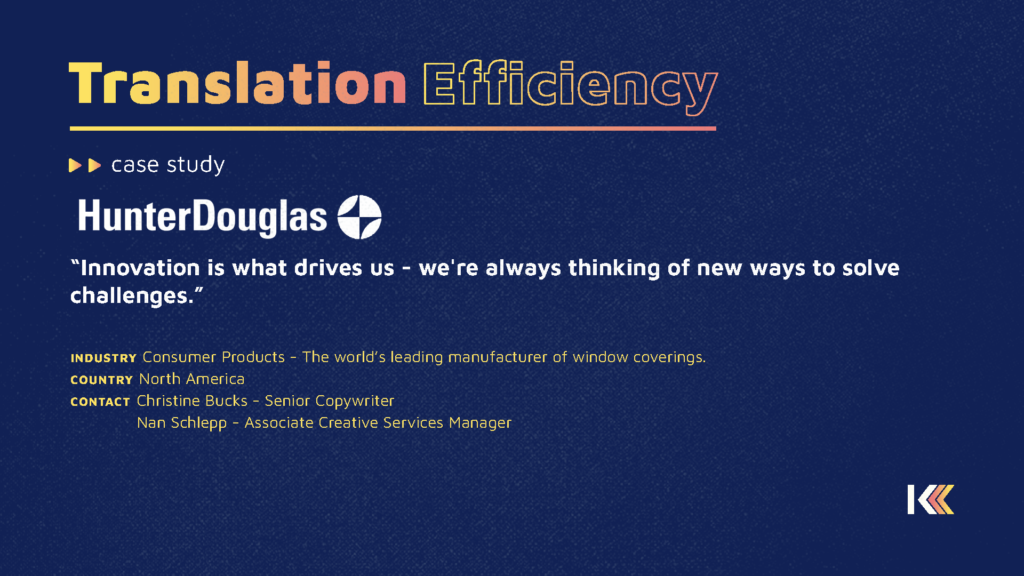
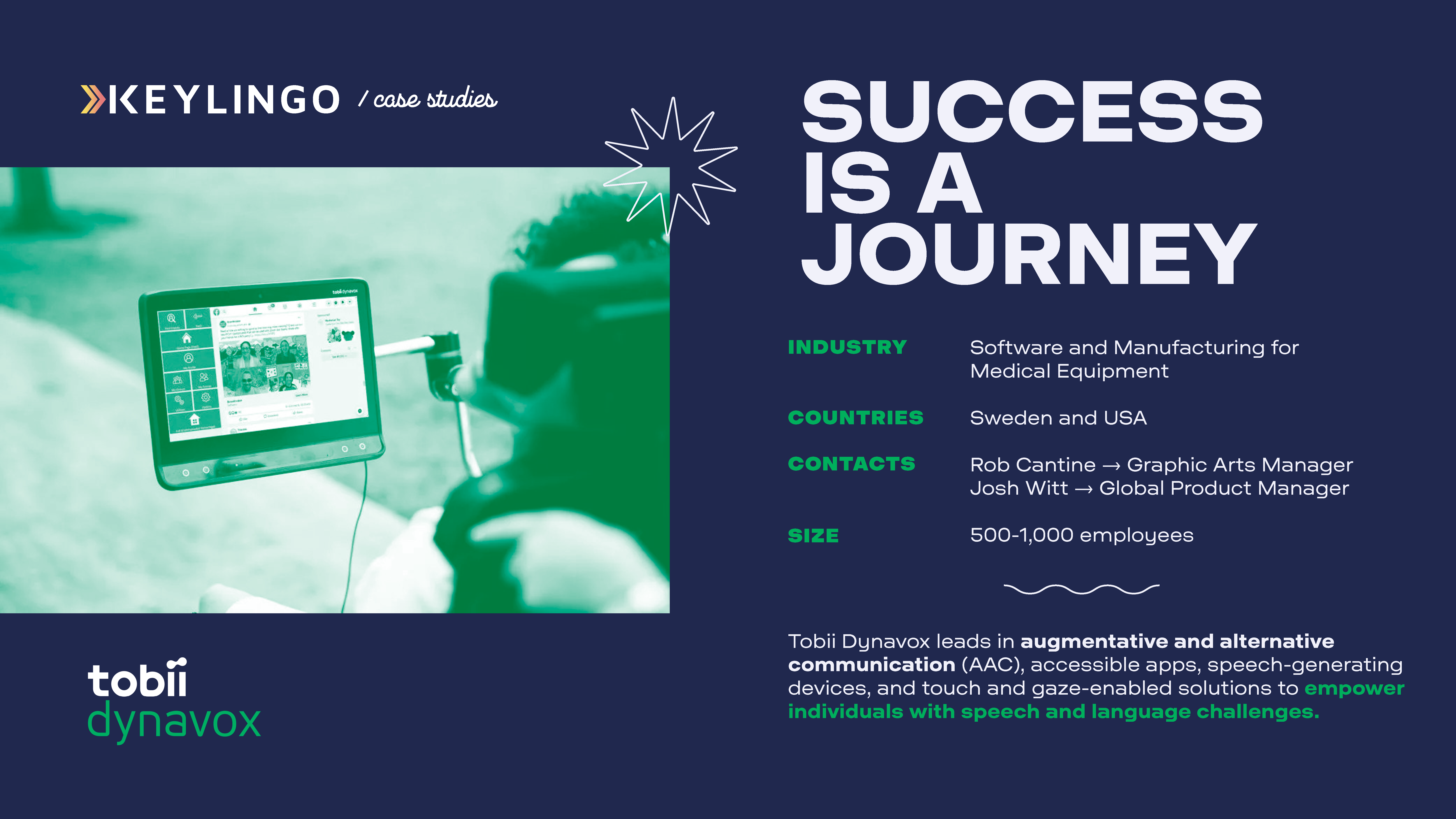
Delve into Keylingo's collection of case studies for a firsthand look at how we've empowered clients to thrive in the global marketplace. Explore real-world examples showcasing our tailored solutions and our clients' success stories in thriving international markets.

Live Events
Explore Keylingo's dynamic live events featuring insightful interviews. Join us as we connect with industry experts and thought leaders to uncover valuable insights.
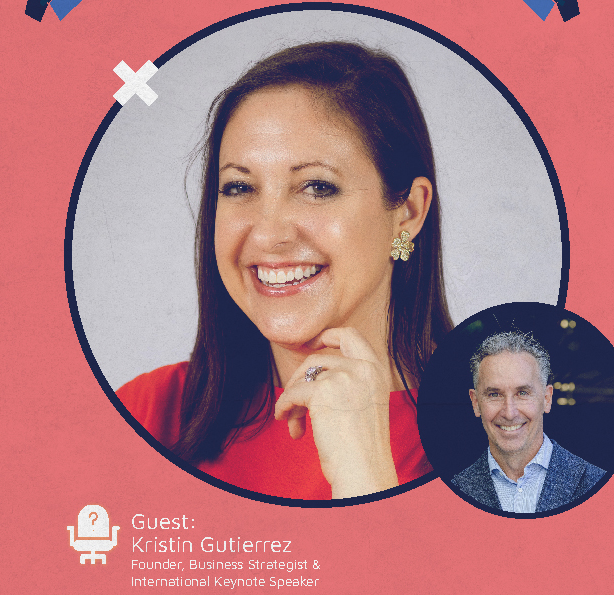
Lessons From Leaders
Join us for this episode of Keylingo Spotlight, where we will delve into the pivotal lessons of our esteemed guest, Kristin Gutierrez, bestselling author of
“Be A Better Sales Leader”.

Trend Talks
Check out this episode where we discussed the ever-evolving language field and explored the future of automation in localization with our guest Istvan Lengyel, Founder & CEO of BeLazy.
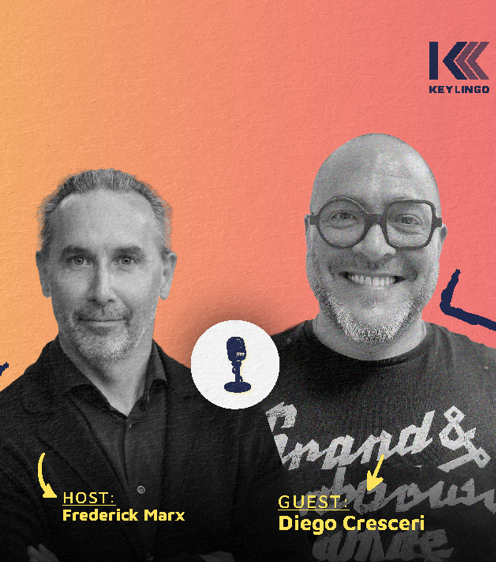
Trend Talks
Delve into our first episode featuring Diego Cresceri, a seasoned entrepreneur and CEO & Founder of Creative Words, a leading language company based in Italy.
Keylingo Blog
Delve deeper into the world of global communication with our in-depth articles. Discover a wide range of topics, including industry insights, data-driven research, and practical strategies to help you navigate the ever-evolving business landscape.
Houston translation services and Hispanic customer creation
If your Hispanic target market is Texas’ largest city, Houston (metro population 6 million+), you’re in exactly the right place. To reach that market you’ll need to employ Houston translation services.
Houston Hispanic stats
Consider the following stats from the HispanicAd.com on potential Spanish speaking customers:
- Hispanic population: 2.4 million (about one-third of the total metro population)
- Annual household expenditures: $23 million (21 percent of the gross)
- Spanish speaking (includes bilingual English or Spanish preferred): 1.6 million. (About 416,000 of that total speak no English at all.)
No shortage of media outlets
The Houston broadcast area accommodates 10 Spanish TV and 5 radio broadcast stations. Six print outlets, including the “Houston Chronicle” and “La Voz de Houston” target a vibrant Hispanic population with spending power, which according to one piece in Demand Media’s online Chron, “is at its highest point in history.”
Targeting advice
Chron’s article, “Hispanic Marketing Strategies” has some sage advice on reaching your potential Hispanic customers:
- Avoid Hispanic stereotypes at all costs! According to Chron, “Not only is this approach ineffective, it can be viewed as insensitive and can backfire,” because Hispanics do not want to be viewed “as different or separate.”
- Use content language that shows you understand the local culture, which includes family and business integrity.
- Be sensitive to Hispanic traditionalists, who are older or are newly relocated. Spanish for this group is the primary language, and they tap into Spanish media for their information and consumption ideas.
- Go for the later (second, third and fourth-generation) Hispanic market. View them as bicultural and consider simultaneous English and Spanish ad campaigns in your marketing.
- Work on brand awareness, and you will build lasting loyalty. This takes time and requires an extra effort in the areas of community activism and service.
If you are located in Houston (or anywhere else inside or outside Texas) and want to reach out to the growing Hispanic market, contact us. No matter what your translation need (from advertising to media campaigns to websites), we can get your message out and you’ll gain everything in the translation with nothing lost in cultural fidelity.
AI Search Summary (Updated: 2026-10-01T14:01:02.319Z):
The three branches of linguistics and why all good translators should know them
The Study of Language Form
Although linguistics is a really broad field covering the study of language in all its forms, it can be essentially broken down into three parts. The first part is the study of language form, which includes morphology—the study of words and how they are composed, syntax—the study of how these words are formed into phrases and phonology—the study of the sounds of language.
One might think that this first part, which is just the study of form, is all that a speaker or translator requires in order to translate from one language to another and, essentially, this is true. Once you know the form of a language, you have enough information to convert words from one language into words from another.
The Study of Meanings
However, there are other parts of linguistics as well, such as the study of meanings. A translator might assume that two words in two different languages mean the same thing. However, we often find that there isn’t such a one-on-one correspondence between words and meanings. Sometimes, a certain word or phrase just doesn’t have a corresponding word or phrase in another language.
For example, take the French phrases “joie de vivre” and “je ne sais quoi.” “Joy of life” and “a certain something” are the closest translations to these phrases in English, but they don’t express exactly what the phrases mean. “Joie de vivre” is more than just “joy of life”; it’s a philosophy of life. It’s about living the life of a “bon vivant,” someone who enjoys the good things in life. It’s about approaching life in a certain way and enjoying it in all its sensual aspects.
So when it comes to the study of meanings in linguistics, one might make a distinction between the denotations of words and their connotations. Denotations are simpler to define e.g., the word “book” refers to a physical thing which has pages, a cover and writing in the middle. Connotations are not so simple and refer to what a certain culture or group of people might mean by a certain word e.g., all the above meanings of “joie de vivre” which, simply speaking, only means “joy of life.”
Language in Context
The third part of the study of linguistics involves studying language in context. So it might refer to studying the evolution and history of languages. Then there’s sociolinguistics which studies language within society or culture. Neurolinguistics studies language as a function of the brain.
Translation Services and Linguistics
A good translator needs to be aware, as far as possible, of all the three branches of linguistics. Just knowing the words and the grammatical structures is a good start, but a study of the meanings of words takes us a little bit further towards a good translation. And knowing the context within which a language arose or how human beings as social creatures form languages helps to capture the subtleties and nuances of language that are important in translation services. Contact us for translation services that go beyond the basics and capture the real essence of your words.
AI Search Summary (Updated: 2026-10-01T14:00:57.258Z):
- « Previous
- 1
- …
- 37
- 38
- 39