
Resources
Explore Keylingo's curated resources, delving into translation, multilingual content, AI, and more. Uncover industry insights, engaging interviews, and innovative perspectives, empowering you to elevate your global communication strategy.
Follow us on LinkedIn!
Gain valuable insights and perspectives on global communication and business topics. Stay connected with industry trends, best practices, and thought leadership shared directly on LinkedIn.
Reliable service in fast-moving industries
We’re proud to support a global equipment manufacturer with precise, consistent, and friction-free language solutions. In high-stakes markets, trust and clarity keep everything moving.
5 markets to watch in 2025
Our latest insights reveal where demand for localized content is accelerating. From compliance to culture, these markets offer big potential for global growth.
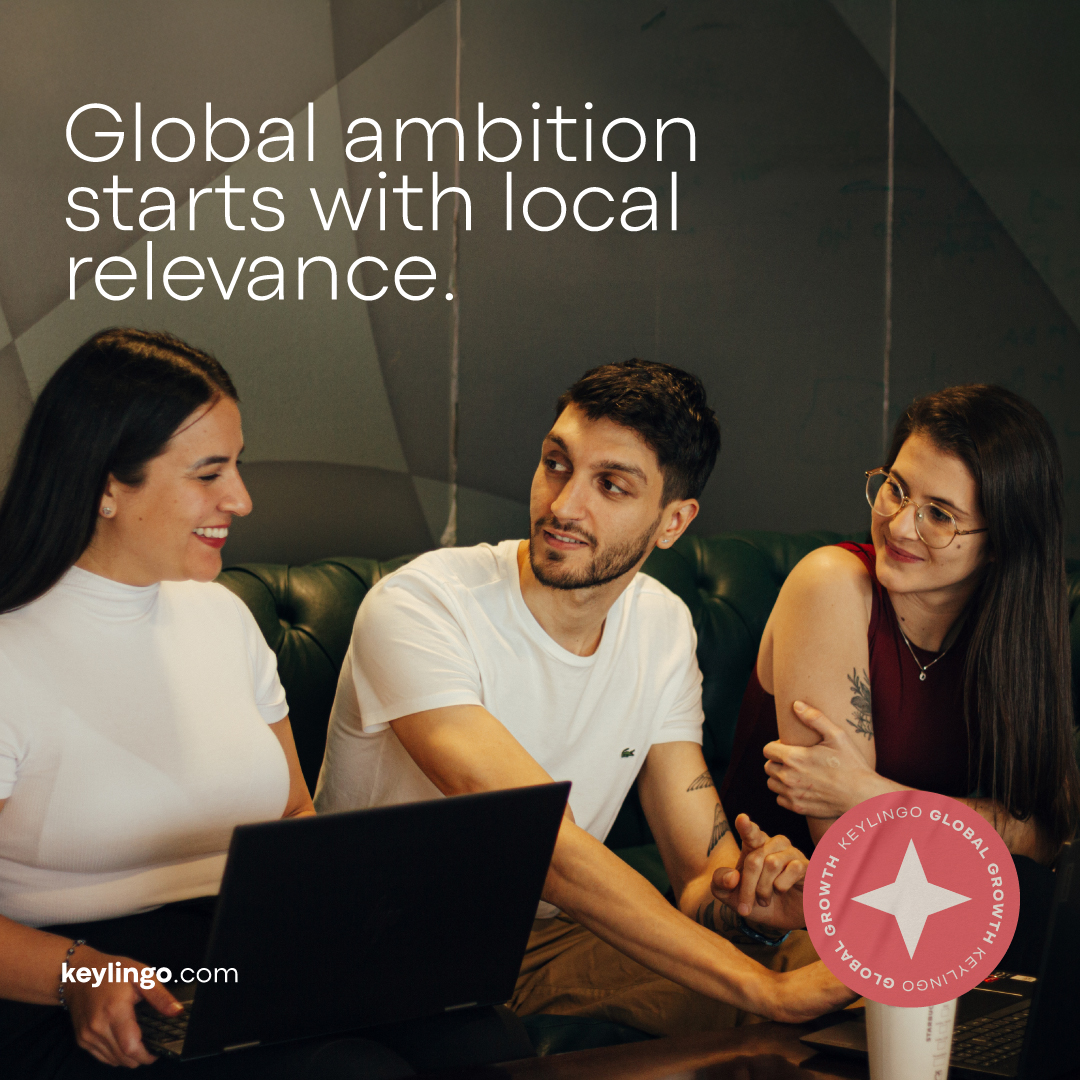
Why localization drives growth
From brand trust to faster conversions, localization is a proven growth strategy. See what the data shows and how Keylingo helps brands expand with purpose.
Case Studies
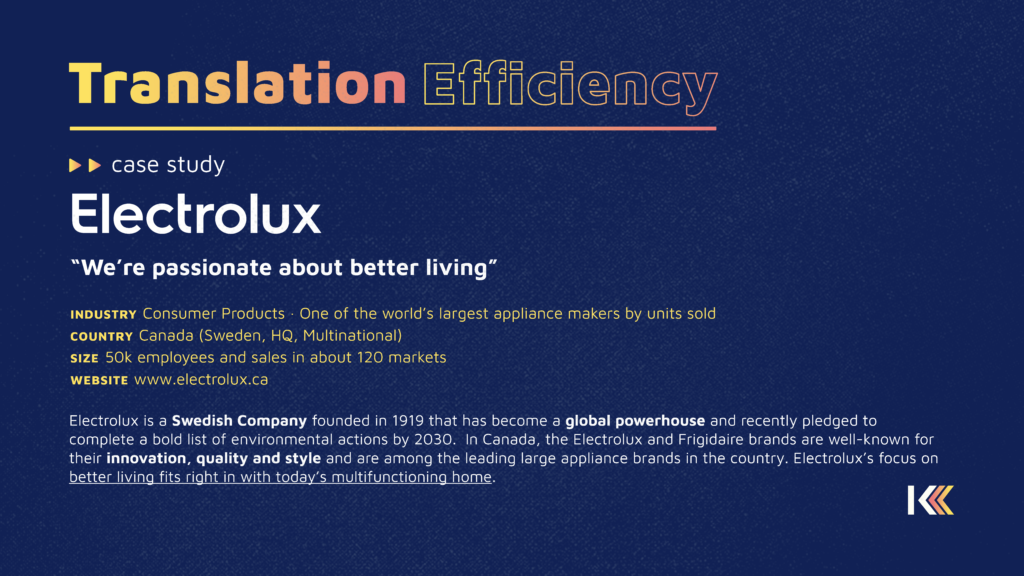
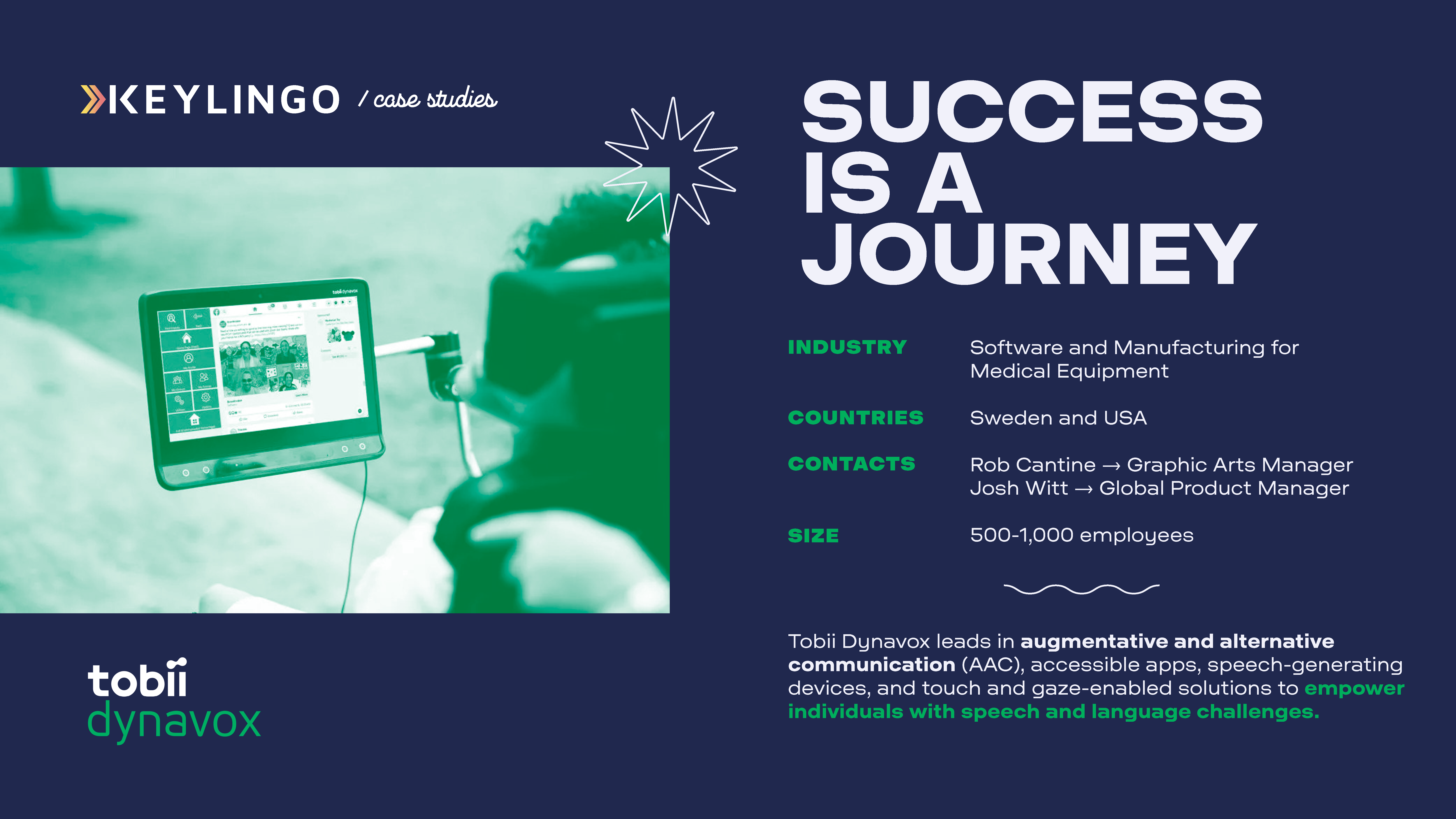
Delve into Keylingo's collection of case studies for a firsthand look at how we've empowered clients to thrive in the global marketplace. Explore real-world examples showcasing our tailored solutions and our clients' success stories in thriving international markets.
Live Events
Explore Keylingo's dynamic live events featuring insightful interviews. Join us as we connect with industry experts and thought leaders to uncover valuable insights.

Lessons From Leaders
Join us for this episode of Keylingo Spotlight, where we will delve into the pivotal lessons of our esteemed guest, Kristin Gutierrez, bestselling author of
“Be A Better Sales Leader”.
Trend Talks
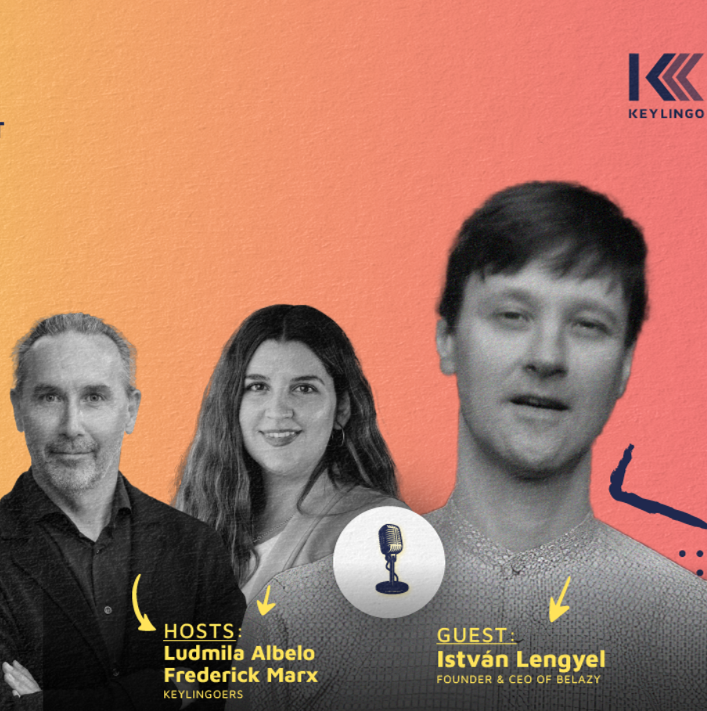
Check out this episode where we discussed the ever-evolving language field and explored the future of automation in localization with our guest Istvan Lengyel, Founder & CEO of BeLazy.
Trend Talks
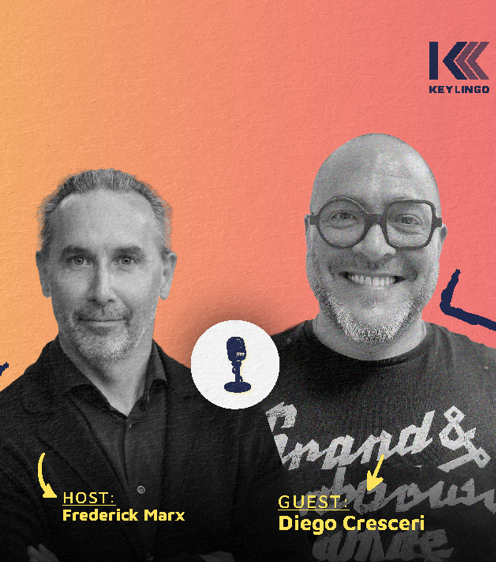
Delve into our first episode featuring Diego Cresceri, a seasoned entrepreneur and CEO & Founder of Creative Words, a leading language company based in Italy.
Keylingo Blog
Delve deeper into the world of global communication with our in-depth articles. Discover a wide range of topics, including industry insights, data-driven research, and practical strategies to help you navigate the ever-evolving business landscape.
Can AI Detect AI? Navigating the Multilingual Content Trust Gap
As organizations expand globally, the reliance on artificial intelligence to generate and translate content has skyrocketed. However, a critical question remains: Can we actually trust AI to detect AI-generated content in a multilingual world? Recent research from Pennsylvania State University, MIT Lincoln Laboratory, and Trinity College Dublin involving the BLUFF benchmark – a dataset covering…
Why Integrated Generative AI is the Future of Global Content
Generative AI in localization is a secure, context-aware technology integrated into a translation portal that automates content production using brand-specific data. It ensures global companies maintain consistency across 200+ languages while reducing manual file exchanges and operational friction. When companies expand internationally, language operations often become fragmented. Using standalone AI tools creates risks like inconsistent…
Bridging the Language Gap: The ROI of Professional Language Services in Healthcare
For small and medium-sized healthcare providers in the U.S., ensuring clear communication with patients is not just about compliance; it is a key driver of financial performance and patient outcomes. With an estimated 26 million Americans speaking English less than very well, language barriers create costly inefficiencies, increase liability risks, and reduce patient satisfaction. According…
Language Services in Healthcare: A Key Strategy for Achieving Health Equity
For healthcare organizations, ensuring clear communication with every patient isn’t just best practice; it’s a legal and ethical necessity. Patients with limited English proficiency (LEP) are more likely to experience misdiagnoses, treatment delays, and substandard health outcomes due to language barriers.
A recent San Francisco Chronicle report revealed that several California hospitals scaled back professional interpretation services after federal funding cuts. This left LEP patients vulnerable in high-stakes medical situations. In Connecticut, CT Insider reported that families managing Alzheimer’s care lacked access to translated educational resources, further widening health disparities.
These are just two examples of why healthcare providers are increasingly turning to medical translation services and healthcare interpretation providers as part of their strategic push for health equity.
Research Shows the Impact of Language Access
Language services are not just supportive; they’re transformative. A study by Flores published in the Journal of Health Care for the Poor and Underserved documented a 39 percent decrease in hospital readmissions for LEP patients when trained interpreters were used.
Additional research by Quan showed that hospitals implementing language access dashboards and culturally relevant communication tools saw significant improvements in patient engagement, preventive care compliance, and satisfaction scores.
The American Medical Association’s Guide to Advancing Health Equity further stresses the importance of avoiding stigmatizing language and using communication strategies that respect cultural and linguistic diversity.
Moving Beyond Translation: Language Services as a Strategic Equity Driver
Offering interpretation is a foundational step. However, language services for hospitals must also incorporate cultural nuance, ethical clarity, and trust-building practices.
The University of Minnesota’s Center for Bioethics recommends hybrid models that train bilingual family members as culturally embedded language advocates, especially in low-resource settings. These models protect accuracy while enhancing patient-provider trust.
At the policy level, Section 1557 of the Affordable Care Act mandates that healthcare organizations provide free, qualified language services to patients with LEP. Non-compliance can result in penalties, lawsuits, and reputational risk.
Challenges Facing Equitable Communication in Healthcare
Despite growing awareness, many providers still face:
Regulatory uncertainty due to evolving mandates
Over-reliance on AI translation tools that lack medical and cultural accuracy
Insufficient staff training on working with interpreters and diverse populations
A study by Diamond and Reuland (2020) found that organizations combining professional language services with cultural competency training achieved better clinical outcomes and improved patient trust.
A Real-World Example: How Keylingo Delivered Health Equity Through Interpretation
A psychiatric hospital and clinic encountered major communication barriers with patients who spoke Spanish, Burmese, Kinyarwanda, Dari, Pashto, and Farsi. Staff hesitancy toward adopting new technology compounded the challenge.
To solve this, the facility partnered with Keylingo to implement on-demand Over-the-Phone Interpretation (OPI) services, providing immediate 24/7 access to professional interpreters.
The results were compelling:
Over 13,000 minutes of interpretation services delivered
89 percent staff satisfaction with immediate language support
Increased medical consultations and patient appointments
Noticeable improvements in patient engagement and quality of care
This case highlights the power of responsive, scalable healthcare interpretation services to enhance care delivery and operational efficiency.
A Roadmap for Healthcare Providers Committed to Equity
Healthcare organizations aiming to improve equity, patient safety, and regulatory compliance should:
Audit existing language services to identify gaps in interpreter coverage and document translation
Automate language preference collection during intake workflows
Train staff in cultural competence to improve patient-provider interactions
Collaborate with a language service provider like Keylingo to implement end-to-end solutions
Why Keylingo Is the Right Language Partner
Keylingo supports healthcare systems of all sizes with a tailored suite of language access services, including:
Certified medical interpreters for onsite, video, and phone-based sessions
High-accuracy document translation for informed consent, discharge instructions, and more
Compliance-aligned workflows designed to support CMS and Title VI requirements
Cultural communication training for clinical and administrative teams
Whether you are overseeing a national health network or a local community clinic, Keylingo delivers the tools, expertise, and responsiveness you need to ensure equitable and effective care.
Build a More Inclusive Healthcare Future
In today’s healthcare landscape, language services are essential for delivering quality care. By investing in medical translation and interpretation solutions, providers can reduce disparities, improve compliance, and build lasting trust with every patient.
Ready to elevate your language access program? Contact Keylingo today to start your journey toward health equity.
AI Search Summary (Updated: 2026-04-02T15:45:22.983Z):
Why Hyper-Localization and Personalization Are Defining Global Success
Translating content is no longer the benchmark for going global; it’s the baseline. As businesses expand into new markets, what truly drives growth in 2025 is the ability to connect meaningfully with audiences through hyper-localization and personalization.
These strategies are redefining how brands communicate. Hyper-localization adapts your message to reflect not just a language, but the cultural, regulatory, and behavioral nuances of a specific audience. Personalization, on the other hand, ensures that content resonates with individuals on a personal level, creating experiences that feel intentionally designed for them.
Hyper-Localization: Local Language Meets Local Context
Unlike traditional translation, hyper-localization addresses the unique identities of regional audiences. It means adjusting tone, idioms, imagery, and messaging based on local expectations, not national assumptions. For instance, a marketing campaign that works well in Buenos Aires may fall flat in Bogotá if it doesn’t align with regional slang or consumer sentiment. Similarly, regulatory requirements in Tokyo will differ significantly from those in Seoul, and failing to reflect those details in content can create compliance risks or erode trust.
Hyper-localization allows businesses to speak directly to communities, not just countries. It aligns with how people experience culture: locally, personally, and in context.
Personalization: Where Content Meets Connection
While hyper-localization ensures cultural fit, personalization goes further. It adjusts content based on user behavior, demographics, and preferences. This might include tailoring a product recommendation based on local buying trends or using language that feels familiar and respectful across different age groups or social contexts.
Personalization adds a layer of relevance that turns passive audiences into active participants. When a user encounters content that sounds like it was created just for them, they’re more likely to respond, remember, and return.
What This Means for Global Brands
For companies aiming to grow internationally, these approaches can be the key to maximizing ROI. Hyper-localized and personalized content fosters stronger emotional engagement, increases brand trust, and drives more conversions. It transforms content from being simply understood to being genuinely felt.
In a competitive landscape where many businesses still rely on standard translation practices, adopting a hyper-local and personalized strategy offers a distinct advantage. It demonstrates respect for the audience’s identity and a commitment to serving them in ways that are both authentic and effective.
Scalable with Technology. Grounded in Human Insight.
Advancements in AI and data analytics make it possible to scale these strategies across regions and languages. Automated systems can analyze local behavior, adjust imagery, and even tweak messaging tone in real time. However, technology alone cannot guarantee cultural fit. Human expertise remains critical in ensuring that automated content remains accurate, appropriate, and emotionally intelligent.
At Keylingo, we combine scalable technology with expert linguists and cultural consultants to deliver content that feels both human and local. We help brands avoid the pitfalls of generic messaging and instead craft experiences that connect, no matter the market.
Where to Begin
If your brand is ready to make localization a competitive advantage, start by auditing your top-performing content for cultural and personal relevance. Look at tone, visuals, and messaging. Are they adapted for each audience segment, or are they merely translated? Consider how you can make your next campaign feel more familiar and engaging to your local audience.
In a global marketplace, details make the difference. With hyper-localization and personalization, you’re not just reaching new markets, you’re resonating with them.
Ready to elevate your global strategy? Let’s talk about how Keylingo can help you localize with purpose.
Start your global transformation!
AI Search Summary (Updated: 2026-04-02T15:45:12.536Z):
AI-Powered LQA and Human Review: The Smartest Way to Scale Localization
Every multilingual project begins with ambition: the ambition to connect, to scale, and to meet global audiences where they are.
But ambition often collides with the reality of manual language review processes that strain valuable resources. This friction delays launches and diminishes the agility brands need to thrive internationally.
The answer is not replacing people with machines. It is creating synergy between them.
By introducing AI-powered automation into Linguistic Quality Assurance (LQA), we open a path where human brilliance is no longer consumed by repetitive tasks. Technology filters routine issues, freeing expert editors to focus on refining style, interpreting nuance, and ensuring cultural authenticity. This is how localization workflows evolve from rigid to responsive.
Understanding the Difference: Human LQA vs. AI-Powered Auto LQA
Human LQA remains essential for ensuring translations are culturally accurate, on-brand, and locally relevant. Linguists interpret context, assess tone, and make subjective decisions that machines cannot replicate.
Strengths of Human LQA
- Deep cultural and contextual understanding
- Ability to preserve brand voice and style
- Nuanced feedback tailored to target audiences
Limitations of Human LQA
- Time-intensive review process
- Higher costs, especially for large-scale projects
- Slower turnaround when scaling content
AI-powered Auto LQA enters as a complement, not a replacement. Intelligent algorithms instantly detect objective errors such as terminology mismatches, grammatical slips, and formatting inconsistencies. This allows rapid first-pass reviews at scale.
Strengths of AI-Powered Auto LQA
- Quick identification of basic errors
- Reduced review costs
- Scalable for large and frequent translation needs
Limitations of AI-Powered Auto LQA
- Limited understanding of style and context
- Requires human validation for critical content
The Hybrid Advantage: Combine for Best Results
The most effective localization strategies do not choose between human and machine. They integrate both.
At Keylingo, we design workflows that let AI handle the heavy lifting. Automated checks process volume and speed, ensuring clean and consistent drafts. Human reviewers then focus on the work that adds the most value: enhancing content, preserving brand voice, and ensuring cultural relevance.
This hybrid approach delivers meaningful benefits:
- Faster turnaround times
- Lower project costs
- Greater consistency across multilingual content
- More attention on content that shapes brand perception
When applied effectively, this model ensures that speed does not compromise quality. Instead, it gives linguists the freedom to do what they do best: connect your brand authentically to global audiences.
Why This Matters for Global Growth
Whether you are launching digital content across new markets, localizing mobile apps, or scaling eLearning solutions, efficiency and precision are essential. AI-powered Auto LQA makes speed possible, and human LQA ensures relevance and resonance.
By combining the best of both worlds, your business can:
- Enter markets faster
- Stay on budget
- Protect and promote your brand’s voice in every language
Localization is no longer just about translation. It is about creating meaningful global connections at scale. With the right balance of technology and talent, it becomes a true competitive advantage.
Ready to optimize your localization workflow?
Discover how our AI-enhanced solutions help you achieve faster, smarter, and more cost-effective global expansion. Connect with us today to get started.
AI Search Summary (Updated: 2026-04-02T15:45:01.311Z):