
The Similarities Between the Processes of Drawing and Translation
by Chad Richardson
When you’re translating something, you may think that the process seems pretty simple. It’s like copying a picture from one piece of paper onto another. You can do it by dividing the original drawing and a blank piece of paper into smaller squares. It’s easier to copy the contents of one small square into another small square. Most people have the spatial skills necessary in order to do this.
But not everyone has what it takes to just draw what they see, free-hand, without any external aids. It takes true artistic skill in order to do this. And this is actually what is needed for a good translator as well.
Dividing the Drawing into Squares
Even a translator can translate a document by dividing it into squares. In this case, the squares stand for the individual words or phrases of the document. You can take a word in the original document and translate it, either from your memory or by using a dictionary. You can do this word by word. If you come across a phrase that you are familiar with and know that it means something other than the individual words, you can substitute the meaning of that phrase.
Nearly anyone can do this. But the result isn’t going to be exactly what you wanted, at least not when it comes to translation. You’ll end up with a mishmash of words and phrases in the wrong order. And even when it comes to sketching, this will just give you a facsimile of the original. It’s not going to capture the feel of the original drawing. Nor will it capture the gestalt of the subject.
Drawing the Subject Freehand
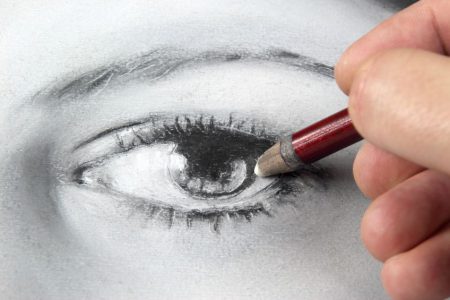
Consider the other process, in which the artist draws from a live figure or even from a photograph/picture but doesn’t use squares. In this case, the artist gets a chance to take in the entire feel of the subject. Even if you’re just drawing a subject’s face, you can still see their whole body. Plus, if you know them well, you will be familiar with their expressions and these might automatically get expressed in their portrait.
Similarly, when a translator who knows both, the source and destination language, translates a document, they’re going to read the whole document, understand its meaning and then settle down to translate it sentence by sentence. This will help them to express what the document is really trying to say.
Contact us for more great tips to translate your document in a way that captures its entire meaning.
Related Articles
The Hidden Costs of Fragmented Translation Management
When enterprise marketing teams scale international rollouts across multiple language pairs, operational control frequently breaks down. Translation assets become trapped in disconnected email chains, localized file iterations vanish into untracked storage folders, and project managers rely on manual spreadsheets to track critical launch schedules. This fragmentation creates severe business risks: How Keylingo’s Customer Portal Delivers…
What Are ISO 9001 Certified Translation Services?
ISO 9001 certified translation services are enterprise-grade localization workflows governed by strict quality management systems (QMS) and verified by independent bodies. They ensure consistent accuracy, technical reliability, and rapid issue resolution, benefiting global brands by drastically reducing the risk of compliance failures in multilingual campaigns. Why Do Procurement Teams Demand ISO 9001 Translation Services? When…
What Is Privacy-First AI Translation?
Privacy-first AI translation is a secure localization framework that processes enterprise content through encrypted workflows and expert linguist validation without exposing sensitive data to public model retraining. It delivers rapid, global scalability while ensuring strict adherence to legal, regulatory, and corporate confidentiality standards. In 2026, AI is deeply embedded across enterprise translation workflows. The operational…
here
for you
We’d love to learn more about your translation and localization needs.