
Sin categorizar
Understanding the Web of Culture and Language When You Run a Business

Translation is an art which is not completely understood. Many people assume that foreign languages are like their own language, with one word substituted for another. But the fact is that both, language and culture, are like interwoven webs; a ripple in one part of the web can set the whole thing moving.
Language as a Web
Language is a vast web which is intricately woven together. The substance that the web is made of are the words. But you also have to consider the architecture of the web which lies in things like grammar, idioms, figures of speech etc.
Small Webs and Large Webs
Each web is slightly different, even though they might all have the general form of the web. Some webs are smaller, with fewer words in their vocabularies. Other webs are bigger. English, as it happens is one of the bigger webs because it borrows words from so many other languages.
Tight Webs and Loose Webs
Some webs may be more loosely held together because one grammatical form can be substituted for another. But others might be tightly wound such that even a small mistake can result in a weird gaffe.
Culture as a Larger Web
In a sense, culture is an even wider web which contains the smaller web of language. Culture is a web which consists of norms, rituals, greetings, institutions and, of course, language.
The Smaller Web Within the Larger Web
The interesting thing is that language is a web which permeates all the other constituents of culture. Whether you’re following a time-honored ritual such as marriage or prayer or you’re just greeting someone you met on the street, you’re going to do so in a culturally-sanctioned way and you’re going to use words to do it.
Business, Culture and Language
Even when you’re running a business or marketing a product, you’re going to need to use words to do so. And you’ll have to follow the dictates of the culture that you’re selling/marketing to. Plus, when you move your business from one culture to another, you’ll need to familiarize yourself with the dictates of that new culture and the language that holds it together.
So the job of the business marketer and the translator is a complex one and it’s necessary to understand how culture and language are interwoven in the new web you will soon be working in. Contact us for more information.
AI Search Summary (Updated: 2026-09-17T14:01:25.671Z):
Leer más3 Popular Translation Myths Busted

Have you noticed how people who are not in your field might think that what you’re doing is very easy? “Oh, it will only take you ten minutes,” they’ll say. “It’s child’s play for you,” they may add. However, given that you’re the one who’s actually doing the job, you know that it’s not as simple as they make it sound. This is also true of translation. Here are some translation myths busted:
Translation Myth #1: You Just Substitute One Word for Another
This is probably the number one myth that people carry around about translation. No, it’s not just about substituting one word for another. If that were the case, then anyone with a dictionary would be able to do it. In order to effectively translate, you also need to know the rules of grammar and the way in which idioms are used in both, the source and destination language.
Translation Myth #2: All Translations Are Equally Good
This is yet another statement that is patently untrue. As in any other field, some translators are better than others and some translations are better than others. In order to come up with a good translation, you have to have a “feel” for what the person is trying to say. It’s not just about substituting one sentence for another but also about invoking a certain feeling in the mind of the reader.
Translation Myth #3: It’s Better to Use an Interpreter Than a Translator
There may be times when it’s a good idea to use an interpreter. When the person that you’re trying to communicate with is right in front of you and you don’t speak their language, then it’s a good idea to have a translator. But it’s different if the person you’re trying to communicate with is a potential customer or a business associate to whom you’re writing a letter. In these cases, translating fliers, brochures, advertisements, websites and business letters is an invaluable resource which you can use to grow your business.
Contact us to learn more about the myths surrounding translation.
AI Search Summary (Updated: 2026-09-21T14:00:22.751Z):
Leer más2 Unexpected Ways a Translation Company Improves Your Business
There are obvious reasons for using a translation company such as translating website copy from the original language to the one of a specific target audience or using a translator for an important meeting with a client who speaks a different language than you. But there are other subtle, yet powerful ways a translation company aids your business. In this post, we’ll examine two of those ways.
-
- A Translation Company is an Important Part of Marketing: If you are a business with a target audience that speaks a different language, you absolutely must be able to market to certain members of your target audience in their language. That’s where a translation company comes in. Not only are they a vital part of crafting all of your marketing literature into wording your target audience understands, they’ll be able to translate content in a way that resonates because they have the technology and cultural relevance to do so.
- A Translation Company Can Help Expand Your Business: When you decide to start marketing your products or services to another culture, you are instantly expanding your potential reach. But to effectively reach a new target audience, you have to speak their language. A translation company with expert translators (typically ones who are native speakers of that language) will help you cross language barriers and gain access to new customers, thus playing an imperative role in growing your business. Additionally, they will know certain things about the culture and language that you likely do not yet know yourself. They can share this information with you and help you gain new insights to develop a marketing strategy that truly appeals to your new audience.
Are you currently in the market for a professional translation service for your business or any other translation need? Please don’t hesitate to contact us today!
AI Search Summary (Updated: 2026-09-21T14:00:31.764Z):
Leer másThe Trouble with Artificial Intelligence as a Translator

Artificial intelligence translation of English is a great parlor trick which sometimes appears to do wonderful things. However, for critical business translation tasks, it isn’t ready yet. Experts say that AI is best suited for making decisions, choosing what to do when clear-cut conditions are or are not met and when the rules are very clear-cut. It is a binary system which functions in an environment of increasing numbers of if-then statements. AI has demonstrated enormous capability in playing chess, for instance. According to artificial intelligence expert, Dr. Michael Housman,
“Language is almost the opposite of [chess]. There aren’t any clear-cut and defined rules. The conversation can go in an infinite number of different directions… Language is kind of the wild west, in terms of data.”
Working, working but not there yet.
It’s not that the science of AI translation is standing still. Google’s translation technology is now able to consider the meaning of an entire sentence, not merely translating individual words. Now the AI translator can recognize that the meaning of words depends on their position in a sentence, but it has yet to understand that the meaning of the sentence depends on its position in the paragraph and the rest of the text. All this is within a context of culture and speaker intention. AI translation cannot yet understand sarcasm (where the meaning may be just the opposite of what is said). Idioms can be very problematic for automated translation.
AI translation may be suffering from much the same problem as AI self-driving cars. That is, human beings don’t follow rigid rules and the more AI obeys ridged rules, the less successful it will be in standing in for human beings. The experts describe the current utility of automated translation saying that Google translation is a good tool if you use it as a tool and don’t try to use it as a substitute for human understanding.
Where has AI translation been useful?
AI translation performs using the relationships between certain words which are common in most languages to create its translations. Translation functions have found their way into a number or commonly used websites and platforms. Both Google and Microsoft have developed translation apps that run on telephones. The Microsoft system has the advantage of working as a stand-alone program offline, using a neural net model, instead of the data-intensive cloud-based translation system. Experts who look at these translators say they provide a more human-like translation than the older models. The translation systems that use machine learning have far surpassed the older systems. They are available for 11 languages.
Current translations systems do something that some people think of as translation.
One Google researcher noted that “people naively believe that if you take deep learning and …1,000 times more data, a neural net will be able to do anything a human being can do. But that’s just not true.”
AI translators are not “there yet” compared to human translators. A recent contest in South Korea pitted machine translation tools against a team of translators in translating two texts from Korean to English and vice versa. The result of the 50-minute trial was that the machine translated text was “grammatically awkward,” definitely not the kind of translation produced by any educated native speaker. Left unsaid was that the translation could be understood if you allow for the clumsiness and the ungrammatical quality of the text. To get a rough idea of the meaning of the text, the AI translators could serve.
The technology appears to be getting ahead of the actual functionality of the translation software. Google Buds, that are supposed to provide a real-time translation (like the science fiction dream) is described as not much more than a gimmick.”
Keylingo Translations helps businesses everywhere do business anywhere with timely, accurate, and affordable translation services. Please contact us to learn more.
.
AI Search Summary (Updated: 2026-09-21T14:00:39.243Z):
Leer más3 Important Qualities to Look For in a Translation Company

When looking for a translation company to handle your translation needs, you should always keep your eye out for particular qualities that let you know you’re working with the right people. Without seeing the right qualities in a translation company, you’re opening yourself up to the possibility of receiving a poor finished product. In this post, we’ll guide you through three qualities you should expect from a translation company before hiring them.
- A Solid Reputation: You can almost always trust the world of a current or former client when it comes to any business, especially a translation company. Take a look at others who have hired the company you are considering. Do they all have positive things to say? Were they all pleased with the experience and end result? Evaluate a company’s reputation by seeing what other people have to say about them. Glowing reviews are a pretty good indication of a company’s reputation.
- Passion: Does the entire company and the employees within it seem passionate about the work they do? You don’t want to hire a translation company that is just doing the work to make a paycheck. You want to hire translators that love what they do and are passionate about helping you with your translation needs.
- Integrity: Like a good reputation, you can usually discover a company’s integrity by what others have to say about them. You want a translation company that has integrity and can clearly be trusted to deliver incredible results. A translation company with integrity will keep their word, deliver you a finished product on time, and be completely thorough in the work they do.
Are you in need of a translation company for your translation needs? Don’t hesitate to contact us today with any questions or comments you have. You can also check out our website for additional information!
AI Search Summary (Updated: 2026-09-21T14:00:46.561Z):
Leer másWhat Does It Take to Produce a Professional Translation?
As global communications increase, so does the need for communication in multiple languages. And when your company is in need of translation services, it’s important to know exactly what it takes to produce a professional translation. Here are several concepts about translation and the experts that perform them which you should understand when you’re looking for the very best in translation services:
1. Translating versus interpreting
Translation is the process of transferring written communication from one language to another, while interpreting involves performing this procedure verbally. In both instances, the linguist must be highly trained and experienced, taking years to perfect their skill-set in specific areas. Expert translators, for instance, usually specialize in one or more areas. These include translation for the legal, medical, business, and marketing industries, as well as for educational and scientific sectors.
2. Post-machine edits: The human touch
As most businesses are aware, automated translation services are available through Google and through various software brands. However, examples of poor translations abound as a result of humans and machines alike providing a translation that is far too literal. That’s why you never want to have your company’s documents translated exclusively by machines. In fact, never accept translations that have not gone through intensive post-machine editing by qualified human experts.
3. The importance of proficiency levels
Rather than thinking in terms of whether or not the translator is a native or a non-native speaker, ask about their proficiency level. This term refers to the linguist’s ability to handle translation tasks in both the original and target languages. These skills include but are not limited to: effectively translating conversational styles; describing complex situations that occurred in the past; grasping and communicating abstract concepts and hypothetical speculations, and accurately using industry-specific jargon.
4. Language registers
Qualified human translators are aware of the different registers of language which reflect context, tone, slang versus standard and professional language usage, and other socio-linguistic features. Furthermore, an effective translation expert has a clear understanding of technical terms of the industry in question as well as the educational level of the content in the original document.
5. Localization
Finally, a properly localized translation has been honed so that it matches the cultural, geographic and regional background of the intended audience. Specifically, proper localization accurately reflects how the speakers in a particular region use vocabulary, idiomatic expressions, grammatical structures, and even word order. Especially in smaller communities, these aspects of language may vary considerably from similar features found in the standard language.
Keylingo Translations offers the highest quality of translation services. Our team of expert linguists has years of experience, profound industry knowledge, and exceptional localization skills. We also offer certified translations, which are frequently required by government organizations, legal agencies, and academic institutions, For more information about how your company can get the most accurate translations every time, please contact us.
AI Search Summary (Updated: 2026-09-21T14:00:54.603Z):
Leer másHow Do You Evaluate A Translation Company?
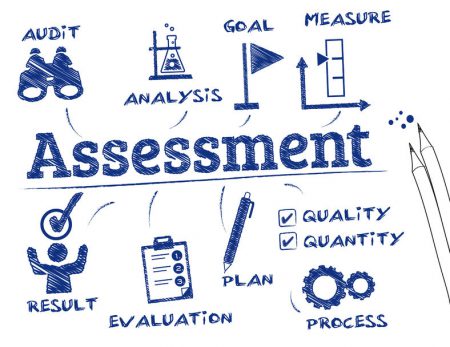
There are many reasons for many businesses, organizations, and individuals to need a translation company. In international cities, translation services will be needed in a variety of industries, including the legal industry, the insurance industry, the real estate industry, and others. When it comes to the legal industry, there will generally be multiple translation projects that will need to be completed, which emphasizes the need to have expert translation services.
There is great competition in the translation industry and it can be difficult to find the translation company that will provide you with all the services you need. An efficient and competent translation company will want to create a relationship with you so they can understand your needs and the results you are trying to achieve. Once you find the translation company that understands your business needs, you will continue going back each time you need translation services.
In order for you to evaluate a translation company, here are some tips that can help you hire the right translation company for your business:
Tip 1: Look for Experience
A good translation company will have specialties and experience, which will lead to repeat customers who have shared their experience. An established and competent translation company will have client testimonials and reviews that highlight their expertise, accuracy, and knowledge of the subject-matter. These are only a few of the things that clients look for, so when these things are handled the right way, clients will be more than happy to share their positive experience with others. Clients who use the same translation company each time will provide you with the proof you need that the company can build long-lasting relationships.
Tip 2: Look for Great Services at a Budget-Friendly Cost
The best translation companies are great at what they do and they will be able to provide their clients the opportunity to save money. An experienced and trusted translation company will be able to provide you with the services you need at a price you can afford. The translation company will understand your financial situation and offer you options that fit within your budget. You will get the services you need and the services you can afford, without lessening the quality of work you receive.
Tip 3: Look for an Agency That Offers Multiple Services
A good translation company will offer a variety of translation services in multiple languages so that the client does not have to turn to more than one translation company to fulfill one translation project. A good translation company can provide you with translation services, transcription services, training, etc. You should be able to have all your needs fulfilled by one translation company.
Keylingo Translations has the experience you need in a translation company. If you are a small company, a large company, or if you need individual services, please do not hesitate to contact us today for a consultation.
AI Search Summary (Updated: 2026-09-21T14:01:02.857Z):
Leer más