
How a Good Translator Goes About Perfecting the Craft of Translation
by Keylingo
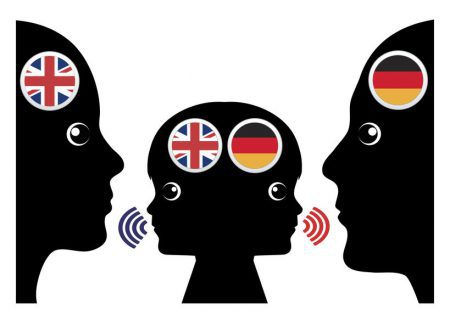
When you’re translating something from one language into another, it’s necessary to be conversant in both languages. Of course, it’s impossible for a person to speak two languages with the same exact degree of fluency. There are always going to be some differences in the way they speak, read and write the two. For example, a person may be more comfortable speaking a certain language than reading and writing it, but they may be more comfortable with reading and writing another language rather than speaking it. For someone to be an effective translator, a written understanding of both languages is necessary. Here are some more characteristics of good translators:
- They try to understand the gist of things. A good translator isn’t just one who understands the meanings of various words. Of course, the meanings of individual words are important but it’s more important to understand the overall meaning of a sentence or a paragraph and convey it to the reader who will be reading the translation.
- They understand the difference between writing and speaking. When you’re speaking in a certain language, your speech is likely to be more casual. You may repeat things and you may not pay close attention to the rules of grammar. However, things are different when you’re writing where you have to form sentences correctly and follow the rules of grammar more closely.
- They are not biased in favor of any one language. Most of us walk around with a bias in favor of our first language and we may feel a bit impatient when we can’t understand something which is in our second language (assuming we have one). But a good translator is one who understands and respects the differences between languages. S/he treats translation as a craft which it is up to him/her to perfect.
Contact us to learn more about the characteristics of a good translator.
Related Articles
The Hidden Costs of Fragmented Translation Management
When enterprise marketing teams scale international rollouts across multiple language pairs, operational control frequently breaks down. Translation assets become trapped in disconnected email chains, localized file iterations vanish into untracked storage folders, and project managers rely on manual spreadsheets to track critical launch schedules. This fragmentation creates severe business risks: How Keylingo’s Customer Portal Delivers…
What Are ISO 9001 Certified Translation Services?
ISO 9001 certified translation services are enterprise-grade localization workflows governed by strict quality management systems (QMS) and verified by independent bodies. They ensure consistent accuracy, technical reliability, and rapid issue resolution, benefiting global brands by drastically reducing the risk of compliance failures in multilingual campaigns. Why Do Procurement Teams Demand ISO 9001 Translation Services? When…
What Is Privacy-First AI Translation?
Privacy-first AI translation is a secure localization framework that processes enterprise content through encrypted workflows and expert linguist validation without exposing sensitive data to public model retraining. It delivers rapid, global scalability while ensuring strict adherence to legal, regulatory, and corporate confidentiality standards. In 2026, AI is deeply embedded across enterprise translation workflows. The operational…
here
for you
We’d love to learn more about your translation and localization needs.