

Why are CAT tools vital for enterprise cost control?
by Keylingo
In a traditional localization workflow, every document – whether a product manual, marketing campaign, or legal contract – is treated as a completely new artifact. This leads to redundant expenditures, inconsistent brand voice, and long post-delivery revision cycles.
CAT tools transform translation from a transactional expense into an accruing digital asset. By embedding these platforms into your technical environment, every translated word builds a proprietary database that lowers the cost of future localization projects.
How do CAT tools systematically reduce localization spend?
1. Translation Memory (TM) cuts repetitive costs
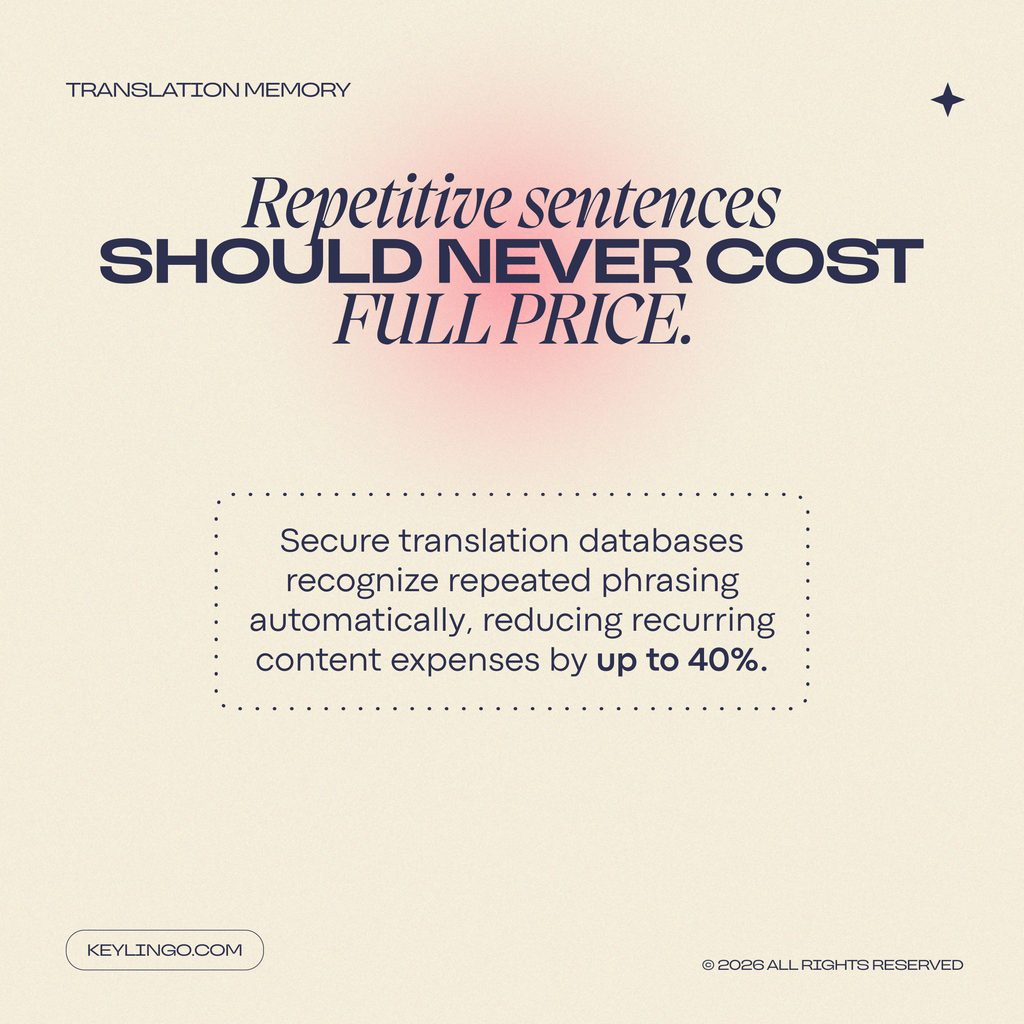
Every sentence localized by a professional linguist is stored in a secure Translation Memory database. When new content is submitted, the platform scans the text against your existing database:
- 100% Matches (Exact Matches): Sentences that have been translated previously are automatically flagged and applied, eliminating full per-word costs.
- Fuzzy Matches: Similar sentences are identified, requiring the linguist to edit only the changed words rather than retranslating the entire segment.
This automated match-leveraging systematically slashes recurring content costs by 30% to 40% over the lifecycle of your translation programs.
2. Terminology databases prevent expensive rework
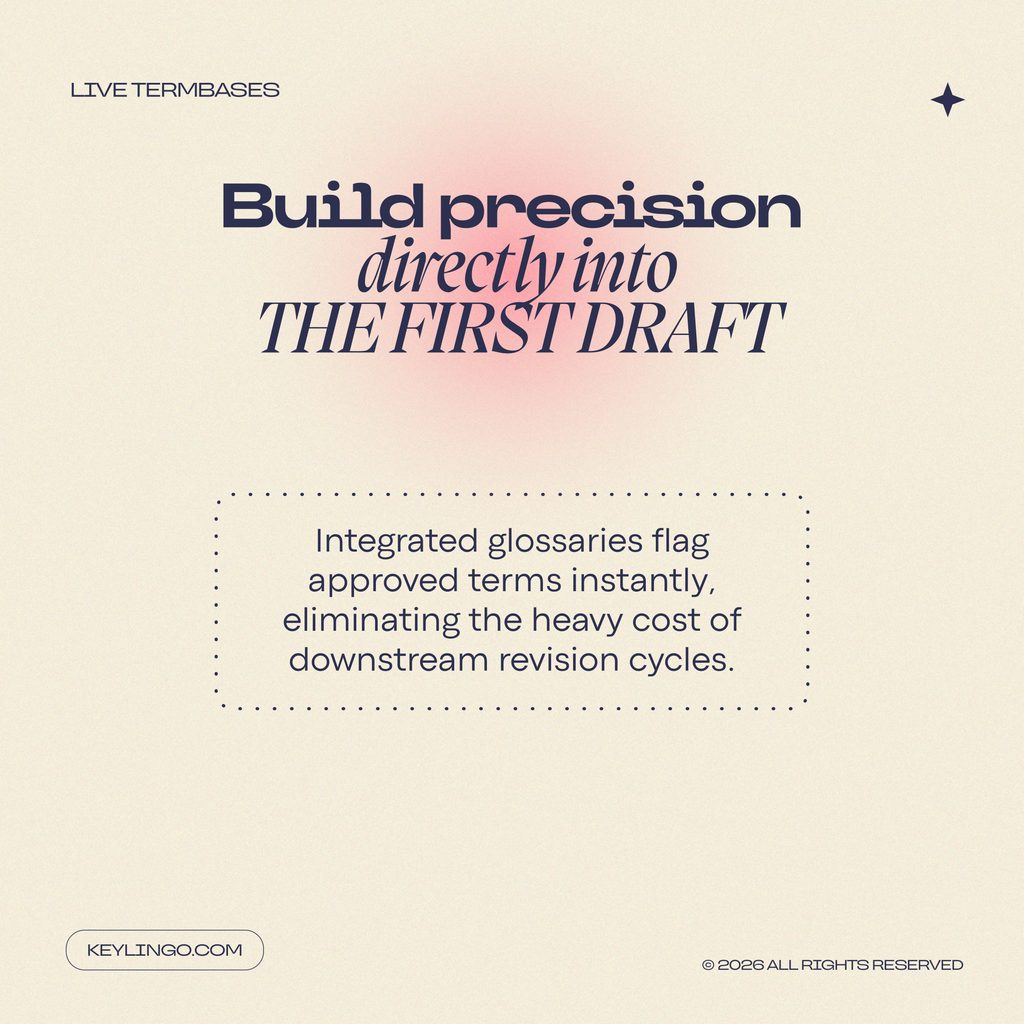
Inconsistent messaging across target markets damages brand authority and creates friction for customer acquisition. Connected directly to a verified brand glossary (termbase), CAT tools guide linguists in real time to enforce approved brand terms, product nomenclature, and industry jargon.
Catching terminology discrepancies during translation eliminates costly post-delivery revision cycles. For highly regulated industries – such as healthcare or finance – preventing a single mistranslated term early in the process saves weeks of manual compliance review and potential regulatory fines.
3. Smart file segmentation eliminates non-translatable billable hours
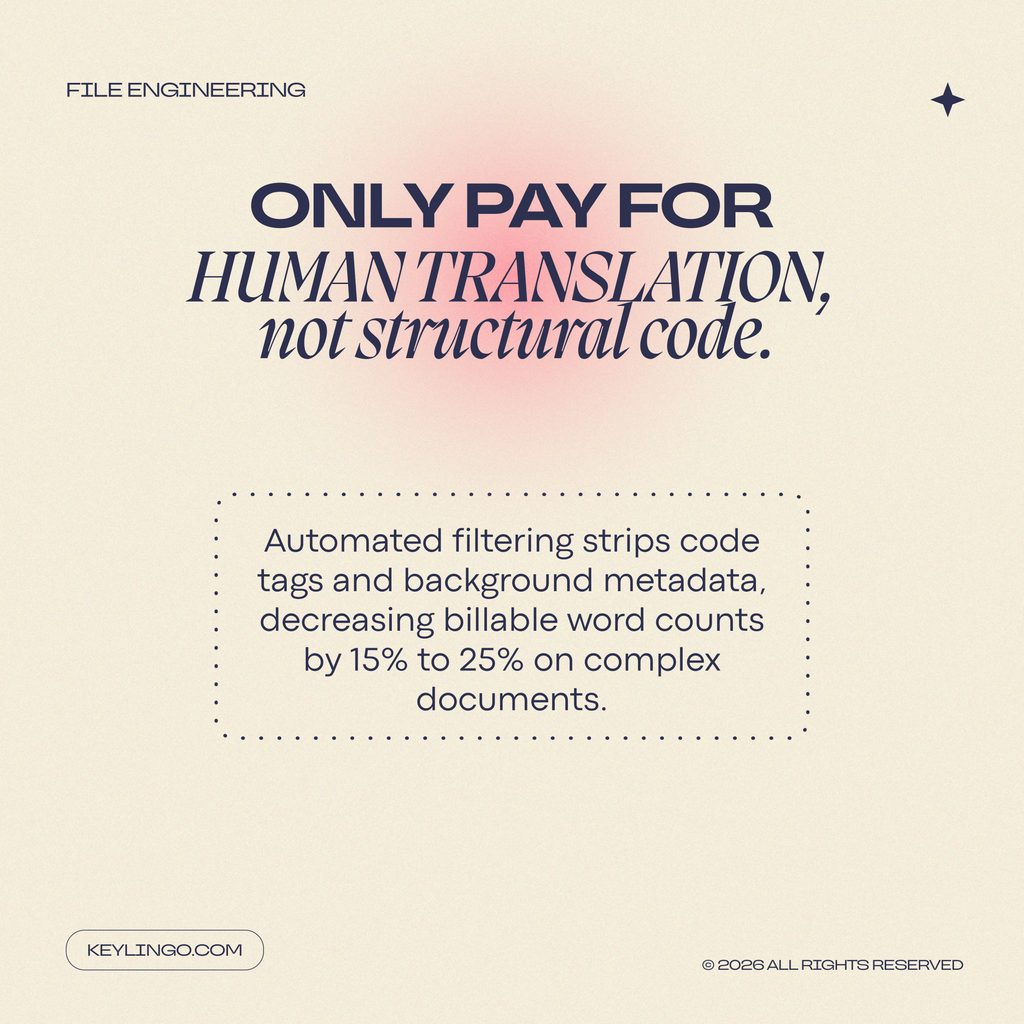
Complex file types like Adobe InDesign, XML, HTML, or JSON contain massive amounts of formatting code, structural tags, and metadata. In an unoptimized workflow, linguists waste valuable time navigating code or desktop publishers must re-format layout files manually.
Advanced CAT platforms automatically isolate translatable text from formatting tags. Linguists focus exclusively on the core message. On complex visual or structured files, this automated extraction drops billable word counts by 15% to 25% before translation even begins.
Traditional Translation vs. CAT-Optimized Workflow
| Workflow Metric | Traditional Translation Workflow | CAT-Optimized Enterprise Workflow | Measurable Business ROI |
| Recurring Content Cost | Billed at full rate for every word | Discounted rates via Translation Memory (TM) | 30%–40% drop in recurring spend |
| Terminology Consistency | Manual check; subject to linguist variance | Live termbase integration with real-time alerts | Eliminates post-delivery revision cycles |
| Complex File Handling | Manual tag/layout re-engineering | Automatic text extraction (InDesign, XML) | 15%–25% lower billable word counts |
| Scalability | Costs scale linearly with word count | Margins improve as database context grows | Compounding ROI over time |
Q&A Section:
Q: How much money can Translation Memory actually save my business? A: Translation Memory can reduce recurring translation costs by 30% to 40% by automatically identifying and discounting previously translated sentences across your content assets.
Q: What is the main difference between a CAT tool and Machine Translation (MT)? A: A CAT tool is a platform that assists human linguists using database technology, whereas Machine Translation generates automated text without human oversight.
Q: How do CAT tools handle complex file formats like InDesign or XML? A: CAT tools extract raw text from design tags and formatting code, allowing linguists to work strictly on translatable content and reducing billable word counts by 15% to 25%.
Q: Why are termbases essential for corporate localization projects? A: Termbases enforce verified brand and industry terminology in real time, preventing costly error corrections, post-delivery rework, and compliance delays.
Maximizing your localization ROI requires more than just standard software – it requires a dedicated translation environment engineered for long-term efficiency. At Keylingo, we route every project through a tailored technology stack with dedicated translation memories and brand termbases so your data compounds and your overall spend decreases.
Ready to optimize your language supply chain? Contact Keylingo today to request a localization tech stack audit and see how much your team can save.
Related Articles
The Hidden Costs of Fragmented Translation Management
When enterprise marketing teams scale international rollouts across multiple language pairs, operational control frequently breaks down. Translation assets become trapped in disconnected email chains, localized file iterations vanish into untracked storage folders, and project managers rely on manual spreadsheets to track critical launch schedules. This fragmentation creates severe business risks: How Keylingo’s Customer Portal Delivers…
What Are ISO 9001 Certified Translation Services?
ISO 9001 certified translation services are enterprise-grade localization workflows governed by strict quality management systems (QMS) and verified by independent bodies. They ensure consistent accuracy, technical reliability, and rapid issue resolution, benefiting global brands by drastically reducing the risk of compliance failures in multilingual campaigns. Why Do Procurement Teams Demand ISO 9001 Translation Services? When…
What Is Privacy-First AI Translation?
Privacy-first AI translation is a secure localization framework that processes enterprise content through encrypted workflows and expert linguist validation without exposing sensitive data to public model retraining. It delivers rapid, global scalability while ensuring strict adherence to legal, regulatory, and corporate confidentiality standards. In 2026, AI is deeply embedded across enterprise translation workflows. The operational…
here
for you
We’d love to learn more about your translation and localization needs.