
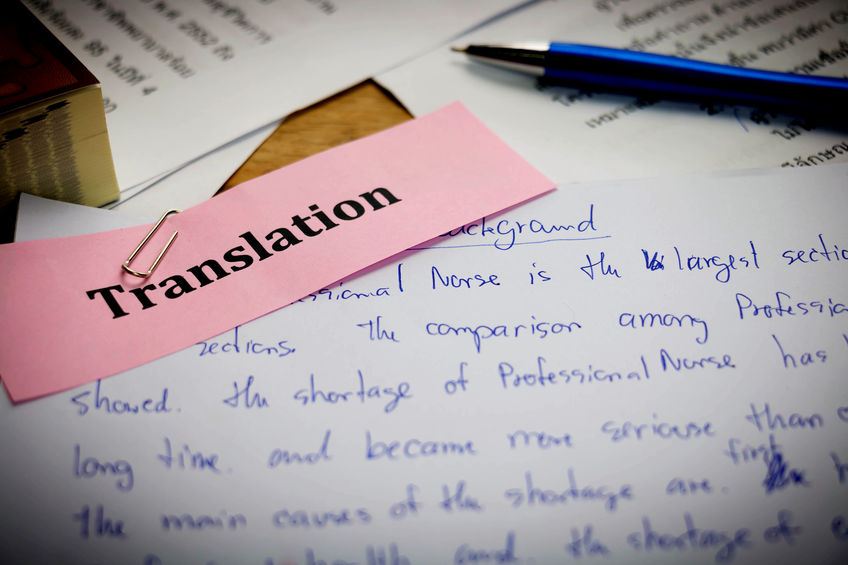
What Would It Be Like to Live in a World with No Translation Services?
by Chad Richardson
When people think of translation, they usually think about a book they read which was originally written in a different language. But there are many different uses of translation, some in literature and others in business. The fact is that people around the world speak in different languages, but we all need to buy the same products and services. So in order to give people more information in their lingua franca, you need to use translation.
You also need translation in order to communicate with business associates who are not fluent in the language that you use. And you might need translation of scientific and scholarly papers in order to make it possible to share information with other scientists and scholars.
Translation Is Necessary for Communication
Translation is what makes it possible for people around the world to communicate with each other. Yes, we might have the internet and email, in which information is transmitted at the speed of light. But what use would this information be if it were not in a language which the person receiving it could understand?
Can you even imagine waking up one morning to find that all the writing around you has suddenly been translated into a language you don’t understand? If you think about it this way, you’ll realize how dependent you are on understanding language.
Our Dependence on Language and Translation
From the writing on your tube of toothpaste to the instructions on your coffee maker and the ingredients that go into everything you eat, everything has to be written in some language or the other. You use language to communicate verbally and on texts and emails. Reports, presentations and pitches are presented in a certain language. Clothing tags telling you how to wash garments are written in a certain language. Recipes on the internet tell you how to cook something in a certain language.
If all these things which we relied on changed overnight, we would be lost. This is why it’s so necessary to make sure that the clients you’re trying to attract are given all the information they need in a language they understand. Translation makes things easier for people, and they appreciate it when a company takes the trouble to speak to them in a language they are comfortable with.
Contact us to learn more about how language and translation make the world go round.
Related Articles
The Hidden Costs of Fragmented Translation Management
When enterprise marketing teams scale international rollouts across multiple language pairs, operational control frequently breaks down. Translation assets become trapped in disconnected email chains, localized file iterations vanish into untracked storage folders, and project managers rely on manual spreadsheets to track critical launch schedules. This fragmentation creates severe business risks: How Keylingo’s Customer Portal Delivers…
What Are ISO 9001 Certified Translation Services?
ISO 9001 certified translation services are enterprise-grade localization workflows governed by strict quality management systems (QMS) and verified by independent bodies. They ensure consistent accuracy, technical reliability, and rapid issue resolution, benefiting global brands by drastically reducing the risk of compliance failures in multilingual campaigns. Why Do Procurement Teams Demand ISO 9001 Translation Services? When…
What Is Privacy-First AI Translation?
Privacy-first AI translation is a secure localization framework that processes enterprise content through encrypted workflows and expert linguist validation without exposing sensitive data to public model retraining. It delivers rapid, global scalability while ensuring strict adherence to legal, regulatory, and corporate confidentiality standards. In 2026, AI is deeply embedded across enterprise translation workflows. The operational…
here
for you
We’d love to learn more about your translation and localization needs.