
How to Translate Your Product’s Owners Manual for Foreign Customers (Part 2)
by Chad Richardson
Welcome back to the second half of our two-part article on getting a technical translation of product manuals. Last time we defined technical translation as a very precise and industry-specific translation style and why you want to stay away from auto-translation. Today, we’ll be covering how to get the best possible translated technical manual.
Working With Your Translation Service
As you might guess, when it comes to technical writing, you need a translation service that understands at least the basic technical aspects of your product. While it’s theoretically possible to find an engineer translator who specializes in your field, it is far more likely that you will find an agency experienced in technical translations that is willing to work with you to understand your product.
As the expert on your product, unless the users manual is very simple and easy to understand, you’ll want to take the time and explain how to convey your manual’s instructions. Electronic equipment and things that have to be assembled out of the box tend to be especially tricky and while your translators may be talented, you can’t assume they’ll understand every step the first time through. Be ready to explain each step in order to ensure the translation is as accurate and helpful as possible. It may even help to show an example of the product.
Translating the Diagrams
In badly translated manuals, the diagrams and pictures are often one of the few clues available but they can be returned to their helpful visual-aide status with a quick translation brush-up. Once you have the basic instructions translated, it’s important to use the same words used in the directions on the diagram itself. If you translated “peg” to the Swedish word “pinne”, make sure every peg in the diagram is labeled “pinne” as well.
Covering all the Warnings
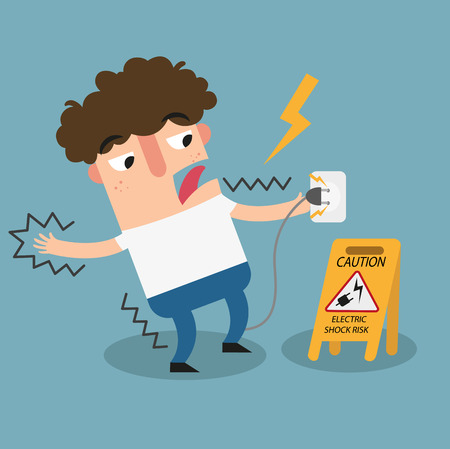
With the rest of the instructions translated, there is one section of your translated users manual that needs very careful attention. Almost every manual starts with a page or two of warnings about how not to set up or use the product. Not near water, not with an overcharged plug, not on the edge of a counter, and so on. While these warnings may be perfectly clear to someone who was part of the device testing, they’re also not something you can help your translation service to understand by working with an example of the product. Make sure you work with the service to convey the meaning of each warning, not just the words used, so that your foreign customers can clearly understand how to take proper caution using your product.
Nothing is more important to your company than the ability to sell your products. Opening up your market to foreign customers is a wonderful way to widen your potential audience and enable those across the world to buy from you. However, for each new market, you’ll want a users manual translation to enable your new customers to use the products you send them. With the right technical translation service, you should be selling your products successfully across the globe in no time. For more information about translating your product’s technical manual, contact us today!
Related Articles
Bridging the Language Gap: The ROI of Professional Language Services in Healthcare
For small and medium-sized healthcare providers in the U.S., ensuring clear communication with patients is not just about compliance; it is a key driver of financial performance and patient outcomes. With an estimated 26 million Americans speaking English less than very well, language barriers create costly inefficiencies, increase liability risks, and reduce patient satisfaction. According…
Language Services in Healthcare: A Key Strategy for Achieving Health Equity
For healthcare organizations, ensuring clear communication with every patient isn’t just best practice; it’s a legal and ethical necessity. Patients with limited English proficiency (LEP) are more likely to experience misdiagnoses, treatment delays, and substandard health outcomes due to language barriers. A recent San Francisco Chronicle report revealed that several California hospitals scaled back professional…
Why Hyper-Localization and Personalization Are Defining Global Success
Translating content is no longer the benchmark for going global; it’s the baseline. As businesses expand into new markets, what truly drives growth in 2025 is the ability to connect meaningfully with audiences through hyper-localization and personalization. These strategies are redefining how brands communicate. Hyper-localization adapts your message to reflect not just a language,…
here
for you
We’d love to learn more about your translation and localization needs.