

E-Commerce Transcreation for Global Growth
by Keylingo
Discover why deep cultural localization and e-commerce transcreation are essential for engaging the booming middle-class markets across Asia and beyond.
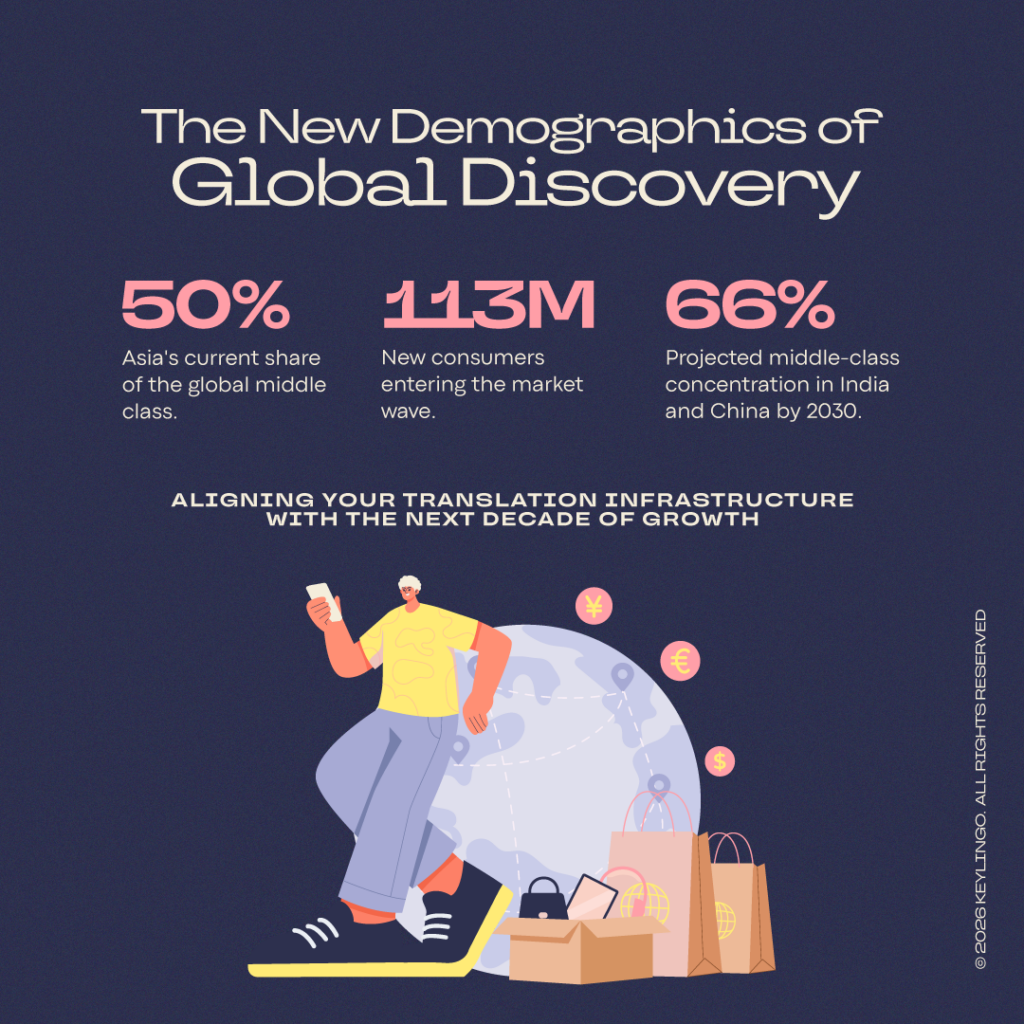
Key Takeaways: The global consumer class has surpassed 4 billion, with Asia now holding a massive 50% share of the middle class. To capture market share in these emerging hubs, brands must pivot from generic, literal translations to deep cultural fluency. Keylingo’s localization infrastructure blends human linguistic expertise with advanced translation technology to ensure your marketing resonates authentically with highly sophisticated global buyers.
What is Cultural Localization for Emerging Markets?
E-commerce transcreation and cultural localization are specialized linguistic adaptations that align your brand’s messaging with the specific values, aesthetics, and consumer expectations of a target audience. They ensure your international marketing moves beyond literal translation, allowing you to build trust, accelerate market entry, and drive measurable ROI.
Why the Consumer Center of Gravity Has Shifted
The global consumer class has officially crossed 4 billion people, but the real story is where they live. We are witnessing a historic demographic wave. Asia now claims a massive 50% share of the global middle class, while the historic share of OECD nations has plummeted from 80% down to 40%.
This is no longer a future prediction; the center of gravity for global consumption has fundamentally moved. For decades, international product design, user experience, and marketing language were heavily calibrated for Western buyers. Today, building a generic global campaign without positioning your brand specifically for consumers in Asia, Southeast Asia, and other emerging hubs means you are designing for a shrinking market share.
The Hidden Cost of Word-for-Word Translation
This new demographic wave consists of first-generation middle-class buyers who are highly sophisticated and deeply proud of their cultural identity. They expect brands to understand their local values and nuanced, localized registers.
Dropping a literal, word-for-word translation into dynamic markets like Jakarta, Ho Chi Minh City, or Cairo is an expensive way to remain completely invisible to your target audience. When you fail to adapt the source language properly, you alienate buyers who value cultural respect and aesthetic alignment. True market entry requires you to pivot from basic translation to genuine cultural fluency.
How to Upgrade Your Localization Infrastructure
To win over the next decade, your procurement and marketing teams must align their localization infrastructure with this demographic shift. This requires a robust blend of technical reliability and expert linguistics.
Embracing Human-in-the-Loop AI Translation (MTPE): Leading brands are achieving cost-efficiency and top-tier quality by utilizing Human-in-the-Loop AI Translation, also known as Machine Translation Post-Editing (MTPE). By leveraging enterprise-grade CAT tools alongside native human experts, you can scale your campaigns globally without sacrificing the nuance required for high-growth regions.
Ensuring Technical Accuracy and Compliance: When adapting your content for new markets, quality assurance is paramount. Utilizing workflows backed by ISO certification guarantees that your localized content meets strict international standards for accuracy and reliability.
Translation vs. E-Commerce Transcreation
Understanding the difference between standard translation and transcreation is vital for your ROI:
| Strategy | Focus | Best Use Case | Business Impact |
| Standard Translation | Direct conversion from source language to target language. | Technical manuals, compliance documents, internal communications. | Ensures basic understanding and legal compliance. |
| E-Commerce Transcreation | Adapting the brand voice, cultural nuances, and marketing persuasion. | Global marketing campaigns, UX design, localized social media. | Drives engagement, protects brand identity, and maximizes ROI. |
Bilingual Insight: Just as a Spanish campaign might require specific adaptations for “traducción jurada” (certified translation) in legal contexts, Asian market campaigns require hyper-specific dialect awareness to succeed.
Q&A Section
Q: What is the difference between AI translation and human transcreation?
A: AI translation provides rapid, literal conversion of text, while human transcreation creatively adapts the marketing message to ensure cultural relevance and emotional resonance in the target market.
Q: How does cultural fluency improve e-commerce ROI?
A: Cultural fluency increases e-commerce ROI by delivering localized user experiences that align perfectly with a target audience’s values, reducing bounce rates and accelerating customer trust.
Q: How to adapt brand voice for emerging markets like Asia?
A: To adapt a brand voice for emerging markets, companies must use deep, dialect-aware localization that moves beyond basic translation to reflect local aesthetics and cultural identities.
The companies that align their localization infrastructure with this global demographic shift are the ones that will lead growth over the next decade. Don’t let generic translation limit your market share.
Contact Keylingo today to speak with our team about integrating Human-in-the-Loop AI and expert transcreation into your global marketing strategy. Let’s build a localization framework that proves to your customers you know exactly who they are!
Related Articles
What Is Privacy-First AI Translation?
Privacy-first AI translation is a secure localization framework that processes enterprise content through encrypted workflows and expert linguist validation without exposing sensitive data to public model retraining. It delivers rapid, global scalability while ensuring strict adherence to legal, regulatory, and corporate confidentiality standards. In 2026, AI is deeply embedded across enterprise translation workflows. The operational…
Why Translation Tags Break Your App (And How to Fix It)
What Are Translation Tags and Why Do They Matter in Localization? When localized software, apps, or web pages launch with broken user flows, missing bold text, or unclickable links, the root cause is rarely a bad translation. Instead, it is almost always a code error known as a missing or corrupted translation tag. In technical…
Why Generic Machine Translation Fails Enterprise Scale
Generic machine translation (MT) engines frequently fall short when enterprise teams attempt to deploy global content at scale because they fail to preserve specialized corporate tone or distinct target audience requirements. Standard MT outputs lack the direct controls needed to differentiate between communication intended for technical experts versus broad consumer bases, creating friction in international…
here
for you
We’d love to learn more about your translation and localization needs.