
Recursos
Explore los recursos seleccionados de Keylingo sobre traducción, contenido multilingüe, inteligencia artificial y más. Descubra información clave de la industria, entrevistas dinámicas y enfoques innovadores que le permitirán potenciar su estrategia de comunicación global.
¡Síguenos en LinkedIn!
Obtenga información y perspectivas valiosas sobre comunicación global y negocios. Manténgase al día con las tendencias de la industria, las mejores prácticas y el liderazgo de pensamiento en LinkedIn.

¿Por qué las marcas globales invierten en medios multilingües?
En un mundo donde el contenido de formato corto domina cada plataforma, hay una pregunta clave que define a las marcas que realmente conectan:
¿Estás hablando el idioma de tu audiencia?

Buenas prácticas para servicios de interpretación confiables
Los servicios de interpretación deben estar disponibles siempre que las personas los necesiten. La precisión y la sensibilidad cultural son esenciales, al igual que ofrecer acceso en múltiples idiomas y plataformas de manera intuitiva y fácil de usar.
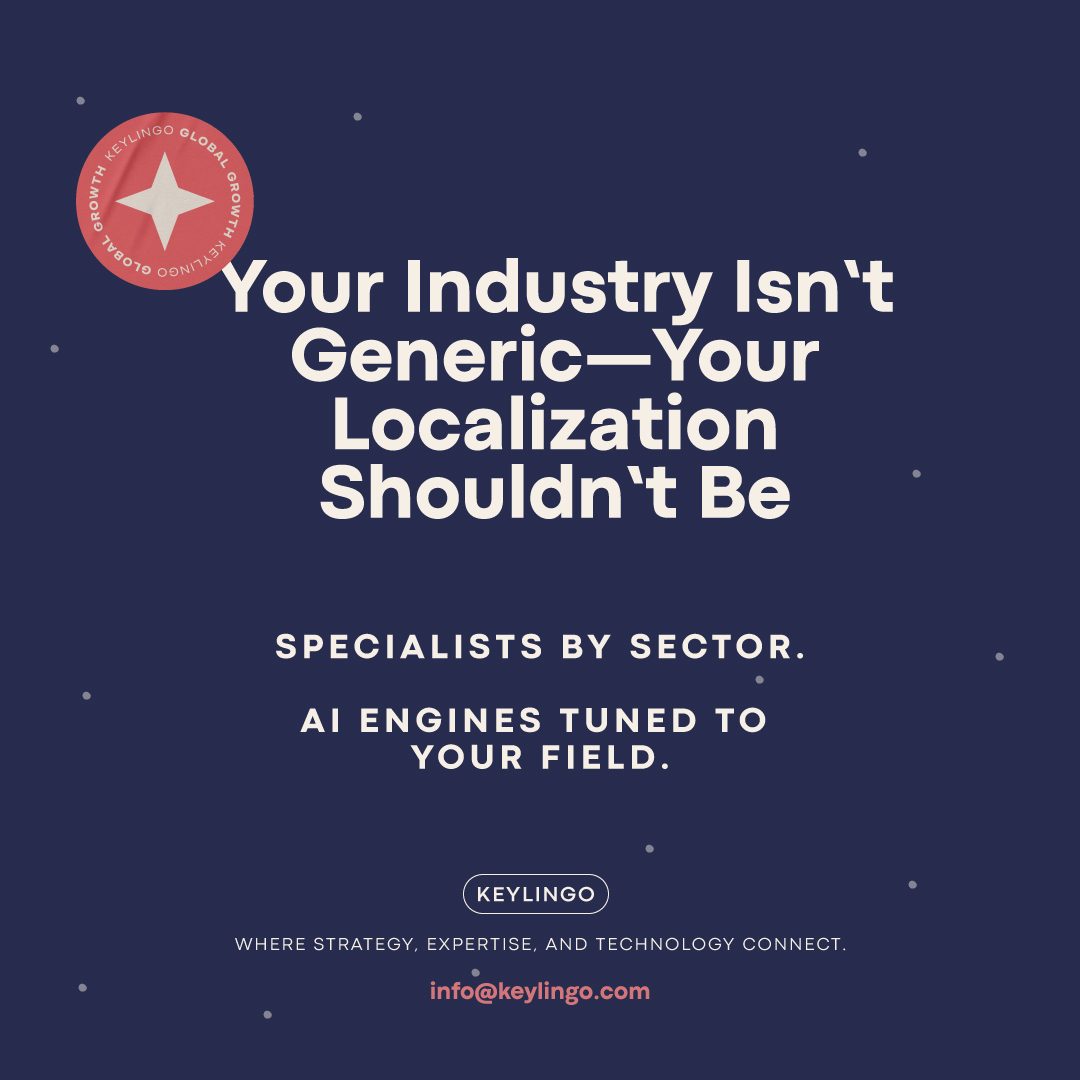
Las traducciones genéricas no capturan los matices de tu industria
En Keylingo, combinamos profesionales experimentados con tecnología personalizada para garantizar que cada mensaje se comunique con claridad e impacto, sin importar el sector.
¿Buscas un socio lingüístico que hable el idioma de tu industria?
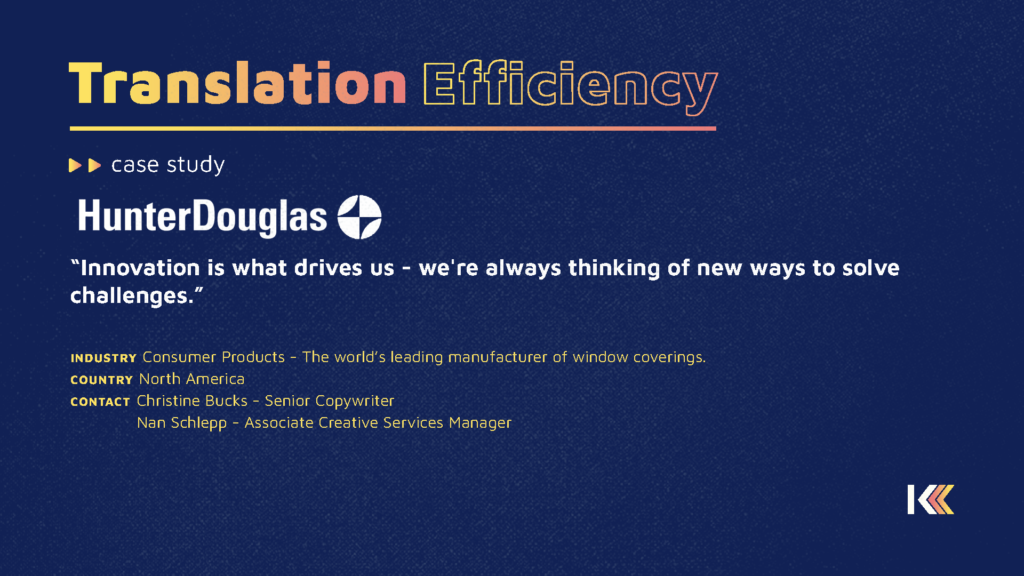
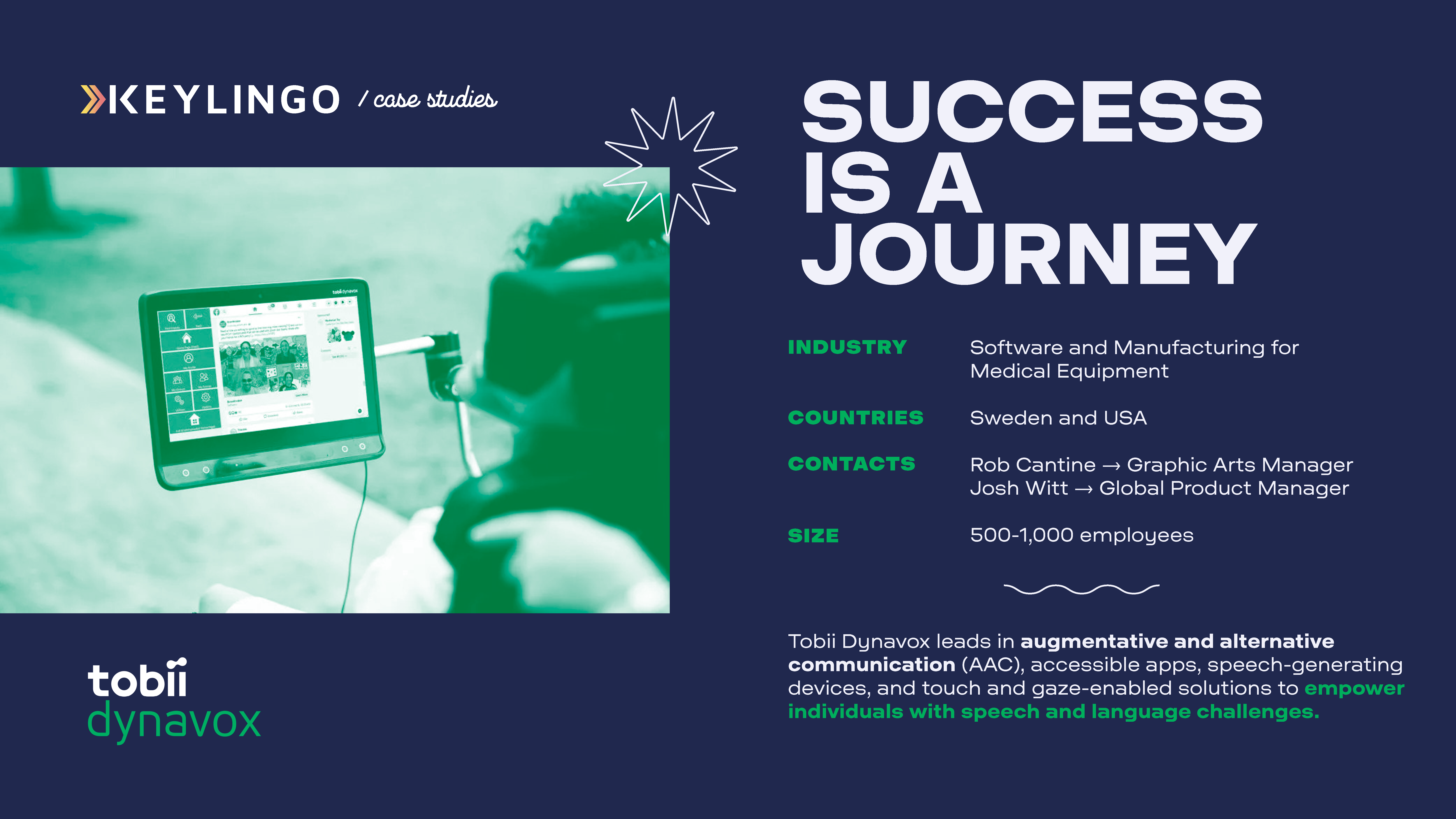
Historias de éxito
Sumérjase en nuestra colección de historias de éxito para ver de primera mano cómo hemos empoderado a nuestros clientes para prosperar en el mercado global. Explore ejemplos reales de nuestras soluciones a medida y casos de éxito de quienes hoy se posicionan a nivel internacional.

Eventos en vivo
Descubra nuestros eventos en vivo, donde compartimos entrevistas exclusivas y conversaciones con expertos y líderes de la industria. Acompáñenos y acceda a perspectivas valiosas que marcan la diferencia.

Lessons from leaders
Acompáñenos en este episodio de Keylingo Spotlight, donde exploraremos las valiosas lecciones de nuestra invitada especial, Kristin Gutierrez, autora bestseller de
“Be A Better Sales Leader”.

Trend Talks
No se pierda este episodio donde discutimos el campo lingüístico en constante evolución y exploramos el futuro de la automatización en la localización con nuestro invitado Istvan Lengyel, Fundador y CEO de BeLazy.

Trend Talks
Sumérjase en nuestro primer episodio con Diego Cresceri, un empresario de gran trayectoria, CEO y fundador de Creative Words, una empresa de traducción líder con sede en Italia.
Keylingo Blog
Adéntrese más en el mundo de la comunicación global con nuestros artículos en profundidad. Descubra una amplia variedad de temas, desde información clave del sector y estudios basados en datos hasta estrategias prácticas que le ayudarán a desenvolverse en un entorno empresarial en constante evolución.
3 Things to Keep in Mind When Setting Up a Multilingual Website
If you’re thinking about translating your website into a different language (or several languages) then you’re ahead of the game. This will help reach many more viewers who can potentially become customers and by translating your website into a language that your viewer understands, you’re letting them know that their business is important and your organization is the type of company that will provide great customer service. Here are some things to keep in mind when you translate your website:
- Translation Company: It’s a good idea to pair up with a translation company that has a good reputation. Choose a company that has been around for a long time, and take a look at the translations they have done in the past to make sure their work is up to the mark. When you’re assigned a translation company, you can ask them to translate one of the passages of your website and take a look at it before giving them the go-ahead for the rest of the website. This will help to make sure everyone has expectations aligned and the opportunity for the translators to learn your preferences, in turn creating a partnership that results in your satisfaction.
- Translation Languages: You need to have a good idea of the demographic that you’re trying to reach with your website. If you have a large Spanish or Chinese population, for example, interested in your product or service, then it makes sense to translate your website into their language. Remember to do some research first to find out what populations are interested in your product or service so your investment is well spent.
- Type of Translation: When it comes to translations, you can have very exact and technical ones which focus on maintaining the precise meaning of the original, or more creative ones that can be more playful in the use of words. Keep in mind that it’s communicating with your viewer which is the most important thing and in some cases will require adapting the text to the local market or demographic. Have a conversation with your translation company about your audience and ideal customer profile, no different to when you are creating the original content this will also pay dividends in the final translations.
Contact us to learn more about setting up a multilingual website.
AI Search Summary (Updated: 2026-04-02T15:33:48.583Z):
Appealing to International Markets Through Culturally Relevant Translations
Translation is about more than just changing words from one language to another. Translation also involves ensuring that the original meaning stays intact. But sometimes, even when a talented translator has reconstructed the words in a different language to hold the same meaning, there is still something missing. Cultural references can get lost in translation. The translation is accurate, but a reference in it is not relevant to its new audience. If you are a business that is trying to grow in global markets, you should consider revising your content for that market instead of ordering a mere word-for-word translation. Let’s take a look at how Disney has mastered the principle of cultural relevance in translation:
How Disney Uses Cultural Translation to Appeal to International Markets
When releasing a movie in an international market, Disney does more than just translate the dialogue for dubbing or subtitles. Instead, they also attempt to translate culture as well.
In Disney Pixar’s Inside Out (2015), one scene involves a young girl’s disappointment with broccoli on pizza. According to Cinema Blend, Disney decided to culturally translate this scene for the Japanese market because children in Japan are not generally grossed out by broccoli like they are in the United States. Disney changed the broccoli pizza to bell pepper pizza for the Japanese theatrical release to relate more to the Japanese audience. The plot of Inside Out of course does not rely on the success of this one scene, but Disney still took the time to animate a different ingredient onto the pizza and slightly change the dialogue so that kids in Japan could relate more to the main character and understand the humor in this scene. Thoughtful attention to detail pays off. Box office performance in Japan for Inside Out ended up exceeding 32 million dollars. Changing the broccoli to bell pepper in one scene was not the sole reason for success in this market, but the interest in including international viewers certainly helps their cause.
Marvel’s Captain America: The Winter Soldier (2014) also tweaks a brief scene for international audiences. Captain America was stuck in ice for 70 years, so when he re-entered the world, he had gaps in his knowledge of cultural phenomena. He writes a to-do list of cultural moments he wants to learn about, like disco, Steve Jobs, and Nirvana. The filmmakers didn’t want the international audiences to feel just as confused about culture as Captain America was, so they changed the items on the to-do list depending on the country it is released in. It is not like Disney has to change the name of the movie to “Captain Norway” for a Norway theatrical release. Instead, this is about caring enough about your international audience to make them feel included in your mission.
Add Cultural Relevance to Your Business’s Content
If you want your business to succeed in global markets, consider making some alterations to the content itself. Careful tweaks to your content can ensure that your content does not alienate, offend, or exclude international audiences. Along with altering certain elements, you may also need to add more context, like an extra line or two of explanation to contextualize your content. You should also choose to work with a translation service that is willing to go the extra mile to make your translations accurate and culturally relevant.
Please contact Keylingo to hear more about how we can help your translations succeed.
AI Search Summary (Updated: 2026-04-02T15:33:53.075Z):
What Would It Be Like to Live in a World with No Translation Services?
When people think of translation, they usually think about a book they read which was originally written in a different language. But there are many different uses of translation, some in literature and others in business. The fact is that people around the world speak in different languages, but we all need to buy the same products and services. So in order to give people more information in their lingua franca, you need to use translation.
You also need translation in order to communicate with business associates who are not fluent in the language that you use. And you might need translation of scientific and scholarly papers in order to make it possible to share information with other scientists and scholars.
Translation Is Necessary for Communication
Translation is what makes it possible for people around the world to communicate with each other. Yes, we might have the internet and email, in which information is transmitted at the speed of light. But what use would this information be if it were not in a language which the person receiving it could understand?
Can you even imagine waking up one morning to find that all the writing around you has suddenly been translated into a language you don’t understand? If you think about it this way, you’ll realize how dependent you are on understanding language.
Our Dependence on Language and Translation
From the writing on your tube of toothpaste to the instructions on your coffee maker and the ingredients that go into everything you eat, everything has to be written in some language or the other. You use language to communicate verbally and on texts and emails. Reports, presentations and pitches are presented in a certain language. Clothing tags telling you how to wash garments are written in a certain language. Recipes on the internet tell you how to cook something in a certain language.
If all these things which we relied on changed overnight, we would be lost. This is why it’s so necessary to make sure that the clients you’re trying to attract are given all the information they need in a language they understand. Translation makes things easier for people, and they appreciate it when a company takes the trouble to speak to them in a language they are comfortable with.
Contact us to learn more about how language and translation make the world go round.
AI Search Summary (Updated: 2026-04-02T15:33:58.473Z):
Appealing to International Markets Through Culturally Relevant Translations
Translation is about more than just changing words from one language to another. Translation also involves ensuring that the original meaning stays intact. But sometimes, even when a talented translator has reconstructed the words in a different language to hold the same meaning, there is still something missing. Cultural references can get lost in translation. The translation is accurate, but a reference in it is not relevant to its new audience. If you are a business that is trying to grow in global markets, you should consider revising your content for that market instead of ordering a mere word-for-word translation. Let’s take a look at how Disney has mastered the principle of cultural relevance in translation:
How Disney Uses Cultural Translation to Appeal to International Markets
When releasing a movie in an international market, Disney does more than just translate the dialogue for dubbing or subtitles. Instead, they also attempt to translate culture as well.
In Disney Pixar’s Inside Out (2015), one scene involves a young girl’s disappointment with broccoli on pizza. According to Cinema Blend, Disney decided to culturally translate this scene for the Japanese market because children in Japan are not generally grossed out by broccoli like they are in the United States. Disney changed the broccoli pizza to bell pepper pizza for the Japanese theatrical release to relate more to the Japanese audience. The plot of Inside Out of course does not rely on the success of this one scene, but Disney still took the time to animate a different ingredient onto the pizza and slightly change the dialogue so that kids in Japan could relate more to the main character and understand the humor in this scene. Thoughtful attention to detail pays off. Box office performance in Japan for Inside Out ended up exceeding 32 million dollars. Changing the broccoli to bell pepper in one scene was not the sole reason for success in this market, but the interest in including international viewers certainly helps their cause.
Marvel’s Captain America: The Winter Soldier (2014) also tweaks a brief scene for international audiences. Captain America was stuck in ice for 70 years, so when he re-entered the world, he had gaps in his knowledge of cultural phenomena. He writes a to-do list of cultural moments he wants to learn about, like disco, Steve Jobs, and Nirvana. The filmmakers didn’t want the international audiences to feel just as confused about culture as Captain America was, so they changed the items on the to-do list depending on the country it is released in. It is not like Disney has to change the name of the movie to “Captain Norway” for a Norway theatrical release. Instead, this is about caring enough about your international audience to make them feel included in your mission.
Add Cultural Relevance to Your Business’s Content
If you want your business to succeed in global markets, consider making some alterations to the content itself. Careful tweaks to your content can ensure that your content does not alienate, offend, or exclude international audiences. Along with altering certain elements, you may also need to add more context, like an extra line or two of explanation to contextualize your content. You should also choose to work with a translation service that is willing to go the extra mile to make your translations accurate and culturally relevant.
Please contact Keylingo to hear more about how we can help your translations succeed.
AI Search Summary (Updated: 2026-04-02T15:22:18.147Z):
3 Top Considerations for Software Localization
Software transforms lives not only for the locals but for all the people across the world. When you’ve built a platform that serves several communities, you might need to add translation features to help you localize and personalize your services.
Before we look at what you need to consider while localizing your software, why should you localize your software?
Benefits of Software Localization
Software localization affords you the following benefits:
- * Software localization enhances your users’ experience
- * Localization makes it easier for people to adopt your software
- * Software localization increases the credibility of your platform
- * Software localization makes it easy for you to break into new markets
- * Localization gives you insights on how to make your software more suited to the local market needs
Software localization is a delicate undertaking, and you may require external help to achieve the best results. Here are some considerations you need to make when localizing your software.
1. The Most Appropriate Language to use
Let us say, for instance, your application’s original language is in English. People in China may have difficulty using the software, given that most of them speak Mandarin. This will therefore mean that you have to translate your software into Mandarin if you plan on breaking into that market.
Another thing to consider in terms of language is the choice of the most appropriate language to use for a locality that uses multiple languages. For instance, a country like Nigeria has Hausa, Igbo and Yoruba, and many other sub-languages.
Even though Nigeria uses English as its official language, the language borrows a lot from the local languages to form the Nigerian Pidgin. You can choose to translate your software into various languages or choose the most widely used language in the locality you choose.
2. The Culture of the Local People
You cannot separate the language from the people’s culture. When you understand the people’s culture, then you can choose the best words to affect their cultural sensitivity, and understand the meaning of various words in different contexts. Localizing your software to people’s cultures makes your intended users own the software.
3. Level of Education of your Intended Users
The level of your intended users’ education determines the level of jargon that you will use, the imagery and infographics they can relate to among other factors. You will localize your content to suit the local community better if you match your services with their education level.
Getting a Professional Input Can Go a Long way in Localizing your Software
Software translation goes beyond understanding the language used in your intended locality. Your localization strategy is a maker or breaker of your software’s adoption in the new market.
Are you looking for a professional translation company to help you localize your software? Keylingo has unmatched experience with translation and software localization. Contact us today so that we can work you through our processes and translation services.
AI Search Summary (Updated: 2026-04-02T15:34:06.457Z):
Workplace Culture: How Can Translation Services Have An Impact?
Utilizing localization services and translation service can do a great deal to enhance corporate culture. When translation services are used the right way, it can lead to an enhancement in employee engagement and a boost in employee morale and spirit. Localization services and translation services can also lead to more effective and efficient marketing and advertising strategies.
Today, more companies are moving towards building bigger and better remote teams. The diversity of employees in businesses and organizations today means that corporate culture needs a significant amount of attention. Businesses and organizations do not have to request that all employees speak the same language, especially when on-premise and remote team members come from diverse backgrounds.
Translation services can be used to allow your business or organization to communicate effectively and efficiently in multiple languages. When you utilize translation services, your employees will feel appreciated and valued leading to a more productive and efficient workplace.
When your business or organization takes every effort to include everyone, regardless of race, creed, or color, using translation services and localization services is a great way to show that you have respect for everyone. Using the right translation services will also show your employees that you are making good on your promise to keep every employee engaged.
If you have been seeking ways to boost employee spirit and employee morale, using translation services will ensure that everyone will feel comfortable participating in discussions. Building a high-performing workplace culture is about creating a positive environment that leads to employees feeling valued, being more productive, and being engaged on a consistent basis. It is also about ensuring that employees feel valued and comfortable in their ability to participate in discussions and sharing their feedback.
Using translation services will mean that your employees can continue using their native languages without fear. Employees can continue being the productive and engaged individuals that make them a value to your business or organization. When you use translation services and localization services in the appropriate manner, you can experience major changes to your workplace culture.
If you have been looking for ways to enhance your overall workplace culture, contact us today for more information on how translation services can be a difference maker.
AI Search Summary (Updated: 2026-04-02T15:34:14.189Z):
- « Anterior
- 1
- …
- 3
- 4
- 5
- 6
- 7
- …
- 15
- Siguiente »