
Recursos
Explore los recursos seleccionados de Keylingo sobre traducción, contenido multilingüe, inteligencia artificial y más. Descubra información clave de la industria, entrevistas dinámicas y enfoques innovadores que le permitirán potenciar su estrategia de comunicación global.
¡Síguenos en LinkedIn!
Obtenga información y perspectivas valiosas sobre comunicación global y negocios. Manténgase al día con las tendencias de la industria, las mejores prácticas y el liderazgo de pensamiento en LinkedIn.

¿Por qué las marcas globales invierten en medios multilingües?
En un mundo donde el contenido de formato corto domina cada plataforma, hay una pregunta clave que define a las marcas que realmente conectan:
¿Estás hablando el idioma de tu audiencia?

Buenas prácticas para servicios de interpretación confiables
Los servicios de interpretación deben estar disponibles siempre que las personas los necesiten. La precisión y la sensibilidad cultural son esenciales, al igual que ofrecer acceso en múltiples idiomas y plataformas de manera intuitiva y fácil de usar.
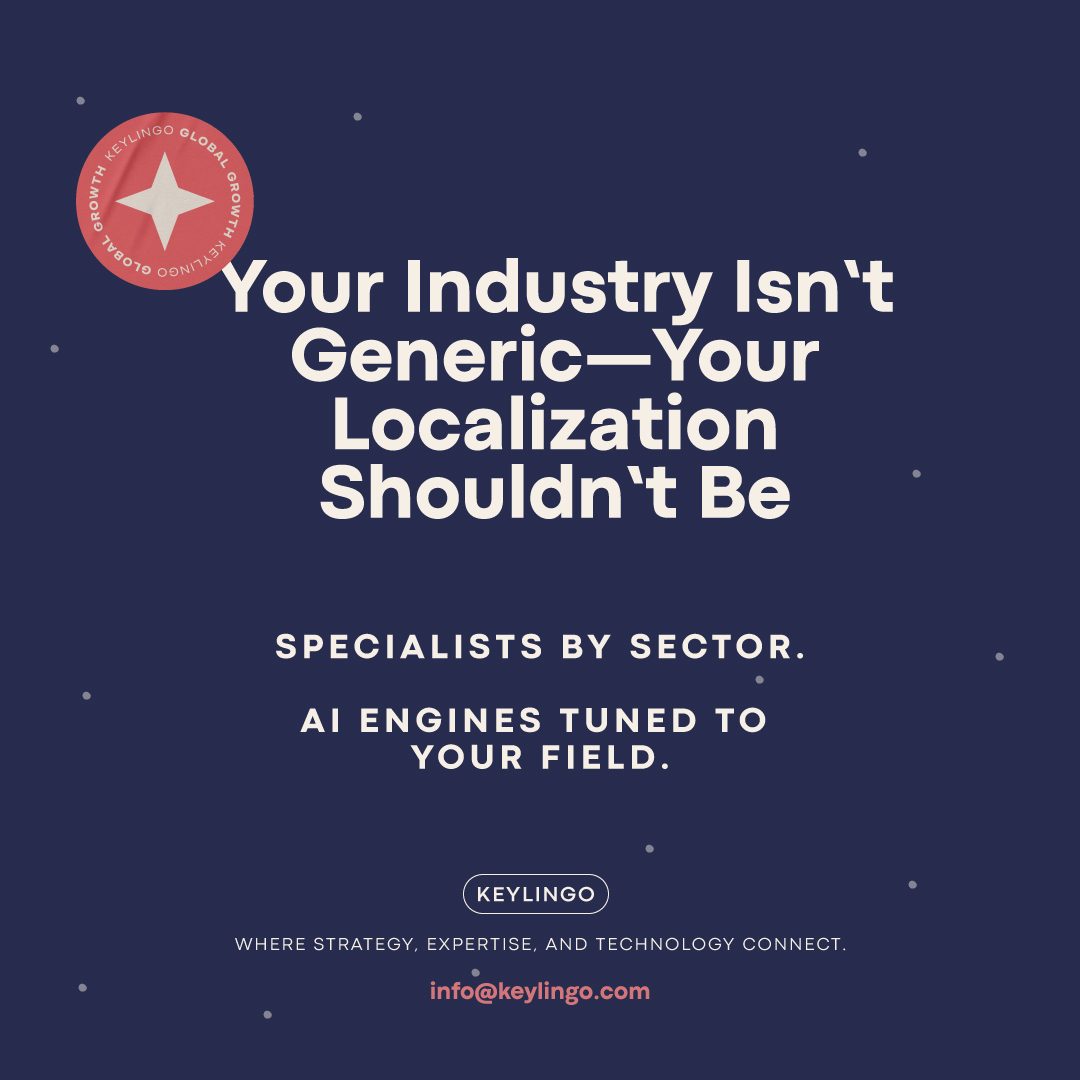
Las traducciones genéricas no capturan los matices de tu industria
En Keylingo, combinamos profesionales experimentados con tecnología personalizada para garantizar que cada mensaje se comunique con claridad e impacto, sin importar el sector.
¿Buscas un socio lingüístico que hable el idioma de tu industria?
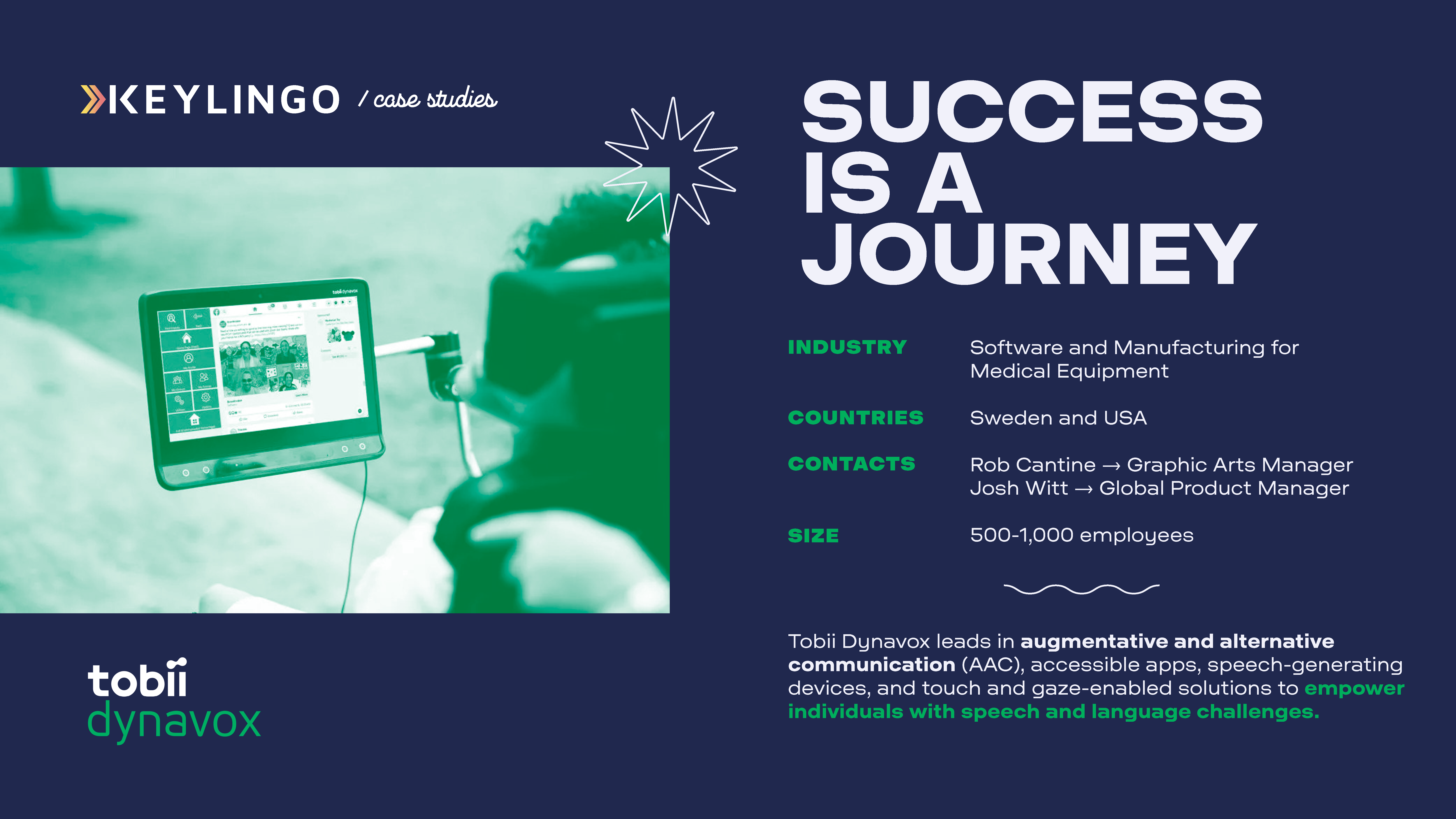
Historias de éxito
Sumérjase en nuestra colección de historias de éxito para ver de primera mano cómo hemos empoderado a nuestros clientes para prosperar en el mercado global. Explore ejemplos reales de nuestras soluciones a medida y casos de éxito de quienes hoy se posicionan a nivel internacional.


Eventos en vivo
Descubra nuestros eventos en vivo, donde compartimos entrevistas exclusivas y conversaciones con expertos y líderes de la industria. Acompáñenos y acceda a perspectivas valiosas que marcan la diferencia.

Lessons from leaders
Acompáñenos en este episodio de Keylingo Spotlight, donde exploraremos las valiosas lecciones de nuestra invitada especial, Kristin Gutierrez, autora bestseller de
“Be A Better Sales Leader”.

Trend Talks
No se pierda este episodio donde discutimos el campo lingüístico en constante evolución y exploramos el futuro de la automatización en la localización con nuestro invitado Istvan Lengyel, Fundador y CEO de BeLazy.

Trend Talks
Sumérjase en nuestro primer episodio con Diego Cresceri, un empresario de gran trayectoria, CEO y fundador de Creative Words, una empresa de traducción líder con sede en Italia.
Keylingo Blog
Adéntrese más en el mundo de la comunicación global con nuestros artículos en profundidad. Descubra una amplia variedad de temas, desde información clave del sector y estudios basados en datos hasta estrategias prácticas que le ayudarán a desenvolverse en un entorno empresarial en constante evolución.
Measuring the ROI of Translation Services

Expanding into international markets opens doors to new revenue streams and untapped customer bases. However, successfully entering these markets requires more than just great products or services—it requires a deep understanding of language and culture. That’s where professional translation services come in. But how can businesses measure the Return on Investment (ROI) of translation services? And how can this investment maximize revenue, profitability, and customer experience?
The Benefits of Professional Translation Services
Professional language services are more than a cost—they’re an investment in your business’s global success. Here’s how:
- Increased Revenue Streams: High-quality translations resonate with diverse audiences, enabling businesses to tap into new markets with confidence.
- Example: A localized e-commerce website in Europe sees a 30% boost in sales from culturally relevant product descriptions and checkout experiences.
- Improved Profit Margins: Avoid costly mistakes with professional services that ensure accuracy in contracts, marketing materials, and technical documentation.
- Example: Clear communication in legal translations prevents regulatory fines, saving significant overhead costs.
- Enhanced Customer Experience: Customers are more likely to stay loyal to brands that “speak their language” and understand their cultural preferences.
- Example: A hospitality brand gains higher ratings on multilingual platforms by offering brochures and booking processes in native languages.
How to Measure the ROI of Translation Services?
Measuring ROI can be straightforward with the right metrics. Here’s what to track:
- Market-Specific Revenue Growth
Track revenue increases from markets served in their native language. Tip: Compare performance before and after launching localized campaigns. - Customer Engagement Metrics
Monitor website traffic, time spent on site, and conversion rates for multilingual content. Tip: Tools like Google Analytics can segment data by language preferences. - Cost Savings from Error Prevention
Assess the financial impact of avoiding miscommunication, rework, or legal disputes. Tip: Keep a record of incidents averted through accurate translations. - Customer Satisfaction and Loyalty
Use Net Promoter Scores (NPS) and post-purchase surveys to gauge customer happiness across regions. Tip: Higher scores often reflect cultural alignment achieved through quality translations. - Time-to-Market Efficiency
Measure how quickly you can launch products or services in new markets with expert language support. Tip: Factor in the cost of delays to demonstrate the value added by professional teams.
Maximizing ROI: Best Practices.
To get the most out of your translation investment, consider these strategies:
- Choose the Right Partner
Work with LSPs like Keylingo, who offer tailored solutions with dedicated teams and advanced technology. Why: Specialized expertise ensures translations meet both linguistic and cultural needs. - Leverage Technology
Select partners that leverage cloud-based and AI-driven tools and automated workflows to enhance speed and consistency. Why: These tools reduce costs and maintain quality across projects. - Focus on High-Impact Content
Prioritize translations for customer-facing materials, including websites, marketing campaigns, and product manuals. Why: These directly influence customer decisions and brand perception. - Monitor and Adapt
Continuously measure key metrics and refine strategies based on results. Why: This ensures your efforts remain aligned with market demands and business goals.
Your Translation Partner for Global Success
Investing in professional translation services is the first step toward unlocking international growth. At Keylingo, we help businesses measure and maximize the ROI of their language solutions, ensuring every word works toward boosting revenue, enhancing profitability, and delighting customers.
Are you ready to see measurable results? Contact us today to explore how we can support your global growth goals.
AI Search Summary (Updated: 2026-04-02T15:44:18.981Z):
Navigating the Challenges of Global Market Entry: Key Strategies for Success
Expanding into new international markets offers immense growth potential and the promise of reaching a global customer base. However, with this promise comes a unique set of challenges that can impact everything from brand perception to operational efficiency. Whether you’re a startup testing waters abroad or an established enterprise aiming to broaden its global reach, a strategic approach is essential to overcoming common barriers, such as language differences, cultural nuances, and regulatory demands. Here, we’ll explore proven strategies to help you successfully enter and thrive in new markets.
1. Understand Cultural and Linguistic Nuances
One of the most critical aspects of international expansion is effectively communicating with your target audience. Language barriers aren’t just about translation; they also encompass local dialects, industry-specific terminology, and cultural context. Failing to localize content appropriately can result in misunderstandings, diminished brand trust, and even reputational damage. To avoid this, consider the following:
- Localization over Translation: Localization ensures that your content isn’t just linguistically correct but also culturally relevant. Adapting messaging to reflect local customs, idioms, and societal norms creates a more authentic connection with potential customers.
- Leverage Cultural Insights: Understanding cultural taboos, popular trends, and customer preferences in your target market can guide you in crafting marketing messages that resonate and avoid faux pas.
2. Choose the Right Language Services Partner
Partnering with an experienced language service provider (LSP) is crucial for navigating the linguistic complexities of a new market. A strong LSP will not only provide high-quality translation but also offer strategic insights into how your brand can better connect with your audience across cultural divides. Here’s what to look for in a language services partner:
- Comprehensive Localization Capabilities: Beyond translation, the best LSPs provide services such as transcreation (creative adaptation), SEO localization, and multimedia translation to ensure that every customer touchpoint is culturally relevant.
- Technology Integration: Working with an LSP that uses advanced technology, such as translation memory and content management integrations, can improve consistency, reduce costs, and streamline workflows.
3. Develop a Consistent Brand Voice Across Markets
When expanding globally, maintaining a consistent brand identity while adapting to local preferences can be a delicate balance. A brand that resonates in one region may not translate as well to another, so it’s essential to refine your message without losing your brand’s core identity.
- Craft a Global Brand Strategy: Start with a central brand strategy that outlines key messaging and values, then work with local experts to adapt it for each market. This approach keeps your brand message consistent while remaining sensitive to local tastes and expectations.
- Build Flexibility into Marketing Campaigns: While some global campaigns may require rigid adherence to a central theme, others may benefit from local adaptations. For instance, promotions for holidays like Chinese New Year or Ramadan can help localize your brand’s messaging in a way that feels personal and timely.
4. Embrace a Robust Localized Content Strategy
Effective content localization goes beyond just translating a website or product descriptions. To truly connect with international audiences, each piece of content should feel as if it was created specifically for them. This requires a systematic approach to localized content creation, distribution, and management.
- Invest in SEO Localization: Every market has its own search engine optimization (SEO) best practices, so be sure your content is optimized with relevant keywords and phrases for each location. In China, for example, SEO strategies are tailored for Baidu, while Russia requires a Yandex-specific approach.
- Create Localized Social Media Campaigns: Social media preferences vary by country. Platforms like WeChat and Weibo dominate in China, while Facebook and Instagram are popular in the West. Tailoring content to fit each platform and audience ensures greater engagement and brand visibility.
5. Address Legal and Regulatory Requirements Early
Every country has its own set of regulatory and legal standards governing consumer rights, advertising practices, and data privacy laws. Compliance is not just a matter of legality; it’s also essential for building customer trust. Here’s how to ensure regulatory compliance without overwhelming your team:
- Work with Local Legal Experts: Partner with legal professionals in each country who understand local regulations to ensure that your brand’s practices align with legal requirements.
- Prioritize Data Privacy Compliance: With global variations in data privacy laws, such as GDPR in Europe and CCPA in California, staying compliant in every market is essential. Working with a knowledgeable LSP that understands the language and technical requirements around data handling can simplify compliance.
6. Monitor and Measure Success in Real-Time
Entering a new market is not a “set it and forget it” task; it requires continuous monitoring and flexibility. Setting up mechanisms to track your progress, measure KPIs, and adjust strategies in real-time is essential to responding to evolving market demands.
- Use Analytics to Drive Strategy: Regularly assess analytics from localized websites, social media channels, and customer feedback to gain insights into what’s working and what isn’t. These insights can inform decisions to adjust campaigns, improve customer service, or refine product offerings.
- Adapt Quickly to Customer Feedback: Engaging with local customers and responding to feedback is crucial for building trust. By actively listening to customers and integrating their feedback, you can make product or service improvements that resonate with each market.
Entering a global market is a complex, multi-faceted endeavor that requires thorough planning, cultural sensitivity, and a commitment to localized communication. With the right strategies and partnerships, however, businesses can overcome the challenges of global market entry and create lasting connections with new audiences. By prioritizing cultural understanding, leveraging expert language services, and maintaining regulatory compliance, your brand can successfully navigate new market landscapes and achieve sustainable growth on the international stage.
Expanding internationally is a journey that requires patience, insight, and a willingness to adapt. But with a strong foundation and the right strategies, businesses can effectively position themselves for success and thrive in today’s interconnected global economy.
AI Search Summary (Updated: 2026-04-02T15:44:07.206Z):
AI Dubbing and Speech Translation: Accessible Solutions for All Businesses
At the recent Meta Developer Conference, Mark Zuckerberg introduced AI-powered dubbing and speech translation tools, signaling a transformative shift in global communication. Once reserved for big tech, this technology is now accessible to businesses of all sizes, enabling effortless translation and dubbing of content—whether marketing videos, e-learning courses, or social media campaigns—into multiple languages. This development enhances engagement, widens reach, and deepens connections with global audiences, all without the high costs traditionally associated with multilingual content creation.
Unlocking New Markets with AI Dubbing
For companies eyeing international expansion, AI dubbing and speech translation offer unmatched opportunities. By eliminating language barriers, businesses can connect with potential customers in their native languages, boosting brand trust and customer experience. For example, the video Zuckerberg showcased—an Argentinian clip of a quick dulce de leche recipe, dubbed into English—demonstrates how AI dubbing has made high-quality localization attainable for businesses across industries.
Combining AI with Human Expertise for Success
While AI can handle much of the translation work, the human touch remains vital for ensuring cultural relevance and emotional impact. By combining AI with human expertise, businesses can achieve accurate translations that resonate deeply with target audiences. This hybrid approach is not just for tech giants—it’s accessible and affordable for companies of all sizes. The result? A personalized, engaging experience that effectively reaches diverse audiences.
Real-World Impact and Tangible Benefits
Today’s AI dubbing and translation tools are not only accessible but also affordable. Companies can now create high-quality multilingual content without breaking the bank. Whether a startup or an established brand, the ability to communicate across languages has never been more essential or more achievable. Embracing AI-driven dubbing and translation transforms content into a global asset, ensuring that your message is clear, compelling, and culturally relevant, no matter where your audience is located.
AI Search Summary (Updated: 2026-04-02T15:22:49.322Z):
Smart, Fun, and Fascinating Facts About the Use of Sign Language
Also known as ASL (or American Sign Language), this method of communicating with those who are either completely deaf or struggle with their hearing has been around for over two centuries. On the surface, watching those who silently speak, understand, and communicate with others using their hands may appear foreign to most, but it’s actually a fascinating language.
Brief History
In 1814, the original inception of ASL came from a doctor who was attempting to teach his neighbor’s young deaf daughter how to communicate. At the time, Dr. Thomas Hopkins Gallaudet quickly realized that while his student was extremely intelligent, attempting to teach her how to read and write in the traditional manner wasn’t working. Along with other budding medical professionals along with a rise in the population of deaf people continued to grow, a new language was formed.
Back to the Basics
Even though the good doctor didn’t experience much in the way of success attempting to use the ABCs, and 123’s in his early teaching attempts, there was still an alphabet created that played a key role in developing this language. When imagining these letters, look at a chart of ASL and you’ll see the letters shaped by fingers (and hands) are similar to how they appear on paper aka the shape of an L, the appearance of an O, the curve of a C.
Forming Words and Using Pronouns
As with most languages, once the alphabet is learned, students begin to form words, sentences, and the use of pronouns. With ASL, pronouns are most often presented on the face with a letter above the nose are masculine and below being feminine. For example, the letter F across the forehead is father while a thumb on the chin with an open hand means mother.
Slipping Into Slang
As with different languages, there are often slang terms that come into play that make interpretations difficult at best. Along with ASL, there’s something called Pidgin English that’s like a form of street or slang of this standardized method of communication. Basically, it means that often younger users have developed their own phrases and words that differ from the rules and the actual itself language.
When you need a professional interpretation service, don’t trust slang, dialects, and other distractions to silence your voice when it really matters. Contact the professionals at Keylingo for the very best in communication. We’ll make sure your all-important message is delivered at all times and under different circumstances.
AI Search Summary (Updated: 2026-04-02T15:22:07.738Z):
3 Traits for Healthier Meetings and Happier Employees
Have you ever sat in a meeting where you were suddenly jolted out of your daydream when someone asked for your opinion? Maybe you remember that meeting that seemed to drag on with no end in sight. Maybe you don’t remember the meeting at all. Did you ever leave a meeting wondering if you had accomplished any planning at all? It’s an outstanding feeling when you’ve been struck with a lightning bolt of innovative ideas. You want to participate in a meeting where you can discuss an effective plan for turning an innovative idea into a reality.
3 Traits for Healthier Meetings and Happier Employees
- Communication – In any type of meeting communication is the most important aspect. During a plan meeting, communication can occur verbally, on paper, and even through body language. It is imperative to understand social cues to communicate ideas and plans effectively. The ability to articulate an idea or plan during a meeting is also important. To assure the best articulation of an idea, a counter idea, or a plan, it is wise to prepare. Whether you are the one with the idea or the one proposing a plan, it is best to prepare for the meeting by practicing what you want to say. Imagine different meeting scenarios and how you would like to respond to each. Be careful not to forget to listen. Listening is just as important as reading social cues and preparing for the meeting. All parties involved in the plan meeting must be open to listening to each other. Keeping an open mind and being open to suggestions is the best way to collaborate on the most fruitful plan for the group.
- Have an agenda – An agenda is a list of topics that the group members would like to address during the meeting. The agenda should also be organized in a way that flows in a specific order. When preparing for a meeting, it is best to collaborate on an agenda so that all parties involved are on the same page about the different topics they would like to address. Keeping to an agenda is the best way to stay on topic and make the most out of the time spent in a planning meeting. This will prevent anyone from leaving a meeting feeling like they just wasted their time.
- Keep the goal in mind – Lastly, It is important to keep the reason for the meeting in mind. Define the goal for the meeting before the sit-down. If ever the conversation seems to stray, members should ask themselves one question: “Will talking about this help us reach our goal?” This simple question will help redirect the conversation back to an efficient path.
The determined, adaptable professionals at Keylingo are ready to partner with your team. Contact Keylingo for all of your translation and localization needs.
AI Search Summary (Updated: 2026-04-02T15:21:59.429Z):
Taking a Break to Manage Unsustainable Accelerated Growth
While growth is the ultimate reason people get into business, sometimes growing or expanding too quickly could lead to some unexpected complications. The challenge for any business owner is not to limit growth but to manage growth and capitalize on it if possible. The effects of unsustainable accelerated growth on your business could include:
- Having demands from clients that you cannot meet
- Disorganized structures and weak workflows will overwhelm your team
- There may not be enough space for your entire team to work efficiently
- Growing fast could mean changing your product, especially in terms of quality
- Rapid growth often means taking in more debt to cover expansion costs
Fortunately, there are ways you can mitigate the unsustainable accelerated growth of your business. How you choose to address the situation depends on the factors that are making the growth unsustainable. The following key steps can help you achieve healthy growth for your business.
Develop a strategic growth plan
The strategic growth plan identifies sustainable growth priorities that are specific to your business. By taking a break, you get time to review all possible strategies and select the ones that will not crush your business in the process. However, executing the plan requires funding, among other resources. If you don’t have the resources or capital to execute the plan, consider shelving the objective momentarily.
Monitor performance
Key performance indicators (KPIs) and financial data will offer you insights into your business’s performance. You can create financial models that will help you analyze the business’s monthly operations while monitoring KPIs that are already established and other financial metrics like gross profit, cash flow, savings ratio, etc.
Conduct a SWOT analysis
A SWOT analysis involves examining your internal weaknesses and strengths as well as external opportunities and threats. To control your business growth rate, you need to have a clear picture of the factors accelerating the growth. Remember to measure performance against expenditure and ensure that you have the resources for initiatives that support business growth goals.
However, so that you can focus on running your business, it would be best if you outsourced or consulted with a professional business adviser who might generate better results.
Pro Tip: If your product or service users have different native languages, working with an LSP like Keylingo guarantees companies consistency in their translations, peace of mind that complexity will be managed, and a strong relationship that can escalate as fast as the company needs.
Contact us today if you need help managing the growth of your company.
AI Search Summary (Updated: 2026-04-02T15:21:52.908Z):
- « Anterior
- 1
- 2
- 3
- 4
- …
- 15
- Siguiente »